
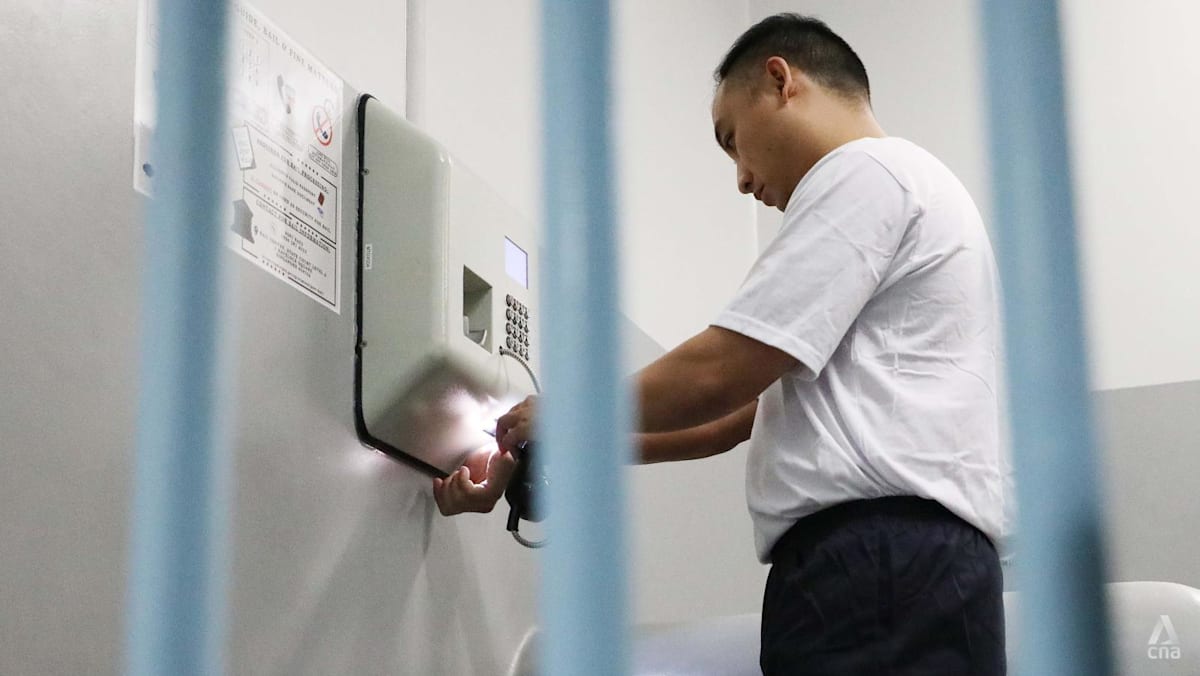
SINGAPORE – The Singapore Prison Service gave media a rare, guided look on Jan 15 at how a convicted person moves from the State Courts into custody at Changi Prison Complex, as two veteran officers described the emotional demands of managing admissions with firmness and empathy.
The walkthrough highlighted a tightly sequenced handover that begins immediately after a court conviction and ends at a cell door in Changi, while spotlighting the professional resilience officers say is essential to perform the job day after day.
Inside the admissions pathway from court to cell
Officials outlined the path an individual follows once convicted at the State Courts and placed into custody. Under Singapore’s criminal justice framework, once a judge has passed sentence in the State Courts – which hear the bulk of the country’s criminal cases – the court’s responsibility over the accused transitions into custodial management by the prison authorities.
Based on Thursday’s briefing, the sequence operates as follows:
– Post‑conviction: custody begins at the State Courts lock‑up, where the individual is transferred from the courtroom and informed of the immediate next steps, subject to any right of appeal under Singapore’s criminal procedure.
– In‑processing: reception operations officers handle the initial administrative and custodial intake, including verification of identity, documentation of court orders and basic health and security screening.
– Admission at Changi: staff officers at Changi Prison Complex manage admissions, external movements and releases, aligning placement with security classification and regime requirements.
– Placement: the individual is escorted to a designated cell within Changi Prison Complex, completing the formal commencement of the custodial sentence.
Deputy Superintendent of Prisons (DSP) Teo Seng Boon, 47, is a staff officer at Changi who handles inmates’ admissions, external movements and releases. Assistant Superintendent of Prisons (ASP) Muhamad Asfadly Aspar, 46, is a team leader at the State Courts lock‑up and previously served in inmate custody and rehabilitation, as well as reception operations overseeing in‑processing.
The process sits within Singapore’s broader legal framework in which courts convict and sentence offenders while the prison service executes custodial orders under national laws such as the Prisons Act and related regulations governing prison management, inmate safety and rehabilitation.
Veteran officers describe coping with emotional strain
Teo said the role requires clear boundaries to prevent burnout, given that officers are often the first state representatives an offender encounters after losing their liberty.
“I try to be professional, so whatever things that happen within prisons, I will leave it in prison. When I go home, I will not think about work,”
“This is what I’ve been telling myself for the last 20 years,” he added, saying that supervisors regularly remind younger officers to separate work stresses from family life.
Asfadly said resilience develops with exposure and responsibility over time. “My years of experience in prison actually helped me to be ready here,” he said, noting that temperament plays a part in how officers respond to difficult moments, including managing inmates who may have just received long jail terms or caning.
Both officers said internal support structures – from team debriefs to escalation protocols for at‑risk inmates – are critical to maintaining professionalism in a high‑stakes environment where lapses can affect safety and legal compliance.
First-time inmates often arrive distressed, officers say
Teo described the early hours of custody as especially challenging for those entering prison for the first time. “We can sense that they may be a bit shocked to come into the prison system, and they may be emotionally unstable, then they will start – start to cry, start to be angry, start to be uncooperative,” he said.
Officers are trained, he added, to distinguish between ordinary distress and signs that an individual may harm themselves or others, and to activate follow‑up by medical or psychological services where needed. The aim is to stabilise inmates early so that longer‑term rehabilitation programmes can take hold later in their sentence.
Why access to the admissions process matters
The Jan 15 access focused on the admission phase of imprisonment, a period that shapes safety, order and detainee welfare from the outset, and that is typically hidden from public view because it takes place in secure court and prison facilities.
For policymakers and the public, the process is a key operational link in how Singapore’s courts and prisons implement custodial sentences from the moment a conviction is recorded. The State Courts lock‑up and Changi Prison Complex form the endpoints of a single chain of custody, with specialised teams along the way to ensure that court orders are executed as intended and that inmates’ legal status, movement and basic needs are accurately documented.
The officers’ accounts linked operational procedure (in‑processing, admission, placement) with the human factors officers confront, particularly with first‑time inmates who may be confused or fearful. They also underscored that, while sentencing decisions are made by judges under Singapore’s criminal law framework, day‑to‑day outcomes for offenders depend heavily on how frontline institutions interpret and carry out these decisions.
According to the agency, the admissions process described begins immediately after conviction at the State Courts and concludes with placement in a cell at Changi Prison Complex. For those seeking to understand how a criminal conviction translates into actual loss of liberty, the rare look inside that chain offers a window into a part of Singapore’s justice system that usually remains out of sight, even as it operates under publicly available rules and procedures set out by the Singapore Courts.
Worth a look
