
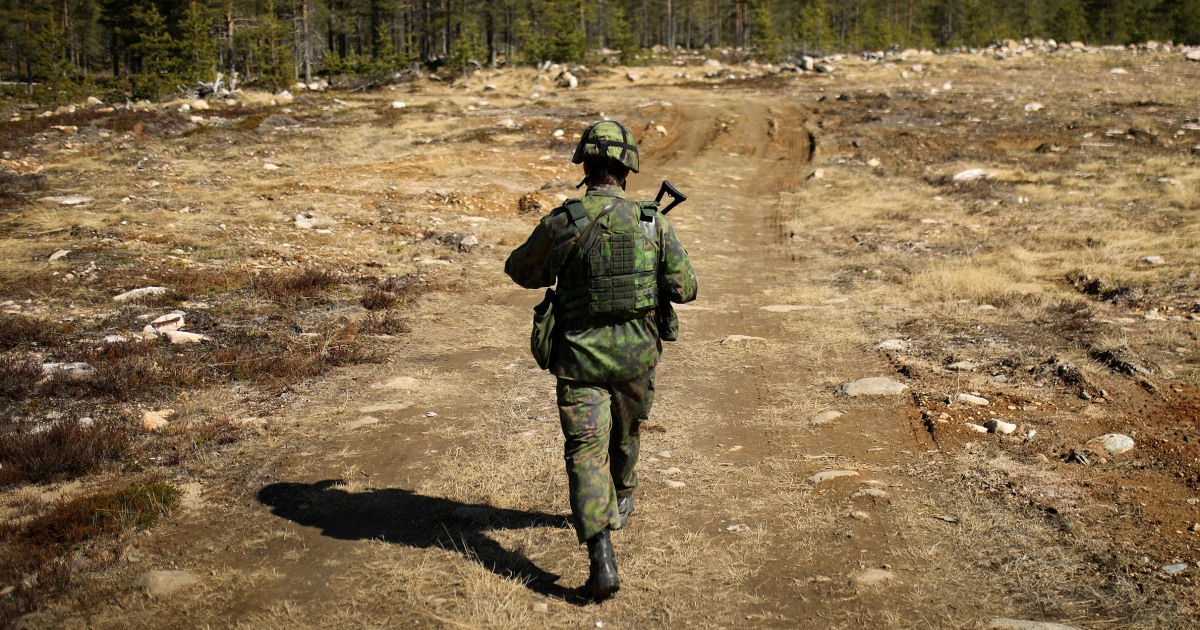
Finland will begin acquiring anti-personnel landmines and train active-duty personnel, conscripts and reservists to use them, the military said, following the country’s withdrawal from the Ottawa Convention that bans such weapons, which took effect on January 10.
The announcement positions Finland alongside fellow European Union and NATO members that border Russia – Lithuania, Latvia, Estonia and Poland – which have decided to leave the treaty amid concerns over the military threat posed by Russia.
Treaty shift linked to regional security concerns
Officials said Finland acted after its exit from the landmine ban became effective. The move comes as Russia has used landmines in its invasion of Ukraine, and in July accused Ukraine of doing so too, after Ukraine announced its withdrawal from the Ottawa Convention.
Finland’s decision marks a sharp turn away from its previous commitments under the Ottawa Convention on the Prohibition of Anti-Personnel Mines, which had required Helsinki to renounce the use, production, stockpiling and transfer of such weapons. By leaving the treaty, Finland is reclassifying anti-personnel mines as a legitimate component of its deterrence posture along NATO’s northeastern flank, even as most European allies remain parties to the ban.
Government officials have framed the move as a response to what they describe as a deteriorating regional security environment since Russia’s full-scale invasion of Ukraine in 2022. Finnish policymakers have repeatedly argued that the country’s long, forested land border with Russia gives landmines a particular role in slowing any large-scale ground incursion.
Procurement, training and domestic production plan
Finland’s Defence Forces said it will initiate the acquisition process and begin training troops. Talks with the domestic defence industry will also start. In a statement, the military set out a target for when new systems would be available and emphasized that the program will be built with local partners.
Key milestones announced:
– Treaty withdrawal effective: January 10, following a six‑month notice period to the United Nations Secretary‑General as depository of the convention.
– Activities planned: acquisition of anti-personnel mines; training for staff, conscripts and reservists; consultations with domestic industry to design and manufacture new systems.
– Availability target: “The goal is to have the first new mines and their exercise equipment available in the course of 2027,” the country’s Defence Forces said in a statement.
– Industrial approach: “New anti-personnel mines are intended to be developed in cooperation with the domestic defence industry with a further goal of manufacturing them in Finland.”
Defence planners say the procurement program will be integrated into broader updates of Finland’s ground forces and border defenses, rather than treated as a stand‑alone capability. Officials have indicated that domestic production is intended both to ensure supply security in a crisis and to keep design control – for example, over fusing, safety and potential self‑destruct features – in Finnish hands.
Operational policy: emergency use only
Authorities said Finland does not plan to lay anti-personnel mines on the ground in peacetime. The Army’s engineer branch set a clear condition for any deployment.
“We will use mines only in emergency conditions,” said Colonel Riku Mikkonen, Inspector of Engineers for the Army Command.
Military leaders have stressed that any deployment decisions would be taken by the political leadership in line with Finland’s defence legislation and rules of engagement. The Defence Forces have also underlined that minefields would be planned as part of controlled, mapped obstacles integrated with other systems, such as surveillance and artillery, to distinguish their approach from the indiscriminate use condemned by the treaty regime.
What the mine ban covers
The Ottawa Convention, also known as the Mine Ban Treaty, is an international agreement that prohibits the use, stockpiling, production and transfer of anti-personnel mines and requires destruction of stockpiles and clearance of mined areas. Finland’s withdrawal removes those treaty obligations for the country and allows it to restore capabilities it says are linked to national defense.
Even outside the convention, Finland remains bound by broader international humanitarian law, including rules requiring distinction between combatants and civilians and precautions in the use of weapons that can have long‑lasting effects. Officials have said the new policy will be implemented “in accordance with Finland’s international obligations,” without detailing what additional safeguards – such as self‑neutralizing mechanisms, marking and post‑conflict clearance provisions – might be built into the planned systems.
The Defence Forces said training for military personnel and consultations with industry will start as part of the implementation of the new policy. As planning moves ahead, Helsinki is expected to face renewed scrutiny from disarmament advocates and partners that remain committed to the mine ban regime, even as it aligns itself more closely with NATO allies that still view anti-personnel mines as a necessary last‑resort component of territorial defence.
Worth a look
