
WASHINGTON – Donald Trump has accused Iran of repeatedly violating a temporary ceasefire, casting doubt on upcoming peace talks as the truce approaches its expiration.
The escalation comes amid a maritime standoff involving a US blockade of Iranian ports and the closure of the Strait of Hormuz, a critical chokepoint for global energy supplies.
The US leader announced the allegations via his Truth Social platform, stating, “Iran has Violated the Cease Fire numerous times!”
Trump did not provide specific details regarding the nature of the violations in the post, and the White House has yet to release corroborating evidence or a formal incident list.
Diplomatic Deadlock in Islamabad
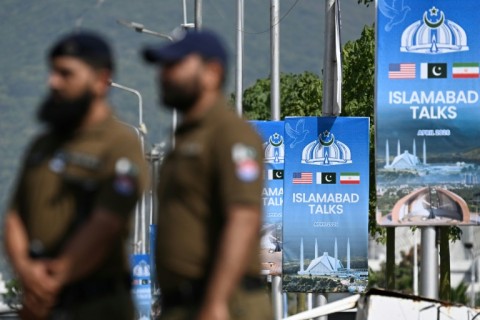
A US delegation led by Vice President JD Vance is expected to travel to Islamabad, Pakistan, which has positioned itself as a mediator between Washington and Tehran. The city previously hosted a first round of negotiations earlier this month, which concluded without a formal agreement or joint communique.
New talks were initially scheduled for Monday under the framework of the current two-week ceasefire, but Iranian officials have refused to participate, raising concerns among US and regional diplomats that the window for a negotiated pause in fighting may be closing.
Iranian state TV dismissed reports that a diplomatic team had been dispatched, stating, “So far, no delegation from Iran has departed for Islamabad, Pakistan.” Tehran has instead accused Washington of undermining the talks by tightening military and economic pressure even as negotiations were being discussed.
The ceasefire, announced by Trump on February 28 as part of what the administration described as an opportunity for “serious talks” with Iran and US partners, is informal and not codified in any public treaty or resolution. It sits against the backdrop of existing international law governing armed conflict and navigation, including the United Nations Convention on the Law of the Sea, which outlines states’ rights and obligations in key waterways such as the Strait of Hormuz.
Maritime Escalation and Trade Disruptions
The diplomatic breakdown coincides with significant military and economic maneuvers in the Persian Gulf. Since the conclusion of the initial talks in Islamabad, the US has implemented a blockade of Iranian ports, a move US officials frame as a targeted effort to curb Iranian military resupply rather than a full embargo on civilian goods.
In response, Tehran has again closed the Strait of Hormuz. The strait is one of the world’s most strategically important shipping lanes, serving as the primary artery for oil exports from the Persian Gulf to global markets. Any prolonged disruption risks higher energy prices and renewed pressure on consumer inflation, particularly in major importers in Asia and Europe.
The two nations have traded accusations regarding the breach of the ceasefire:
- The US administration claims Iran has fired on ships within the restricted trade route and directed armed drones toward US naval assets enforcing the blockade.
- Iran asserts that the US blockade and the seizure of an Iranian vessel constitute direct violations of the truce and of its sovereign rights, arguing that Washington is using the language of “ceasefire” while escalating economic warfare at sea.
Maritime security analysts note that both sides are testing the boundaries of what constitutes a ceasefire violation at sea, in an environment where civilian tankers, military escorts and sanctions enforcement operations are closely intertwined. Shipping insurers and major energy companies have already warned clients of heightened risk premiums for transiting the Gulf, according to industry notices reviewed by GlobalHeadlinez.
US Negotiating Strategy
Despite the absence of an Iranian delegation and the increasing tension on the water, Trump maintains that the US holds the advantage in these proceedings and has signaled he is prepared to extend or tighten the pause depending on Tehran’s response. Earlier on Tuesday, the president said he would prolong the existing ceasefire period if Iran submits what he called a “serious” proposal for ending hostilities, framing the pause as leverage rather than a settled diplomatic outcome.
Speaking with broadcaster CNBC, Trump expressed confidence in his ability to secure terms favorable to Washington.
“We’re going to end up with a great deal. I think they have no choice… We’re in a very, very strong negotiating position,”
Trump said.
US officials say any enduring arrangement would likely require parallel understandings on maritime conduct, limits on Iranian missile and drone activity, and security guarantees for regional allies, including Israel and Gulf states. Congressional leaders in both parties are already signaling they will scrutinize any eventual deal for its implications on sanctions relief, use-of-force authorizations and compliance with existing nonproliferation commitments.
The two-week ceasefire is scheduled to end within hours, unless the White House issues a formal extension. As that deadline approaches, diplomats in Islamabad and Gulf capitals are watching closely for signs that either side is prepared to move beyond tactical pauses and toward a more durable framework for de‑escalation, including potential follow-on talks under broader regional security initiatives such as the proposed US-backed maritime task forces in the Gulf.
For now, the conflict remains governed less by a single binding peace agreement than by overlapping military postures, ad hoc understandings and longstanding international rules on navigation and armed conflict – a fragile mix that leaves the Strait of Hormuz, and the global economy, exposed to sudden miscalculation.
- Urban Infrastructure Resilience: How European and Asian Megacities Are Adapting to Extreme Climate Oscillations in 2026
- UN General Assembly 2026 Framework on Autonomous Systems: International Diplomacy Faces Algorithmic Governance
- Jay Clayton named White House AI czar by Trump to lead task force (globallypulse.com)
