
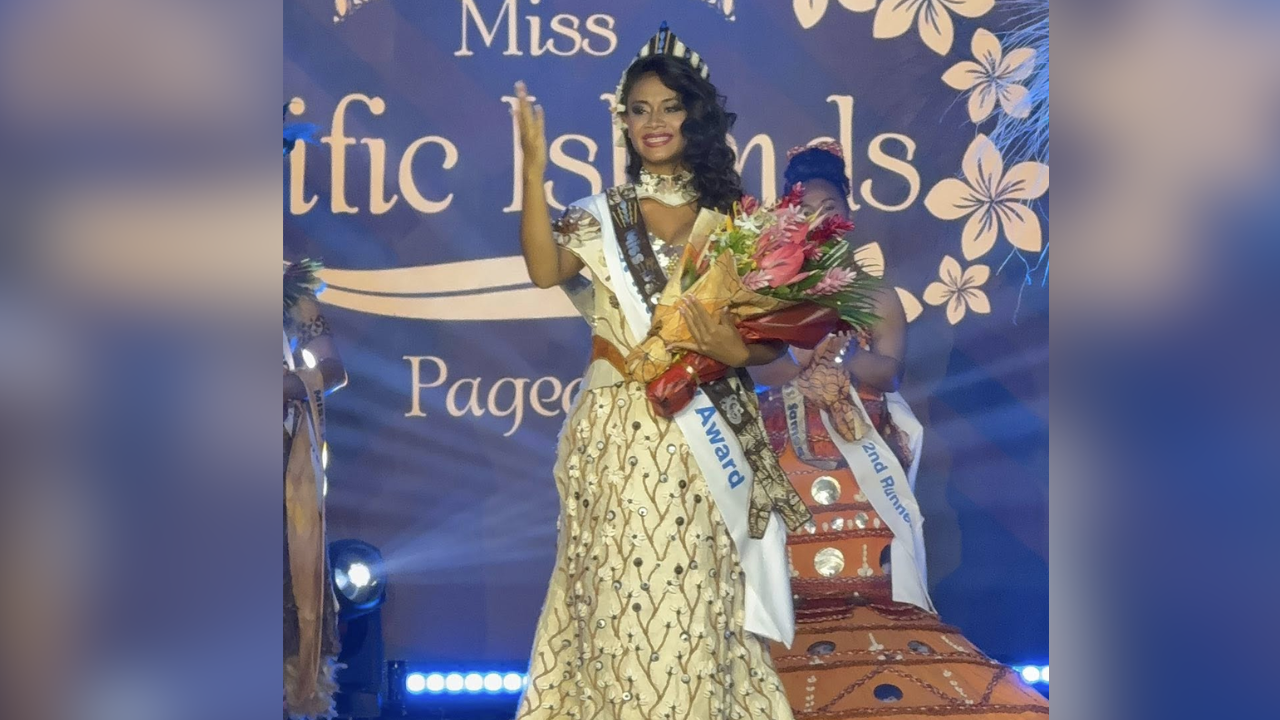
Ailava Samuel has been crowned Miss Pacific Island Pageant 2026 on home soil in Fiji, prevailing over six other contestants from across the region. The 19-year-old also received the Best in Interview award and was crowned by last year’s winner, Litara Allen of Samoa.
The result is a significant moment for Fiji’s pageant history. Samuel is the fourth Fijian winner of the regional title, with the source noting Anne Dunn’s 2016 victory as the most recent prior Fijian win. In her victory remarks, Samuel acknowledged her family and team for their support and dedicated the win to the country.
Source: FBC TV / Facebook]
Placements and special awards
The 2026 edition of the pageant concluded with the following placements and citations, reflecting both overall scoring and performance in key judged categories:
- Winner: Ailava Samuel (Fiji) — Best in Interview.
- 1st runner-up: Iampela Popena (Papua New Guinea) — Best Traditional Wear; Miss Internet.
- 2nd runner-up: Iliganoa Feagaimali’i Soti (Samoa).
- 3rd runner-up: Siosi’ana Patricia Taumoepeau (Tonga) — Best Sarong; Miss Tourism.
- 4th runner-up: Petra Mataiti (Cook Islands) — Best Talent; Miss Photogenic.
- Special award: Atiterentaai Rinimarawa (Kiribati) — Miss Personality.
Context for the regional title
The Miss Pacific Island Pageant brings together national representatives from Pacific countries and territories for a competition that typically includes interview segments and presentations of cultural wear and talent. Established to promote regional identity and women’s leadership, the event is overseen by a regional organizing body that operates under the cultural and gender-equality objectives set out in the Framework for Pacific Regionalism, which guides intergovernmental cooperation across the Pacific.
This year’s slate of awards reflects the pageant’s judging areas, with distinctions for interview performance, traditional attire, sarong presentation, talent, photogenic appeal, tourism ambassadorship, internet popularity, and personality. Contestants are assessed not only on stage presence and creative expression but also on their ability to articulate positions on social, cultural, and development issues affecting their home countries, giving the event a soft-diplomacy role within the broader regional calendar. For host governments and tourism authorities, the pageant has become a platform to highlight national branding, cultural policy, and women-focused initiatives.
For readers unfamiliar with the pageant’s structure, the combination of formal interviews and cultural segments means national ministries responsible for culture, youth, and women’s affairs often work closely with organizers, aligning delegate preparation with domestic priorities on education, public health, and climate resilience. That coordination reinforces the pageant’s status as more than an entertainment spectacle, positioning it instead as a regional forum where emerging female leaders gain visibility.
Fiji’s standing in the competition
Samuel’s win returns the regional crown to Fiji for the first time since Anne Dunn’s 2016 title, according to the source material. Her acknowledgment of family and team support, and her public dedication of the win to the nation, were central themes of her remarks following the crowning.
For Fiji, the victory also underscores the country’s continued investment in cultural diplomacy and youth representation, priorities reflected in its commitments under the Charter of the United Nations, which Pacific states frequently cite when advancing gender equality and sustainable development in regional forums. With the 2026 Miss Pacific Island Pageant now concluded and results and special awards finalized, attention will turn to how Samuel’s year-long reign is used to advance national campaigns on education, culture, and women’s empowerment across the Pacific.
Keep reading
