
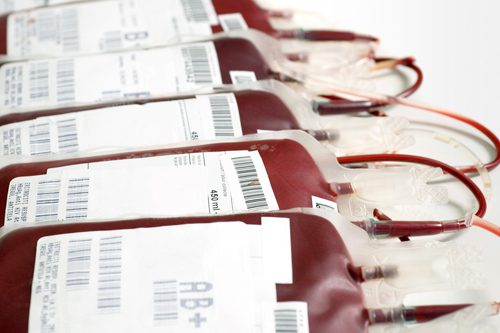
Transfusions remain a backbone of modern care – and a system-wide responsibility
Every two seconds, someone in the U.S. needs a blood transfusion as part of treatment for illness, trauma, or surgery. From emergency rooms to oncology units, the country’s transfusion system relies on steady community donation, rigorous regulation, and disciplined clinical practice to ensure patients get the right component at the right time.

“Some people, like cancer patients receiving chemotherapy, may need regular transfusions over many months, while a patient suffering from a severe traumatic injury, such as a car accident or gunshot wound, may need dozens of units of blood urgently,” says Dr. Elizabeth Stone, assistant attending physician in transfusion medicine and cellular therapy at NewYork-Presbyterian/Columbia University Irving Medical Center. “There’s no substitute for blood, and if we don’t have a constant supply from healthy donors, patients may not get the lifesaving treatments they need.”
When and why patients need blood
Blood transfusion is a core hospital therapy used to replace either whole blood or specific blood components that are below safe levels in the body. It is prescribed, much like a drug, when the expected benefit clearly outweighs the risk and when other options, such as iron therapy or medications that stimulate blood production, are not sufficient.
- Severe anemia that reduces oxygen delivery to tissues and leaves patients short of breath, dizzy, or at risk of organ damage.
- Cancer treatment or other immunosuppression requiring platelet support to prevent dangerous bleeding.
- Clotting disorders or preoperative management requiring plasma to restore coagulation factors before or after surgery.
- Rapid blood loss from trauma, childbirth, or critical illness necessitating immediate replacement to maintain blood pressure and organ perfusion.
| Blood component | Primary purpose | Typical clinical settings | Key safety considerations |
|---|---|---|---|
| Red blood cells | Restore oxygen-carrying capacity | Anemia, surgical blood loss, trauma | Blood type and antibody compatibility are verified before transfusion; volumes tailored to the patient’s weight and heart function. |
| Plasma | Replace clotting factors | Coagulopathy, liver disease, urgent reversal of certain anticoagulants | Compatibility checks to help prevent reactions; careful volume management to avoid fluid overload. |
| Platelets | Prevent or treat bleeding due to low platelet count or dysfunction | Chemotherapy, bone marrow disorders, major procedures | Short shelf life; bacterial risk mitigated with testing or pathogen-reduction technologies. |
| Cryoprecipitate | Provide concentrated fibrinogen and selected clotting factors | Hypofibrinogenemia, massive bleeding protocols | Used in targeted doses with compatibility confirmation and lab monitoring. |
| Whole blood (select trauma use) | Simultaneous replacement of cells and plasma | Prehospital or early trauma resuscitation in some systems | Type-specific or low‑titer group O programs with strict protocols and oversight. |
What patients typically experience
“During a scheduled transfusion, it can take up to four hours to transfuse a unit of blood, which is roughly the equivalent to 12 ounces. We don’t want to give blood transfusions quickly, especially if a patient has cardiac disease or kidney disease, because they might not be able to handle that additional volume and develop a complication called circulatory overload. During the first 15 minutes, we transfuse very slowly and monitor the patient for a transfusion reaction. A patient’s vitals are taken pre-transfusion, at the 15-minute mark, and then periodically during the transfusion. Most patients have no problem tolerating a transfusion and feel well during and after the procedure.”
“In severe trauma with acute blood loss, an entire unit of blood can be transfused in a minute or two, but in this case the need for life-saving intervention outweighs the risk of a reaction, and the patient will be carefully monitored until the patient is stabilized.”
“The process should not be painful at all. A needle is used to insert a tiny tube into the patient’s vein, which may feel uncomfortable at first. Patients may also feel a little bit cold during the procedure, because units of red blood cells are stored in a refrigerator. But it should not be painful whatsoever. If a patient is having pain or feels anything unusual during a transfusion, they should notify their care team immediately.”
Safety architecture: how risks are reduced across the system
“Blood transfusion is very safe, especially in this country, where it is highly regulated.” Dr. Stone notes, “Not only are blood donors screened by a questionnaire, but every single donation gets tested for many different infectious diseases.” In the United States, the Food and Drug Administration sets and enforces the core safety rules for blood collection and use through its blood and blood products regulatory framework, which requires individual donor assessment, standardized testing, and traceability from donor to recipient.
- Regulatory oversight
- Licensing and inspection of blood establishments, with quality systems requirements and mandatory reporting of certain adverse events.
- National standards and accreditation supporting consistent practice, documentation, and the ability to trace each unit if a safety issue arises.
- Compatibility safeguards
- ABO and Rh typing and antibody screening for patients with prior transfusion or pregnancy to reduce the risk of immune reactions.
- Unit‑to‑patient identity checks and barcoding at the bedside to prevent mis‑matches.
- Type O negative blood reserved for emergencies when crossmatching is not immediately feasible, with rapid confirmation once the patient is stabilized.
- Hemovigilance and continuous improvement
- Monitoring of reactions and near‑miss events to refine protocols, technology, and training across hospitals and blood centers.
- Targeted use of pathogen‑reduced platelets and bacterial mitigation strategies, guided by evolving national and international recommendations.
Blood transfusion is very safe, especially in this country, where it is highly regulated.
Dr. Elizabeth Stone
What can go wrong – and how clinicians respond
“The most common transfusion side effects are mild allergic reactions, such as hives and itching, which can be treated with allergy medications. Patients can also develop a fever due to some residual white blood cells in units of blood, or experience chills and some shaking during the procedure. If a patient gets a fever, the transfusion is stopped and we do an additional workup to make sure the patient is not having a more serious reaction.”
“Serious reactions are very rare but can occur if a patient receives blood that is incompatible with their blood type.” Clinicians further guard against delayed reactions by reviewing transfusion histories and performing additional antigen matching for those with complex antibody profiles. In most hospitals, these steps are reinforced by institutional transfusion committees that review safety data and update local policies.
- Common, typically mild effects
- Allergic symptoms such as hives and itching.
- Fever, chills, or rigors during infusion.
- Volume‑related issues such as transfusion‑associated circulatory overload in susceptible patients.
- Warning signs of delayed hemolytic reaction (days to weeks after transfusion)
- Dark-colored urine.
- Yellowing eyes.
- Fevers.
- Back pain.
The system behind the bag: workforce, logistics, and supply
Beyond the bedside, every unit of blood reflects decisions made by hospital leaders, public agencies, and regional blood operators about staffing, infrastructure, and risk tolerance. That system is continuously balancing today’s demand with tomorrow’s uncertainty.
- Inventory dynamics
- Day‑to‑day variability in donations creates pressure to maintain hospital stocks while minimizing waste from expired units.
- Type O negative units are in persistent demand for emergencies and are often the first to run short during national or regional shortages.
- Platelets have a short shelf life, typically under a week, requiring constant replenishment and careful coordination between hospitals and blood centers.
- Operational dependencies
- Specialist workforce in collection centers, testing labs, and hospital blood banks, many of whom operate 24/7.
- Cold‑chain transport and regional sharing to balance surges in need, including mutual-aid arrangements during large-scale incidents.
- Disaster preparedness to maintain supply during storms, outbreaks, or mass‑casualty events, often coordinated with state and local emergency management plans.
- Equity and access
- Diverse donor pools help match patients with rare blood types and support conditions such as sickle cell disease that may require extended antigen matching.
- Rural and smaller hospitals depend on coordinated delivery networks for timely resupply and on policy decisions about funding and regionalization of services.
Policy levers that strengthen patient safety and readiness
Because transfusion touches almost every part of the health system, decisions taken by regulators, hospital boards, and health departments can directly shape what happens at the bedside.
- Standardized massive transfusion protocols for trauma and obstetric hemorrhage, with pre-defined ratios of red cells, plasma, and platelets and clear activation criteria.
- Minimum on‑hand inventory targets with real‑time dashboards for regional coordination, enabling hospitals to share stock in response to local spikes in demand.
- Expanded use of validated technologies, including bacterial detection and pathogen reduction for platelets, as they become affordable and backed by robust evidence.
- Continuous training and drills for bedside identification and verification steps, reinforced by institutional policies that make double-checks a non-negotiable standard of care.
Why donation still determines what’s possible
From elective procedures to life‑saving resuscitation, clinical teams can only act as fast as the supply allows. “There’s no substitute for blood, and if we don’t have a constant supply from healthy donors, patients may not get the lifesaving treatments they need.” Even with strong regulation, advanced testing, and well-drilled protocols, the system’s resilience ultimately depends on individuals who are willing and able to donate on a regular basis. Sustained participation by eligible donors keeps the system ready for the next emergency and the next planned treatment alike. For more on eligibility and why it matters, see this overview of community blood donation at the New York Blood Center.
Worth a look
