
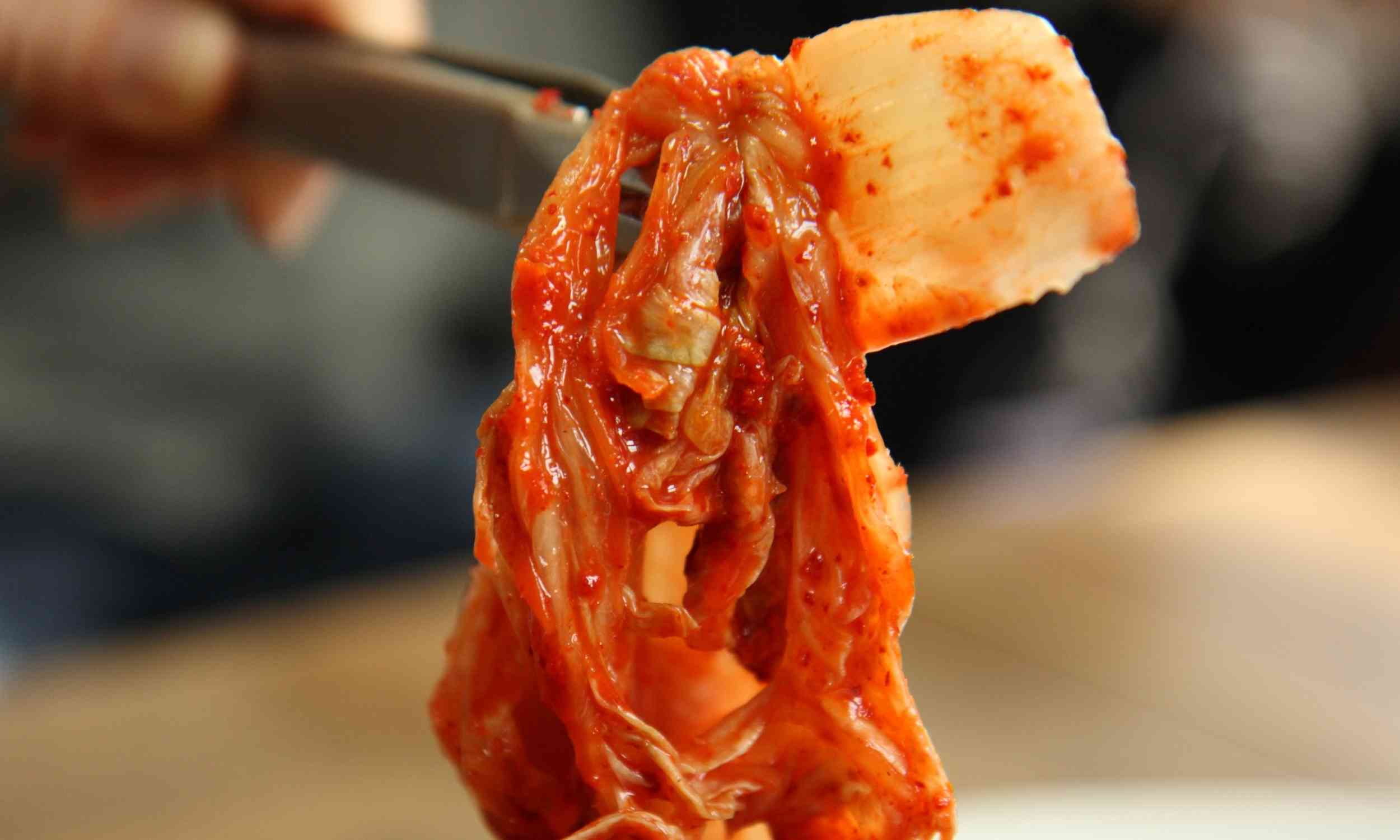
Fermented-food microbes show promise as gut-level “catchers” of nanoplastics
A bacterium originally isolated from traditional kimchi has demonstrated an ability to latch onto nanoplastics in gut-like conditions and help move them out of the body. In controlled lab systems that simulate the human intestine, the strain held onto particles that other bacteria largely released. In germ-free mice, animals receiving the same microbe passed more than twice as many nanoplastic particles in their feces as untreated controls, a signal that interception can occur before particles cross into tissues. The findings add to early evidence that microbes widely used in fermented foods and probiotics could be engineered or selected as a biological “filter” for ingested plastics, if safety and efficacy are confirmed in people.
What the experiments revealed
- Mechanism: The kimchi-derived bacterium used biosorption, a surface binding process that traps pollutants on the cell exterior before they move deeper into tissue.
- Pre-digestion binding: In a simplified pre-digestion phase, the strain bound 87% of test particles, slightly ahead of a comparison strain at 85%, indicating strong affinity for the nanoplastics used in the study.
- Simulated intestinal fluid: Under shifting gut-like conditions meant to mimic the small intestine, the strain retained more than half of particles, whereas a comparison bacterium lost most of its grip, suggesting better persistence through digestion.
- Robustness: Performance across varying temperature, acidity, and particle loads suggests the effect is durable enough to justify animal and, eventually, tightly monitored human testing.
Signals from germ-free mice
- Model choice: Germ-free mice were used to minimize interference from existing gut microbes and to isolate the effect of the introduced strain.
- Outcome: Treated mice excreted more than double the amount of nanoplastics compared with controls, consistent with intestinal capture and clearance rather than absorption into tissues.
- Scope: Results demonstrate feasibility in a living system but do not establish a human health effect, changes in symptoms, or reductions in disease risk.
Why particle size and exposure pathways matter
- Translocation potential: Nanoplastics-smaller than roughly 0.00004 inch-can sometimes cross biological barriers such as the gut wall, blood-brain barrier, or placenta in experimental settings. That possibility elevates interest in intercepting them at the intestinal surface.
- Tissue distribution: Human autopsy work has reported higher plastic concentrations in brain samples than in liver or kidney samples, though such findings do not, by themselves, prove harm or establish a safe exposure level.
- Everyday exposure: Tiny plastic fragments enter food, water, and air as larger materials degrade, making the intestine a primary site for first contact with the body’s defenses and a logical target for interventions that could reduce internal dose.
Policy and oversight touchpoints
- Food-contact safety: In the United States, evaluation of food-contact substances, including certain packaging and processing aids, falls under the authority of the U.S. Food and Drug Administration, guided by the Federal Food, Drug, and Cosmetic Act and implementing rules such as its food additive regulations. Any microbial product proposed for food use or supplementation would need to navigate these or analogous pathways, including demonstration of strain-level safety.
- Drinking water monitoring: Utilities and public agencies have begun building methods to detect microplastic particles in finished water, and some regulators are exploring monitoring frameworks for smaller particles. Health-based thresholds specific to nanoplastics, however, remain under development, leaving governments to balance precaution with evolving evidence.
- Chemicals regulation: The European Union has adopted restrictions on intentionally added microplastics under chemicals legislation, reflecting a prevention-first approach in consumer and industrial applications. Those rules mainly target sources of pollution, while studies like this one explore downstream, health-facing mitigation strategies.
- Global health posture: International health bodies have called for better measurement of micro- and nanoplastic exposure, exposure reduction strategies where feasible, and research that clarifies dose-response relationships and vulnerable populations before any clinical use of microbial “plastic catchers.”
From lab finding to a public‑health tool
Taken together, the in vitro and animal data position the kimchi-derived strain as an early-stage candidate for translational research rather than a ready-made supplement. The evidence to date maps out a potential path from bench science to policy-relevant interventions.
| Evidence type | Setting | Population/Model | Key outcome | What it demonstrates |
|---|---|---|---|---|
| In vitro gut simulation | Intestinal fluid model | Kimchi-derived bacterium with polystyrene nanoplastics | 87% binding prior to digestion; >50% retention under simulated gut conditions | Stable biosorption across changing pH, temperature, and particle loads, indicating the mechanism can withstand some features of digestion. |
| In vivo proof-of-concept | Germ-free mouse study | Male and female mice without resident microbiota | >2x nanoplastic particles in feces vs. untreated controls | Intercept-and-eliminate mechanism can operate in living animals and measurably change elimination patterns. |
Health-system questions now on the table
- Clinical endpoints: Beyond particle counts in stool, future trials will need validated biomarkers that capture absorption, inflammation, organ distribution, and any shifts in gut ecology, alongside conventional safety and tolerability measures.
- Product pathway: Depending on formulation and intended claims, a candidate could be regulated as a food ingredient, a dietary supplement, or-if positioned to treat or prevent disease-a biological or drug product. Manufacturing, stability, dose, and strain specificity would determine feasibility and cost.
- Surveillance: If human effects are confirmed, wastewater and stool-based monitoring could offer noninvasive ways to track exposure reduction at population scale, informing environmental-health surveillance systems and municipal spending priorities.
- Cost and access: Ensuring that validated, strain-specific interventions do not widen nutrition or environmental health inequities will be a core policy consideration, particularly if future products are marketed as premium add-ons rather than integrated into staple foods.
Important limits to keep in view
- Polymer scope: Only polystyrene was tested; binding may differ for polyethylene, polypropylene, PET, and other common polymers, and those differences could narrow the real-world impact.
- Digestive complexity: Real-world digestion involves mixed meals, enzymes, bile, mucus, medications, and diverse resident microbes that could alter performance-either enhancing or competing with the tested strain.
- Duration: Longer studies are needed to evaluate sustained use, gut microbiome stability, and whether binding changes downstream absorption, immune responses, or toxin transport over months or years.
- Translatability: Mouse results are hypothesis-generating and do not establish human benefit. Regulators are likely to require multiple human trials before endorsing any health claims related to micro- or nanoplastics.
Statement from the research team
“Plastic pollution is increasingly recognized not only as an environmental issue but also as a public health concern. Our findings suggest that microorganisms derived from traditional fermented foods could represent a new biological approach to address this emerging challenge,” Lee said, emphasizing that the work remains at a proof-of-concept stage.
Institutional context and publication
The work was led at the World Institute of Kimchi, drawing on a large pool of lactic acid bacteria commonly found in fermented foods and already familiar to food-safety authorities. The study appears in the peer‑reviewed journal Bioresource Technology and is part of a broader push to understand how diet, industrial pollution, and gut microbes intersect in shaping long-term health risks.
Worth a look
