
HAWORTH, WEST YORKSHIRE – A four-mile trail running from the village of Haworth to Top Withens has long drawn readers seeking the view said to have inspired the setting for Emily Brontë’s 1847 novel Wuthering Heights. The moorland route is “well trodden”, with footprints pressed into boggy ground, and the surrounding moors moving in waves of brown bracken broken by a lone tree.
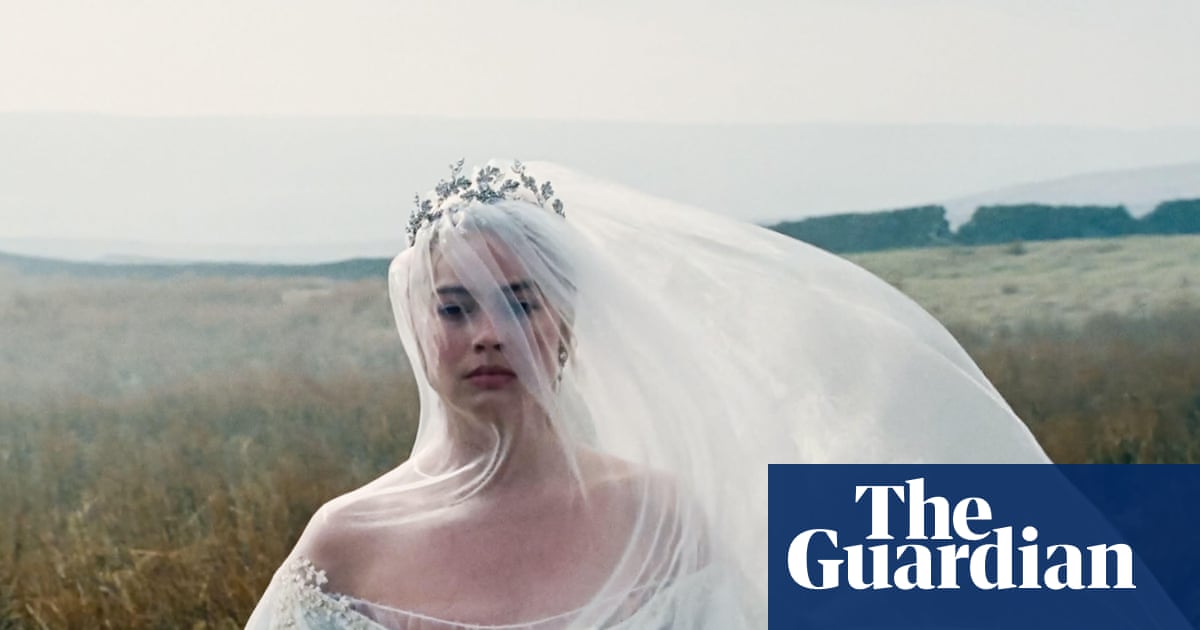
Now the area’s cultural infrastructure – from museums and National Trust properties to hotels, pubs and local government – is preparing for another cycle of screen-driven tourism as Emerald Fennell’s new film of Wuthering Heights arrives, starring Margot Robbie and Jacob Elordi. In Haworth and across filming locations in the Yorkshire Dales national park, operators expect increased visitor traffic tied not only to the release itself, but also to the wider market for screen-adjacent experiences: exhibitions, on-site screenings, themed retail and premium “stay packages” built around recognisable titles.
The early signals are already visible in programming demand at the Brontë Parsonage, while nearby heritage properties are formalising film-and-literature tie-ins to capture attention in a controlled, ticketed setting – a model that has become increasingly important as UK cultural institutions balance public access with the funding and governance requirements set out by bodies such as Arts Council England and the Department for Culture, Media and Sport.
The local mood in Haworth, by contrast, is one of routine. “We’re used to crowds,” said Craig Verity, landlord at the Kings Arms, a pub at the top of Haworth’s steep cobbled Main Street, close to the parsonage where the Brontës were raised. On the pub wall, a board promotes Bridgehouse cask ales named Charlotte, Anne, Emily and Branwell, reflecting a commercial ecosystem in which Brontë associations have been monetised for decades.
That ecosystem extends through Haworth’s surrounding streets, where businesses include the Brontë Hotel and the Brontë Bar and Restaurant, alongside a more tenuous Brontë Balti.
Museums turn adaptations into year-round programming
The Brontë Parsonage – the former home where the sisters lived and wrote, and where Emily and Charlotte died – operates as a museum holding artefacts, personal items and manuscripts, and runs events including workshops, talks and screenings of book adaptations. The museum draws around 75,000 visitors annually.
Demand for adaptation screenings is already quantifiable ahead of the new film’s release: the Parsonage’s screening of the 1992 Wuthering Heights, planned for 12 February, has sold out.
For cultural institutions, on-site screenings function as more than audience engagement. They can shift visitor activity from unpriced, high-footfall outdoor sites toward ticketed, capacity-managed spaces, while deepening the “reason to visit” beyond a single photo opportunity. They also provide clear programming hooks for local marketing partnerships without requiring institutions to claim any official connection to a production beyond verifiable exhibition, archival or filming histories.
For publicly funded museums, this kind of programming sits within a formal policy environment. National museums and many regional organisations operate under UK government indemnity and collection management guidelines, which shape how they handle loans, insurance and access – and make predictable, ticketed events more attractive than unmanaged surges on fragile outdoor sites.
National Trust properties package film history with physical objects
In the same corridor of West Yorkshire, East Riddlesden Hall – a 17th-century National Trust property around five miles from Haworth – is using the moment to foreground its own screen credentials. Scenes from the 1992 film, starring Ralph Fiennes and Juliet Binoche, were filmed at East Riddlesden Hall. The building’s exterior also featured in the 2009 mini-series as Wuthering Heights itself, and in the now-lost 1920 silent version.
The long arc of adaptations also underlines how production economics can separate story settings from filming locations: the 1939 film starring Laurence Olivier and Merle Oberon was shot in California and on set in Hollywood.
National Trust staff emphasise that early film usage is sometimes documented only indirectly. “We only know about the use of the property because of a January 1921 article in the Shipley Times and Express,” said Sophie Fawcett, a senior marketing and communications officer with the National Trust.
Coinciding with the release of Fennell’s adaptation, East Riddlesden Hall will stage a Lights, Camera, Brontë exhibition. Among the objects highlighted is the “vast oak dresser” thought to have inspired the piece described in the opening pages of the novel. The dresser originally came from Ponden Hall – about an hour’s walk from Haworth and now a bed and breakfast – where the sisters were frequent visitors.
Ponden Hall itself is linked to specific imagery remembered by readers: one room features a box bed and window likely to have inspired the scene in which the ghost of Cathy appears to a terrified Lockwood.
For heritage operators, this is a familiar model: connecting a recognisable IP property to artefacts and rooms that can be visited, photographed and interpreted on site. It creates structured visitor flows, supports retail (from guidebooks to facsimile editions), and provides the kind of “proof of place” that audiences increasingly seek when moving between screen stories and real-world locations.
Hospitality businesses weigh authenticity against branding
Film production activity also creates direct, short-term demand for accommodation and catering – and a longer tail of tourism inquiries that can be converted into higher-margin packages.
For the new film, the cast stayed at Simonstone Hall, a country house hotel in the Yorkshire Dales. The hotel sits a 20-minute drive from Swaledale, where many of the scenes were shot.
Owner Jake Dinsdale described a low-friction shoot stay and stressed that the property kept its normal trading posture. “They were lovely people, and brilliantly undemanding,” he said, adding that Robbie had since returned for a stay with her husband. “Although they’d booked out all 20 rooms, our restaurant was still open to the public, and the cast enjoyed being around the firepit to toast s’mores, or sitting down to a roast dinner or afternoon tea.”
Dinsdale said he is not betting the business on a single title’s tourism afterglow. “I don’t know what the film will do,” he said. “It could all be a flash in the pan, and that’s fine. If it sticks, that’s also great. What I do know is that I won’t be renaming any rooms as ‘The Jacob Elordi Room’ or ‘The Heathcliff Room’.
“Commercial naffness isn’t for us – I’ll just be happy if guests understand why so many people love the Yorkshire Dales.”
Even with that posture, Simonstone Hall is actively packaging the connection for visitors who want a curated experience. The hotel is offering a Wuthering Heights Romantic Getaway package until 13 March: two nights for £738 per couple, including champagne on arrival, candlelit dinners, bedtime brandy and truffles, leisurely breakfasts and late checkout. Copies of the novel are also available in the gift shop.
The offer illustrates a common hospitality strategy around high-recognition screen titles: avoid claiming official endorsement while creating time-limited add-ons that can be operationally controlled (inventory, dining capacity, staffing) and priced above baseline room rates. In rural areas, where weather and seasonality can complicate forecasting, pre-defined packages can also reduce demand volatility.
Local government plans for crowd control, safety, and access
In North Yorkshire, public agencies are preparing for visitor growth that can follow film and television exposure, particularly when locations are outdoors and dispersed across large areas.
“The area has featured in so many films and series; we’re experienced in managing that. Post-Covid, we were already seeing more younger people getting outdoors and exploring the county, and this demographic will doubtless grow as the film showcases the area’s beauty and authenticity.
“We’ll have to wait until the release to see whether there’s some iconic shot that people want to replicate. If there is, hopefully it will be somewhere like Aysgarth Falls, which has all of the necessary infrastructure in place – otherwise, we’ll need to suggest alternatives that don’t make mountain rescue unhappy.”
The statement from Tony Watson, head of economy and tourism for North Yorkshire council, points to a practical constraint often overlooked in culture coverage: when “set-jetting” moves from cities to rural terrain, the limiting factors are rarely enthusiasm or marketing reach. They are toilets, parking, signage, trail conditions, emergency access and staffing – and the reputational risk of visitors being funnelled into fragile sites without support facilities.
In Haworth, residents and operators are treating the new moment as a continuation rather than a disruption. Local Jack Greatrex framed the connection as cultural inheritance rather than novelty: “The Brontë sisters shaped this village for future generations, and for lovers of landscape and literature,” he said. “This film could mean that they continue to do so.”
Watson also stressed readiness rather than surprise: “I’m the luckiest head of tourism imaginable – the film is going to do my job for me.”
For local authorities, that readiness now extends to formal visitor management plans. Councils are expected to align tourism growth with statutory duties on public safety, environmental protection and rural access under frameworks such as the Countryside and Rights of Way Act, which codify how England’s national parks and open moorland can be used and protected.
For entertainment businesses, the implications are structural. A new adaptation can function as a demand shock not only for cinemas and streaming services, but for museums, heritage properties, hospitality and local government – sectors with different lead times, procurement constraints and duty-of-care obligations. The Brontë corridor’s response shows how those sectors increasingly build formal programming and managed visitor experiences around screen titles, rather than relying on informal footfall alone.
The Brontë Parsonage Museum’s screening of the 1992 Wuthering Heights, scheduled for 12 February, is sold out.
Keep reading
