
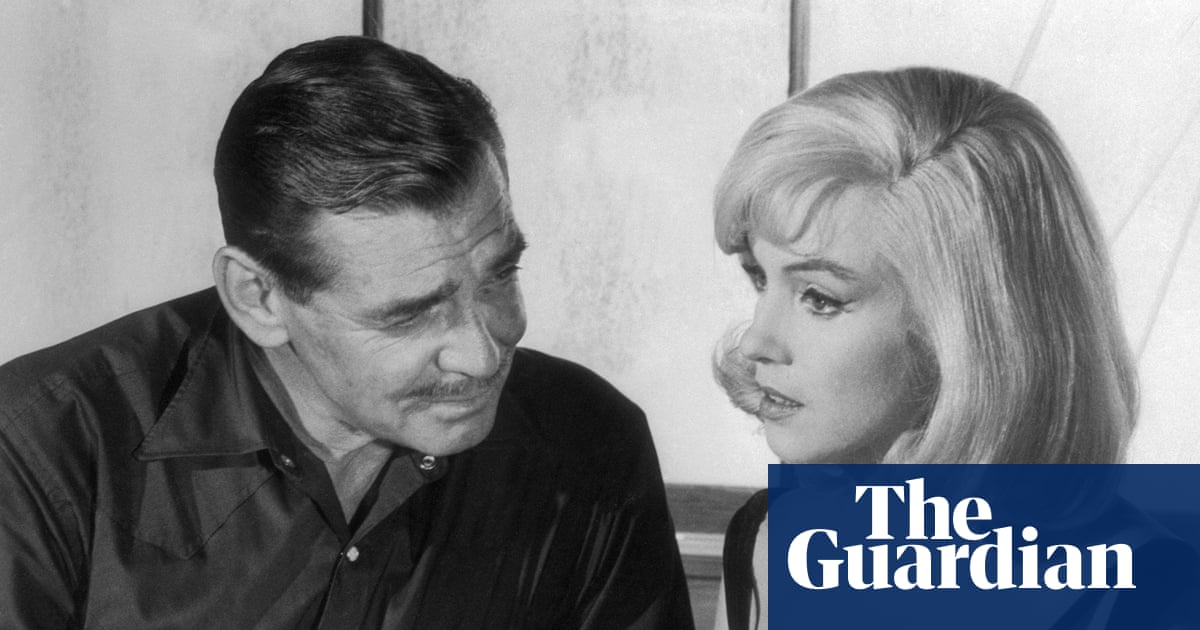
LOS ANGELES – Marilyn Monroe, whose century-long legacy as a cinematic icon continues to influence global media, left a definitive professional marker in the 1961 production The Misfits. As her final completed feature film, the project serves as a record of an actor attempting to transition beyond the stylized archetypes of her earlier career.
The production represents a critical intersection of industry transition and personal instability, pairing a director known for depicting self-destructive characters with a lead ensemble facing severe substance abuse issues. For Monroe, the film functioned as a pivot toward dramatic complexity, distancing her from the comedic precision of Gentlemen Prefer Blondes and Some Like It Hot. Released at the dawn of the 1960s, it also arrived just as the old studio system was loosening its grip under evolving labor rules and content standards such as the then-dominant Motion Picture Production Code, a regulatory framework that had long constrained how sexuality, addiction and moral ambiguity could be portrayed on screen.
Production and Narrative Structure
Directed by John Huston, The Misfits utilizes a desolate Nevada setting and black-and-white cinematography to establish a tone of finality and moral exhaustion. Shot largely on location outside Reno, the film departs from the gloss of Monroe’s earlier studio musicals, opting instead for a near-documentary starkness that underlines the characters’ economic and emotional precarity.
The narrative follows Roslyn, an out-of-towner who obtains a quickie divorce in Reno from an absentee husband, played by Kevin McCarthy – a plot point that draws on Nevada’s mid‑20th‑century status as a hub for expedited divorces under its liberal residency and dissolution laws, which made the state a magnet for Hollywood and political elites alike. Roslyn subsequently integrates with a group of local marginalized figures, including an aging cowpoke, Gay Langland, played by Clark Gable, and a bronco rider, Perce Howland, played by Montgomery Clift. The plot culminates in a search for the region’s last remaining mustangs to be sold for dog food, mirroring the characters’ own status as relics of a passing era and echoing contemporary debates over land use, wildlife protection and the human costs of extractive policy decisions in the American West.
Cast Dynamics and Industry Impact
The casting of Gable, Monroe, and Clift paired three generational talents whose professional and personal lives were marked by volatility and whose contracts still reflected the final years of Hollywood’s vertically integrated power structure. Huston’s direction leveraged this instability to heighten the film’s atmosphere of gloom, often allowing extended takes that leave the actors visibly straining against both their characters’ limits and their own health.
Industry records indicate the severe toll of the production period. Clark Gable died of a heart attack 12 days after filming concluded, a fact that retroactively infuses his performance as Gay with a valedictory charge. While Montgomery Clift completed one subsequent film, the vulnerability displayed in The Misfits-specifically the phone booth scene-is cited by historians and acting teachers as a peak in his dramatic output and a reference point in discussions of how Method performance reshaped expectations of male emotional range on screen.
The off‑screen turmoil also sharpened debates about on‑set safety, scheduling and duty of care in an era when studios, insurers and guilds were only beginning to codify protections around long working days, stunt work and substance dependency. Those frictions, visible in studio correspondence at the time, anticipated many of the labor‑rights and risk‑management questions that continue to shape contract negotiations between creative talent, producers and regulators today.
Scripting and The Method
The screenplay was written by Arthur Miller, who was Monroe’s husband at the time and an already canonised American playwright. Miller described the role of Roslyn as a “gift” for Monroe, though the character-a woman seeking an exit from a miserable marriage-closely mirrored the couple’s own deteriorating relationship. The two split shortly after production ended, turning the film into an unintended chronicle of a collapsing partnership between one of the century’s most scrutinized couples.
Monroe utilized the role to demonstrate her training in Method acting, which she had honed at New York’s Actors Studio and in classes that challenged the more controlled performance styles favored under earlier studio regimes. Rather than relying on the “object of desire” image prevalent in her previous work, she portrayed Roslyn as a contradiction: simultaneously impulsive and timid, innocent and world-weary. This approach indicated a shift toward a more rigorous, interrogative style of performance and has since informed how casting directors, film schools and actors reassess the scope of her craft beyond the caricature of a “dumb blonde.”
Career Termination and Distribution
The Misfits was not intended to be Monroe’s final project. She was scheduled to return to the production of the romantic comedy Something’s Got to Give, a Fox vehicle that itself became a cautionary case study in studio risk appetite, insurance exposure and the economics of star‑driven productions when shooting stalls. However, the project remained unfinished following her death in the summer of 1962. Monroe was found dead in her home from a barbiturate overdose at the age of 36, a loss that intensified scrutiny of Hollywood’s informal systems for managing mental health, prescription drug use and the pressures of image maintenance-areas that, decades later, would feed into more structured industry guidelines and union-backed support mechanisms.
The transition from the comedic tone of her early work to the dramatic depth of The Misfits suggested a planned evolution in her professional trajectory that was terminated by her death. In the decades since, the film has been folded into broader conversations about how American cultural institutions remember women whose public personae were heavily manufactured, and how policy debates on worker protections, representation and harassment are increasingly informed by revisiting the legacies of stars like Monroe.
The Misfits is currently available for rent or purchase via Apple TV in the United States, United Kingdom, and Australia, and is available for streaming on Prime Video in the United States. In an era when back-catalogue access is shaped by studio licensing strategies and national media rules, its continued availability on major platforms keeps Monroe’s final completed performance within easy reach of new audiences and of educators, archivists and policymakers who still look to Hollywood’s mid‑century output when assessing the long tail of American soft power and cultural regulation.
Keep reading
