
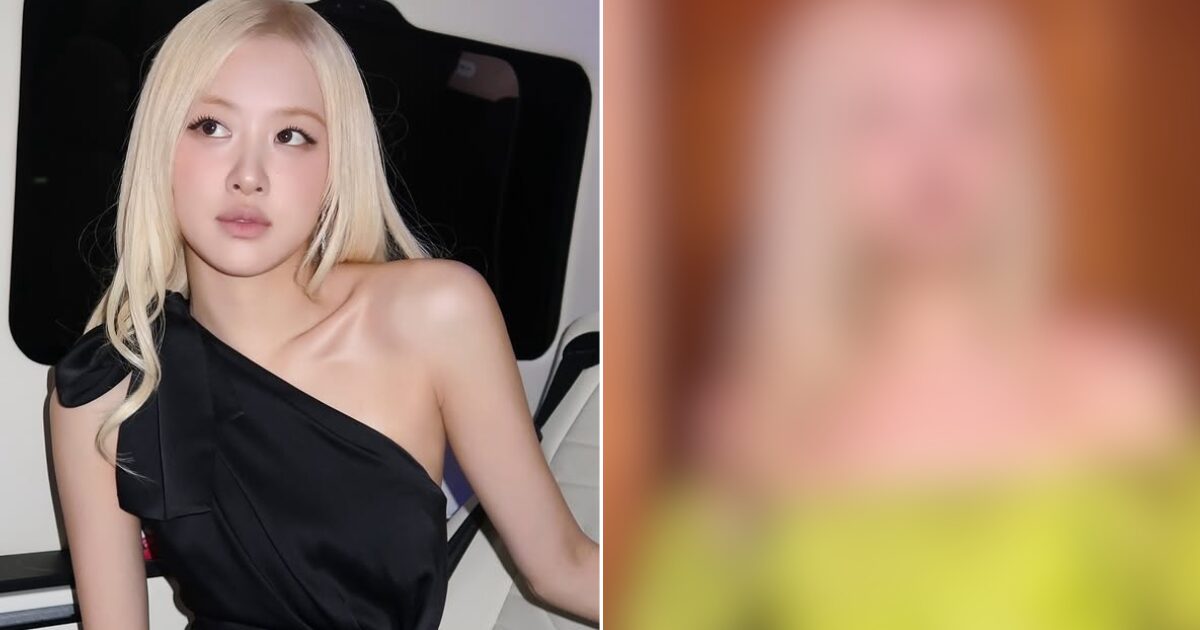
PARIS – BLACKPINK’s Rosé, a member of the South Korean group BLACKPINK, attended a Saint Laurent (YSL) runway presentation during Paris Fashion Week on March 3, 2026 (local time), prompting a wave of scrutiny and debate about her outfit across social media.
Posts about the appearance circulated widely on X, where entertainment and fashion-focused accounts amplified images and short reactions in real time. In a March 3, 2026 post, one account wrote: “#ROSÉ is attending the @YSL WW26 show at Paris Fashion Week.”
#ROSÉ is attending the @YSL WW26 show at Paris Fashion Week pic.twitter.com/Qn26mHq2cq
– XFashion (@XFashion) March 3, 2026
ELLE Korea posted about Rosé on March 4, 2026, while another account framed the look in overtly complimentary terms on March 3, 2026.
생로랑의 오프 숄더 드레스를 완벽하게 소화한 로제의 빛나는 순간! pic.twitter.com/6YDdj4UmrP
– ELLE Korea 엘르 (@ELLE_KOREA) March 4, 2026
ROSÉ looks ethereally beautiful, serving full Barbie beauty at the Saint Laurent fashion show. pic.twitter.com/mqEY2hi4kh
– Pop Core (@TheePopCore) March 3, 2026
At the same time, Rosé’s styling for the show drew sharp criticism from other users, with the debate expanding beyond the outfit itself to broader arguments about responsibility-whether the reaction should be aimed at brand styling choices or the celebrity wearing the look. The intensity and frequency of the criticism reflected a recurring dynamic of modern fashion-week publicity: a runway appearance is no longer confined to photographers and invited guests, but immediately becomes a platform-by-platform performance subject to rapid judgment and reframing in a global, largely unmoderated comment environment.
How a runway appearance becomes an industry-facing marketing asset-and a reputational risk
Paris Fashion Week is a global trade and media moment for luxury brands, built around runway presentations that convert creative direction into commercial influence: wholesale interest, editorial positioning, social reach, and celebrity-driven exposure. The event sits within the broader ecosystem overseen by the French fashion federation and operates under the same speech and expression protections set out in instruments such as the European Convention on Human Rights, which shape how far authorities can or cannot intervene in online commentary around cultural events.
For talent teams and labels, these invitations can serve as high-value visibility without the release-cycle demands of film or music promotion. When the attendee is a globally recognized artist like Rosé-whose solo work and group activities with BLACKPINK have already secured major international accolades and brand partnerships-the appearance functions as a soft-power asset for both the celebrity and the house, informing future casting, endorsements, and even diplomatic-style cultural programs run by national tourism and culture agencies.
That reach comes with a structural downside. The same social distribution that helps fashion houses scale awareness-particularly through short-form video, wire-like reposting, and algorithmic discovery on platforms that are themselves subject to evolving content-moderation rules, including the European Union’s Digital Services Act-also speeds up negative feedback loops. A look can be assessed in seconds, cropped into memes, or attached to broader narratives about taste, brand fit, or celebrity image. In Rosé’s case, the posts embedded below show that the conversation quickly moved from a standard “best dressed/worst dressed” debate into pointed criticism aimed at both the garment and the overall presentation.
Several responses shared on March 3, 2026 targeted the styling directly and, in some cases, the brand itself. One user wrote: “She is beautiful, but the dress is extremely ugly. Sorry.” Another wrote: “YSL is the worst clothing brand out there
There I said it….always giving tacky nd unflattering.”
Go give us nothing as usual https://t.co/TVAcBwDXbJ pic.twitter.com/oRYrn297vq
– 🎩 (@Nightanglesin) March 3, 2026
She is beautiful, but the dress is extremely ugly. Sorry
– OT8 IT’S FATE👅 (@im47734) March 3, 2026
YSL is the worst clothing brand out there
There I said it….always giving tacky nd unflattering– Savy✨ (@Savy_rants) March 3, 2026
girl what is this… https://t.co/EWUF7Uyuzs
– ‘Cmila (@joyningbp) March 3, 2026
Other replies showed the way online criticism can blur into arguments about a celebrity’s perceived ability to “sell” luxury styling-an especially sensitive area for global pop stars whose public image is managed across multiple industries at once (music, endorsements, editorial, and live appearances). One post stated: “I start to believe the problem is on her not in the outfits.” Another suggested the garments themselves could work “only if they styled it nicely????” In practice, this kind of commentary can influence how talent contracts, exclusivity clauses, and future seating plans at fashion weeks are evaluated inside brands and agencies.
I start to believe the problem is on her not in the outfits https://t.co/xRMbp2HNYk
– 모찌민🐥✨ (@dawnl00v) March 3, 2026
Girl why they always do this…?
This dress so good, it will look fab on her only if they styled it nicely????– Gauchi (@yotyoiyevfvrv) March 3, 2026
Boring https://t.co/438zTh79KA
– Jennie rubies (@jennieyad_980) March 3, 2026
The business mechanics behind styling criticism
Public reaction to a celebrity’s fashion-week appearance is often framed as personal taste, but in practice it can intersect with measurable business objectives: brand positioning, press volume, social engagement, and the maintenance of a consistent image across markets. In the luxury sector, these moments are not purely artistic; they are coordinated outputs involving brand communications, styling teams, and talent management, all operating within advertising, consumer-protection, and platform-governance rules that increasingly require companies to monitor how their campaigns land online.
The posts surrounding Rosé’s March 3, 2026 appearance also demonstrate how quickly conversation turns into a referendum on a fashion house’s broader aesthetic. That matters for brands because visibility is not neutral: the same “earned media” that pushes a runway show into global feeds can also attach a negative sentiment tag to the label’s choices, even when the primary driver is a single look. For internal decision-makers-from creative directors to communications leads and investor relations teams-these spikes of reaction are now treated as data points that may shape future collections and casting.
For celebrity talent, the reputational exposure can be double-edged. Fashion-week appearances can broaden reach beyond music audiences and extend a public profile into editorial and luxury marketing ecosystems. But when reaction becomes personally directed-as some of the March 3, 2026 posts suggest-the cost can be a distraction from core creative work and a potential complication for brand partners navigating public perception, especially in jurisdictions where regulators and lawmakers are scrutinizing the mental-health impact of high-volume online criticism on public figures and the responsibilities of platforms that host it.

BLACKPINK
</div>As of March 4, 2026, the publicly visible record in the cited material remains Rosé’s March 3, 2026 attendance at the Saint Laurent show during Paris Fashion Week and the subsequent online reaction reflected in posts dated March 3-4, 2026. Neither Saint Laurent nor Rosé’s representatives had issued a formal statement on the styling debate in the material reviewed at the time of publication, leaving the narrative largely shaped by real-time user commentary and the editorial framing of fashion and entertainment outlets.
- Interactive Storytelling and Immersive Audio: How Next-Gen Gaming Engines Are Transforming Contemporary Television Production
- Independent Cinema’s New Distribution Paradigms: How Direct-to-Consumer Micro-Premiers Are Shifting Box Office Dynamics
- Tens of thousands expected in Paris for student protests – RTE.ie (archyde.com)
