
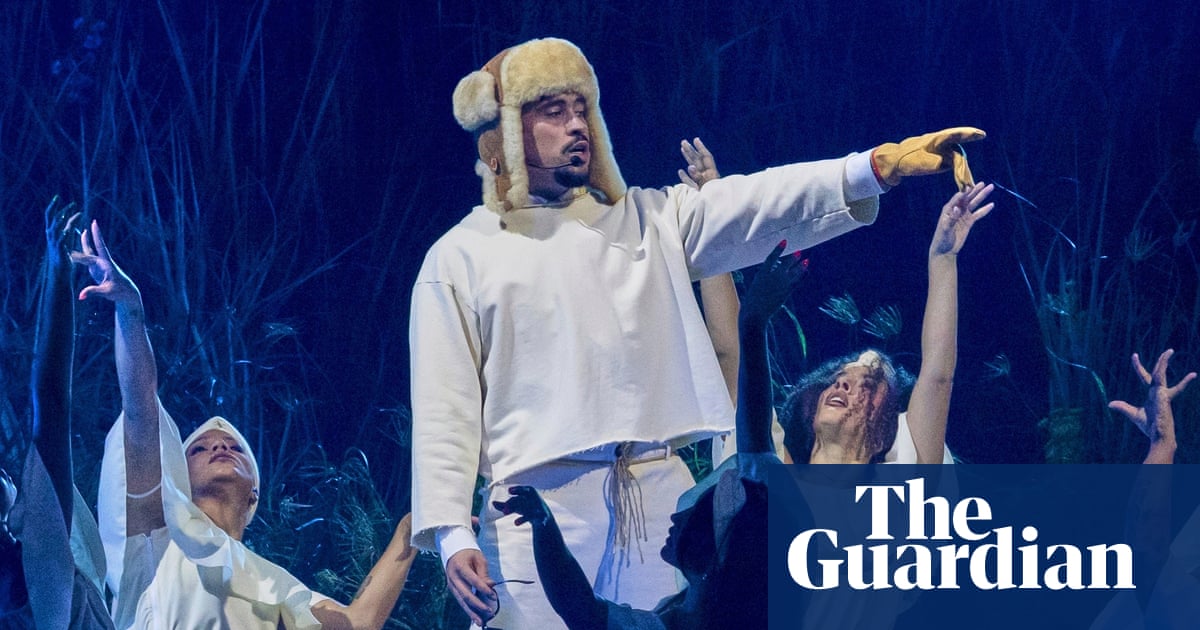
NEW YORK – Bad Bunny, the Puerto Rican singer born Benito Antonio Martínez Ocasio, is expected to deliver the Super Bowl half-time show entirely in Spanish-an artistic and programming choice that has already produced an unusually visible secondary effect: English-speaking viewers racing to learn the language quickly enough to follow the performance in real time.
The surge is not limited to casual interest in Latin music. Online, people are posting Bad Bunny lyrics, Puerto Ricans are explaining the slang and cadence embedded in his writing, and non-Spanish speakers are documenting compressed, deadline-driven efforts to learn Spanish before the broadcast.
For the entertainment business, the development sits at the intersection of creative control, audience reach, and platform governance. The Super Bowl half-time show functions as a rare, mass-audience stage where musical performance, broadcast standards, advertising adjacency, and cultural politics collide. A Spanish-language set-especially from an artist whose work is closely identified with Puerto Rican Spanish-tests how U.S. institutions and audiences handle language not as “world-music” ornamentation, but as the primary delivery mechanism.
A Spanish-language set on America’s most scrutinized music stage
Bad Bunny’s expected Spanish-only performance is being treated by parts of the audience as a comprehension challenge-and, for some, an opportunity to move toward a language already widely used in the United States. U.S. census data cited in the coverage notes that Spanish is the most spoken language at home behind English-except in three states-and that more than 13% of residents age five and older speak it.
That linguistic reality meets one of the few remaining appointment broadcasts with near-universal reach. The Super Bowl is carried nationally under the umbrella of the National Football League’s broadcast contracts and is subject to federal content rules, including indecency standards enforced by the Federal Communications Commission. A Spanish-language set on this stage therefore becomes not just a creative decision, but a live test of how gatekeepers apply those standards when English is no longer the default language of performance.
Vanessa Díaz, an associate professor of Chicano and Latino studies at Loyola Marymount University, described the moment as an intensification rather than a sudden trend shift. “People were already starting to make the effort with learning Spanish as a result of their interest in Latin music,” Díaz said. “The Super Bowl itself is an additional push for a trend that was already happening.”
Díaz, who is the co-author of P FKN R: How Bad Bunny Became the Global Voice of Puerto Rican Resistance, argues that the rise of Latin music over the past decade has pushed non-Spanish speakers to learn the language-and that Bad Bunny’s messaging across lyrics, videos and performances amplifies that interest.
From a broadcast dare to a four-month countdown
The idea of “learning the show” did not begin with the Super Bowl announcement alone. In October, Bad Bunny kicked off the 51st season of Saturday Night Live by expressing pride over the achievement in Spanish before switching to English with a direct challenge: “If you didn’t understand what I just said, you have four months to learn!”
That line has become a practical timeline for a subset of viewers who are treating the half-time show like a fixed-date cultural exam, with social platforms functioning as both study hall and distribution channel. The posts range from Puerto Rican Spanish explainers to progress diaries from learners trying to build vocabulary quickly enough to catch meaning without subtitles.
One of those learners, Niklaus Miller, 29, said he has been working on Bad Bunny lyrics since the SNL appearance. “I am delusional enough to be like ‘this would be easy. I could pick it up pretty quickly,'” Miller said.
Miller also framed the effort as a response to the current political climate. “It felt like a form of protest,” he said. “What can I do right now besides what everyone is doing that is trying to help? It just feels good.” He added that he has received messages from people who watch his videos with their parents, saying they feel seen and appreciated.
Miller said he has learned portions of six songs he believes will be part of the half-time show, including “Tití Me Preguntó,” “DtMF” and “Baile Inolvidable.”
Another creator, O’Neil Thomas, 28, a New York City actor and content creator, said he began learning the catalog the day after Bad Bunny was announced as the half-time act. “I was just so excited because he wasn’t an artist that I expected,” Thomas said. “And given how we are right now with the state of the country I think he is the perfect person to headline such a humongous stage.”
Thomas said the response to his TikTok videos-showing him learning “NUEVAYoL” and other tracks-has been positive, and that many Puerto Rican people have reached out saying they are proud someone outside the community is attempting to learn about their culture.
“I love Spanish and I always wanted to learn it,” Thomas said. “So, this has been a fun introduction for me to finally hone in.”
Dialect as delivery: the friction is the point
Language-learning tied to pop music often focuses on standardized Spanish. Here, the friction is more specific: both Miller and Thomas said they are trying to learn Spanish, specifically Puerto Rican Spanish, on a short clock.
Thomas said casual listening is not the same experience as learning lyrics. “Listening to his music is really fun,” he said. “The amount of times I’ve pressed rewind just to get a phrase, I can’t even count.”
Miller described the technical difficulty as much as the cultural one: the dialect’s speed and clipped pronunciations. He said if he does not work on understanding a song for days, he might forget the pronunciation and struggles to return to it. “It’s fun but then stressful because I am a type-A person, so that’s been hard, honestly,” Miller said. “I’m firing on all cylinders.”
For broadcasters and rights-holders, the operational question is not whether audiences will understand every lyric; it is how “understanding” is defined during a live event. A Spanish-language performance can still function as mainstream programming if the show is structured around rhythm, recognizable hooks, staging, and visual storytelling. The audience’s “homework” trend underscores a different dimension: some viewers are choosing to close the comprehension gap themselves rather than asking the production to narrow it.
A booking that became a political flashpoint
Bad Bunny’s expected Spanish-language set arrives amid public controversy around the booking. The coverage describes anger from some conservatives who have vilified Bad Bunny for speaking out against U.S. president Donald Trump‘s anti-immigrant policies.
The singer previously canceled the U.S. portion of his tour in 2025 out of fear that Immigration and Customs Enforcement agents would target his fans.
The controversy has also included direct political commentary and a competing event. Trump called the selection “ridiculous,” according to the reporting. Conservatives have criticized it as anti-American, despite the fact that native-born Puerto Ricans are U.S. citizens. Turning Point USA is putting on an alternative “All-American Halftime Show” with a lineup led by Kid Rock.
Díaz said she does not think the performance will necessarily shift how Latinos are perceived in the U.S., but that it could generate an “interesting conversation” depending on “how people are going to grapple with the magnitude of having someone like Bad Bunny on the stage.” She added that, at a time when “the US is targeting Latinos and migrants and Spanish speakers or even those who are just perceived to be any of those things in a way that we haven’t seen in our lifetimes”, his visibility is powerful.
The reporting links the cultural moment to immigration enforcement, stating that Trump’s executive actions have vastly expanded who is eligible for deportation and that routine hearings have turned into deportation traps for migrants. Within that backdrop, the half-time show is being interpreted by different constituencies not simply as a music booking, but as a programming decision with symbolic consequences.
Grammys momentum and an artist using the mic for institution-level critique
Interest in the half-time show has intensified following the Grammys, where Bad Bunny’s album Debí Tirar Más Fotos became the first Spanish-language album to win the Grammy for album of the year, according to the reporting. The coverage says he did not shy away from addressing targeted federal immigration operations at the awards, including after winning his first Grammy for best música urbana album.
“Before I say thanks to God, I’m going to say ICE out,” he said in English after winning his first Grammy for best música urbana album. “We’re not savage, we’re not animals, we’re not aliens. We are humans and we are Americans.”
From an industry perspective, those remarks matter because they show an artist treating major entertainment institutions as venues for direct political messaging. That posture is not new in award-show history, but it is consequential when paired with a booking on the Super Bowl half-time show, where the audience is broader and the broadcast environment is tightly managed.
Audience participation is now part of distribution
The online “learn Spanish for the half-time show” wave also illustrates how music distribution has shifted. The performance itself is a single event, but the surrounding content-language explainers, lyric breakdowns, and practice videos-extends the lifecycle of the catalog and pushes new listening patterns.
In this case, the most circulated material is not only the music but the language inside the music: Puerto Rican slang, pronunciation, and phrasing that can be difficult even for Spanish learners. That dynamic makes the catalog function like a curriculum-one built not by a label or an educational platform, but by communities and creators around the artist.
Those creators are not merely promoting; they are translating cultural context and negotiating identity questions in public, including who “gets” to participate, how respect is signaled, and what it means to learn a dialect that is often stereotyped or dismissed in U.S. mainstream discourse. For advertisers, rights-holders and regulators, that participatory layer effectively stretches a 12-minute performance into a multi-week programming environment in which questions of culture, speech and belonging are argued in real time.
Bad Bunny is expected to perform the Super Bowl half-time show entirely in Spanish.
Related reading
- Interactive Storytelling and Immersive Audio: How Next-Gen Gaming Engines Are Transforming Contemporary Television Production
- Independent Cinema’s New Distribution Paradigms: How Direct-to-Consumer Micro-Premiers Are Shifting Box Office Dynamics
- Spanish election: Pedro Sanchez calls snap election for 29 November after housing protests (globallypulse.com)
