
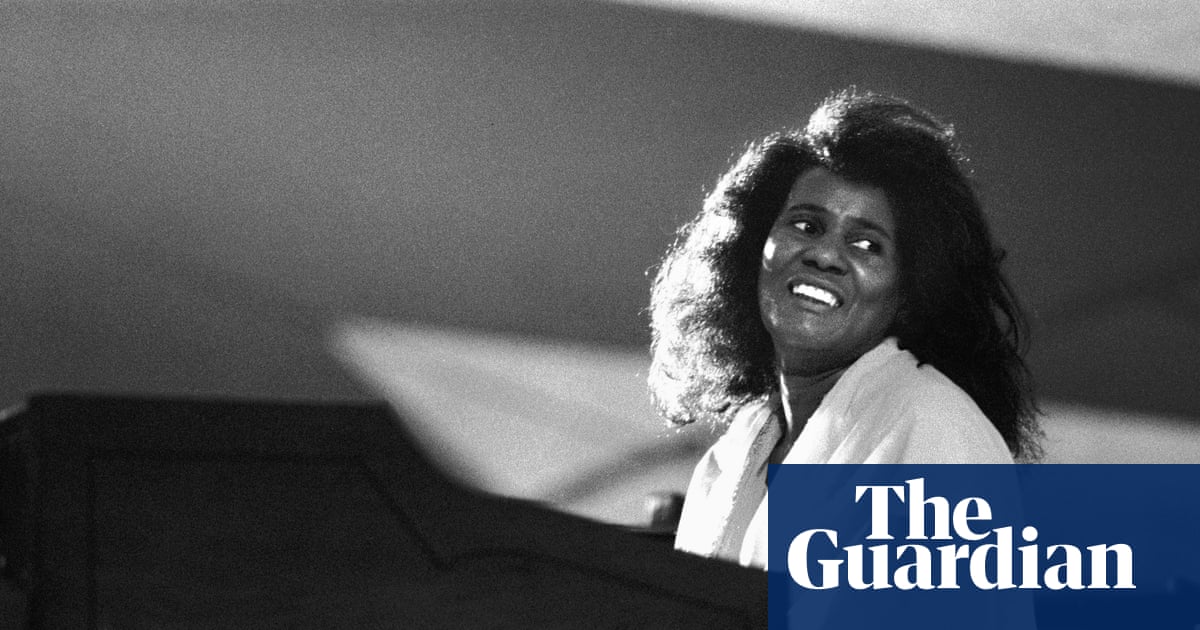
LOS ANGELES – Nineteen years after her death and more than half a century after the run of recordings most closely associated with her name, Alice Coltrane is receiving the kind of institutional and commercial framing that tends to determine which artists become durable reference points in the global music economy: a first full biography and, in Los Angeles, the first major exhibition dedicated to her work.
The biography, Cosmic Music by Andy Beta, is being published by White Rabbit. Around it sits an ecosystem of renewed attention that is already visible in programming and artist development-an “abundance of cosmic jazz harpists on festival lineups,” as one account of the current climate put it-and in a widening list of musicians publicly tying their own practice to Coltrane’s approach. In parallel, museums and presenters are treating her catalogue as part of the same cultural infrastructure that, in the US and Europe, is underwritten by public arts funding bodies and by norms set out in frameworks such as the UNESCO Convention on the Protection and Promotion of the Diversity of Cultural Expressions, which encourage institutions to surface historically marginalized voices.
Steven Ellison, the musician known as Flying Lotus and Coltrane’s grandnephew, said the shift has been long in coming. “For so long it seemed like her contributions were overlooked,” he said. “As I was growing up, it seemed like everyone just wanted to ask her about John Coltrane.”
Biography and exhibition as canon-making infrastructure
For the entertainment business, biographies and museum exhibitions are not simply prestige markers. They are mechanisms that consolidate a narrative, standardize a set of “essential” works, and establish an artist as legible to institutions that decide programming-publishers, curators, festivals, broadcasters, and education pipelines. They also help determine what appears in publicly funded curricula and symphony seasons, and which recordings are prioritized by collecting societies and library systems.
In Coltrane’s case, the new biography arrives alongside a stated rise in cross-genre endorsement, from mainstream artists to experimental scenes. That combination-publishing plus exhibition plus artist advocacy-functions as an industry-grade correction to the way Coltrane has often been treated historically: as an extension of her husband’s story rather than as a principal force in her own right.
The biography’s central claim, as summarized in its reception, is that Coltrane was integral to the radical late period of John Coltrane’s music “from the masterpiece A Love Supreme onwards.” It also positions the partnership as structural as well as artistic-“they created a sense of stability from 1963 in raising a family and marrying, post his quitting heroin”-and as a shared commitment to “spiritual and musical exploration.”
Before the Coltrane narrative: Alice McLeod as a working musician
The biography and its surrounding commentary also reassert a point that matters in how careers are valued: Coltrane’s musicianship did not begin with association.
Before she met John Coltrane, she worked as pianist Alice McLeod and had an established reputation. Carlos Niño-described as a longtime California “beat scene” colleague of Ellison and, more recently, producer of André 3000’s Alice-inspired album New Blue Sun-said McLeod was “known as a badass on the scene.”
Niño also described the breadth of her early development: skills “honed in Detroit’s gospel churches,” and a teenage musicianship that included playing Stravinsky and Rachmaninov “for pleasure by her mid-teens.” In an industry that often collapses women’s careers into proximity to celebrated men, those details matter because they anchor professional identity in training, repertoire, and peer regard.
After 1967: a solo catalogue that widened the frame
Following John Coltrane’s death at 40 in 1967, her solo work expanded, incorporating “global instrumentation and Hindu meditational discipline” while also moving into “lavish orchestral arrangement” and, notably, the harp.
Amanda Whiting, a Welsh harpist, described what that meant in musical terms rather than as mythmaking: “the music, the chords, it just isn’t moving around so much, and there’s much more room for layers, it creates soundscapes.” She situated the harp’s role in broader screen-and-stage language-“moments of liminality – the point between waking and sleeping, living and dying, passages of time”-and argued Coltrane “made the most of that association.”
American composer Adrian Younge placed the instrument shift inside a larger aesthetic move: “Alice Coltrane took the harp, an instrument of angels and orchestras, and made it sound like the cosmos breathing.”
The reception to that widening, however, was not neutral. Commentators including Amiri Baraka and Robert Christgau were described as dismissive, with criticism frequently framed as Coltrane diluting what was treated as the purity of John Coltrane’s “noble vision.” One phrase-“soft-headed and incoherent rambling,” attributed to Richard Cook’s Jazz Encyclopedia-was cited as representative of contemporary assessments, alongside what was characterized as openly gendered language about softness and prettiness.
The same account argued that a largely male critical establishment “didn’t allow her into the canon” in the way it did peers of John Coltrane such as Yusef Lateef and Pharoah Sanders-an institutional memory issue with downstream effects on booking, education, and the framing of “essential listening.”
Leaving the music industry, and the later business of circulation
A decisive career and rights-management turning point came at the end of the 1970s, when Coltrane detached from the music industry to focus on her Shanti Anantam ashram. After that, she recorded only for cassettes circulated within that spiritual community.
Those recordings later entered the commercial market through a familiar route in the contemporary catalog business: curation and recontextualization by an established label. They were “later released on David Byrne’s Luaka Bop label,” shifting private, community-based circulation into formal distribution and putting material that had been peripheral into an identifiable marketplace channel. For rights holders and estates, these kinds of catalogue decisions now sit within a wider policy environment shaped by copyright directives and neighboring-rights rules, and by the streaming-era dominance of a handful of global platforms that effectively act as gatekeepers of access.
A long cross-genre relay: rock, experimental music, and DJ culture
For an extended period, Coltrane’s most visible champions were described as operating outside jazz’s critical center. Jerry Garcia of the Grateful Dead covered her work, and Carlos Santana recorded an album with her during a period when Santana was described as “one of the world’s biggest rock stars.”
Later, experimental and alternative artists were linked to her methods. Sonic Youth were described as absorbing her experimentalism, and Jonny Greenwood was said to have spoken about lifting specific recording techniques and string arrangements for Radiohead tracks from the Amnesiac era. By the 2000s, she was getting namechecks across a wide stylistic range, including Paul Weller’s “dreamy” “Song for Alice” and Sunn O)))’s “Alice.”
Niño framed that cross-genre uptake as consistent with her creative position rather than as a later rebrand. “Because she was so beyond genre or style or anything,” he said, “if I try to think who was that bold, who expressed and emoted like that and talked like that, she’s more like a Jimi Hendrix – in the sense that you couldn’t encapsulate her as one thing any more than you could encapsulate Jimi Hendrix as the blues.”
Inside jazz, Herbie Hancock was cited as a notable champion, and as someone who carried her sonic ambition into “funk, electro and beyond.” Her records also moved into DJ culture, reaching hip-hop-she was sampled by Cypress Hill-as well as trip-hop and broken beat. Drum’n’bass artist Adam F described Coltrane’s “emotional and spiritual force … The way she blended jazz, devotion and total experimentation echoes through so many generations of musicians.”
Richard Russell, described as the “svengali” of XL Recordings, tied the influence to a specific album and a specific life moment, crediting Journey to Satchidananda with “rewiring his life – and therefore the label” as he entered his early 30s after “a decade of rave, excess and travelling the world” with the Prodigy. “It had a huge impact on me at that time of personal change when a different outlook was dawning on me,” he said. “That album is a proper mind expander, it’s a reset tool. It can help reprogram thinking.”
From youth programs to pop culture: how influence becomes institutional
By the time a new generation of UK jazz musicians were coming up, Coltrane’s music was described as having an “underground ubiquity” that fed back into formal learning environments.
Sheila Maurice-Gray, founder of the Afrobeat-jazz ensemble Kokoroko, said it was “completely normal” as a turn-of-the-millennium teenager in the Kinetika Bloco youth programme to learn “Blue Nile” and Journey to Satchidananda. Maurice-Gray also remembered the material as “very, very spiritual,” and described “an accessibility” she linked to “leaning into her feminine energy; a kind of comfort you won’t find from other musicians of her generation”.
The reach extended into pop culture in ways that were described as indirect as well as intentional. Asked about influence on younger artists, David Byrne replied: “Influence on a younger generation? Check out the cover of the Luaka Bop record. Can you spot the very young Doja Cat?” The same account stated that Doja Cat lived in the Santa Monica mountains commune from ages eight to 12 and, while “very ambivalent about the ascetic environment itself,” credited the minimalist, hymnal music Coltrane was making at the time with influencing her performance and persona.
Why the current revival narrative is being attached to crisis
Some musicians and broadcasters have explicitly linked the renewed interest to wider social conditions, framing Coltrane’s work as responsive to instability rather than as escapism.
Thurston Moore of Sonic Youth said expressions of “love overcoming greed through the power of art … have become more essential today more than ever, to a culture seeking spiritual truths while so many world leaders ravage our planet”. DJ, writer and broadcaster Zakia Sewell pointed to contemporary Coltrane-indebted artists such as Khruangbin and Alabaster DePlume and said their music “speaks to people’s appetite in a time of crisis for stuff that goes beyond pop structures, but that isn’t just comforting but is soaring, expansive, sprawling”.
That framing is subjective, but it is also a clue to how Coltrane is being positioned by today’s cultural intermediaries: not only as a musician with historical importance, but as an artist whose catalog is being used as a reference for programming that emphasizes spiritual jazz, extended forms, and hybrid instrumentation-categories that increasingly travel across festivals, reissue marketing, and streaming-era discovery. For public broadcasters and arts councils, those categories in turn inform decisions about which artists receive commissions, stage time and support, and how “spiritual jazz” is defined in policy language around diversity and access.
In Ellison’s words, the shift is visible at the level that matters for longevity: uptake by working musicians. “It’s been such an interesting and beautiful thing to see the new generation fall in love with Alice Coltrane.” That uptake is now reinforced by the slower-moving but powerful machinery of cultural memory-from museum wall texts and music-education syllabuses to the metadata rules that govern how streaming services tag and surface her work, norms that sit alongside, but are distinct from, the technical standards set out by bodies such as the International Organization for Standardization.
Cosmic Music, by Andy Beta, is published by White Rabbit.
