
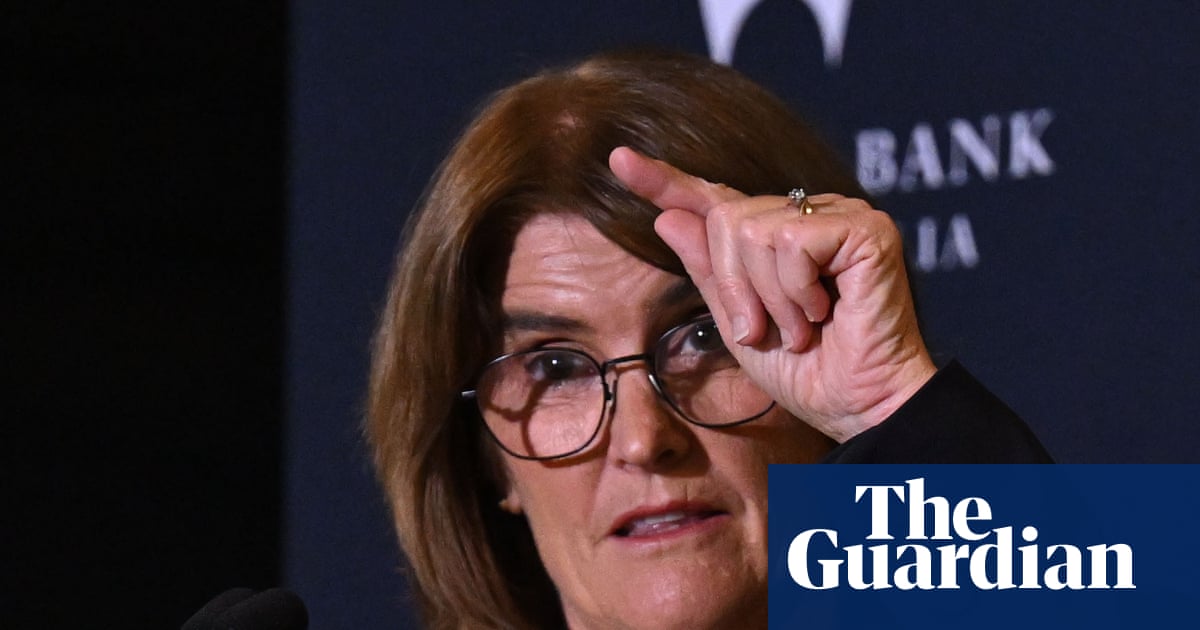
SYDNEY – The Reserve Bank of Australia has maintained the cash rate at 4.35%, but Governor Michele Bullock warns that a ceasefire in the Middle East will not be sufficient to preclude further monetary tightening.
The decision to hold rates ends a sequence of three consecutive increases, yet the central bank remains focused on an inflation rate that currently sits at 4.2%, well above the mandated 2% to 3% target range set out in its Statement on the Conduct of Monetary Policy. This creates a volatile environment for corporate planning and household borrowing as the RBA signals it is prepared to prioritize price stability over immediate economic growth.
The current macroeconomic pressure is defined by several conflicting indicators:
- Cash Rate: Held at 4.35%
- Inflation: 4.2%
- Unemployment: 4.5% (highest since late 2021)
- Global Oil: Approximately $US83 per barrel
Monetary Policy and Labor Market Volatility
Governor Bullock acknowledged that higher borrowing costs have been “tough” on households, but maintained that the risk of entrenched inflation represents a more severe economic threat. Under the inflation-targeting agreement with the federal government, the bank is required to steer price growth back toward the mid-point of its target band over a “reasonable timeframe”, even if that means tolerating weaker output and a softer labour market.
The RBA is currently navigating a loosening labour market, with unemployment rising to 4.5% and expectations that this figure will climb further as earlier rate hikes filter through to hiring and investment decisions.
This rise in unemployment, coupled with consumer confidence levels mirroring those seen during the height of the pandemic, would typically suggest a pivot toward lower rates to stimulate demand. However, the persistence of price growth in services and energy-intensive sectors has prevented the board from committing to a dovish shift, and officials remain alert to the risk that inflation expectations could drift higher if policy is eased prematurely.
“I want to be very clear that inflation remains too high,” Bullock said. “Today’s decision does not rule out further tightening in monetary policy if that is what is required to bring inflation down.”
Financial markets remain divided on the trajectory of the cash rate, with the probability of a further hike by the end of 2026 priced at slightly over 50%. Traders are also weighing the possibility that rates could stay at restrictive levels for longer than previously assumed, extending pressure on highly leveraged households and interest-sensitive sectors such as construction and discretionary retail.
Energy Infrastructure and Geopolitical Risk
The Australian economy remains exposed to global supply chain disruptions, specifically concerning the Strait of Hormuz, a key conduit for seaborne crude and liquefied natural gas. The closure of this critical shipping route followed attacks by the US and Israel on Iran in late February 2026, causing a spike in energy costs and logistics premiums and feeding directly into domestic fuel, transport and input prices.
While a peace deal between the US and Iran was signed on June 15, 2026, the RBA suggests that the immediate impact on inflation will be muted. The reopening of trade routes is complicated by the need for extensive repairs to energy infrastructure and the time required for shipping firms and insurers to regain confidence in the region.
The RBA recognizes that while the flow of commodities may gradually normalize, the resolution is not yet orderly. Bullock stated that if the conflict ends and the Strait of Hormuz reopens, it should support lower prices over time, but warned of ongoing “upside risks to inflation and downside risks to growth” if supply remains erratic or if risk premiums stay elevated.
Fiscal Coordination and Market Outlook
Treasurer Jim Chalmers has adopted a similar stance, noting that while the government is pleased with the diplomatic developments in the Middle East, it remains realistic about the timeline for global economic normalization. Canberra is under pressure to calibrate fiscal policy so it does not work at cross‑purposes with the RBA’s efforts to cool demand, particularly as targeted cost‑of‑living relief and energy subsidies roll through the budget.
The RBA’s current strategy reflects a cautious approach to the macroeconomic transition, avoiding premature rate cuts that could reignite price growth while attempting to mitigate the impact of a slowing economy. Policymakers are signalling that any move to ease will depend not only on headline inflation but also on measures of underlying price pressures and wage dynamics.
The central bank will continue to monitor the intersection of unemployment trends and energy‑driven inflation to determine if the 4.35% rate is sufficient to stabilize the domestic economy. For households, businesses and governments, the message from Martin Place is that financial conditions are likely to stay tight until the inflation target is credibly back in sight.
Related reading
