
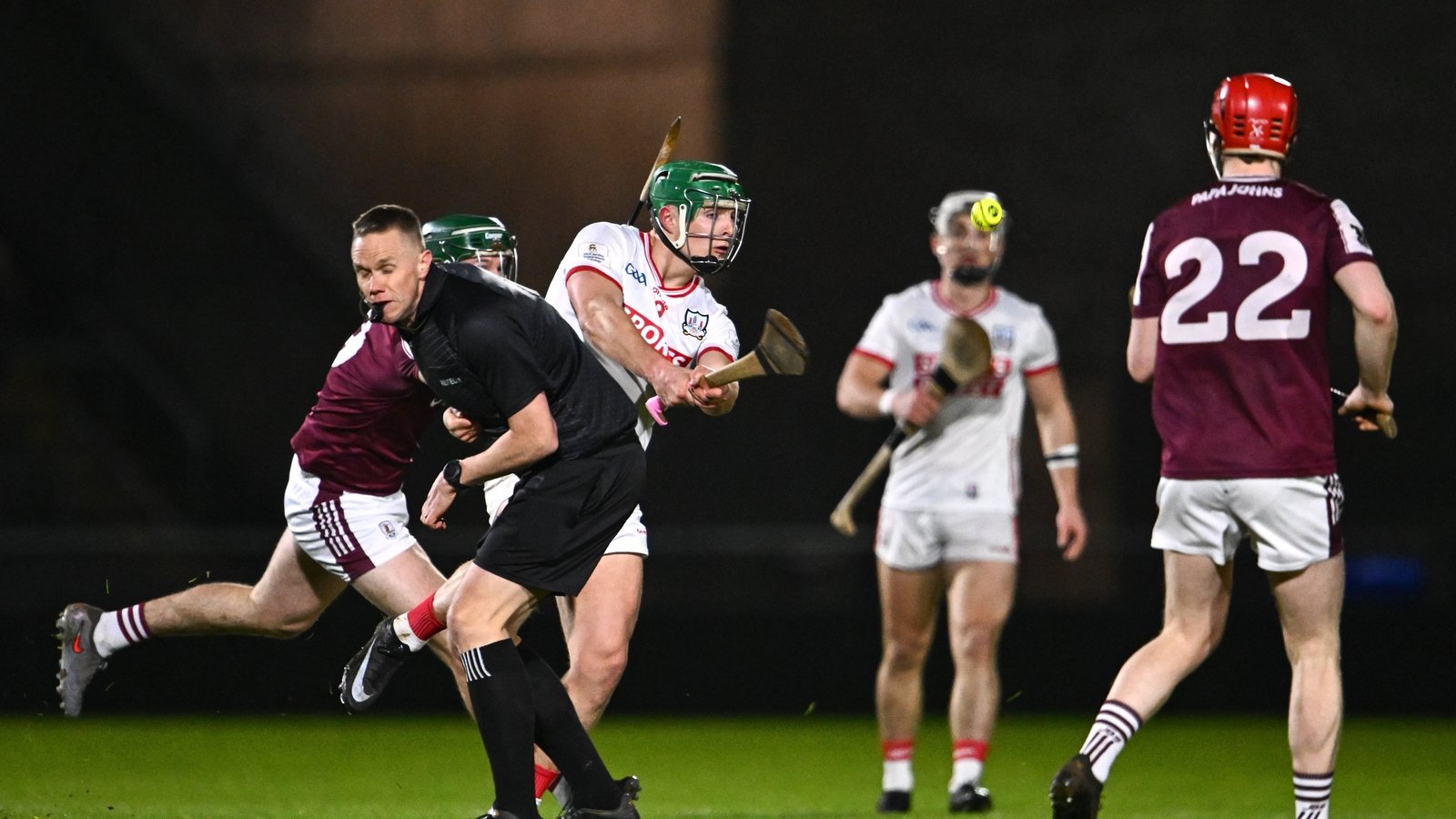
GALWAY –
Lede – The Allianz Hurling League fixture between Galway and Cork at Pearse Stadium on January 31, 2026, reinforced the role of county-level Gaelic games as recurring commercial events: corporate sponsorship (Allianz), matchday revenues for local businesses, and broadcast and media exposure combine to sustain the competition’s commercial model while providing predictable short-term demand for regional hospitality and transport services.
Nut graph – The match, part of Division 1A of the Allianz Hurling League, demonstrates how season-by-season fixtures function as scheduled commercial assets for the sport’s governing bodies and sponsors. For Allianz – the naming partner of the competition – and for the county organisations involved, a single fixture drives a cluster of revenue streams and operational obligations that have direct implications for contract fulfilment, local cashflows, and media-rights value in the wider Irish sports calendar. The Rebels (Cork) travelled west to Galway on January 31, 2026, seeking a second consecutive Division 1A victory in the early rounds of the competition.
Commercial framing of the fixture
The Allianz brand presence in the league title signals a long-term commercial relationship between the competition and a multinational insurer whose global marketing strategy includes sports sponsorship as a mechanism to reach domestic markets. Allianz is a multinational financial services group with global insurance and asset-management operations; that corporate profile makes sports sponsorship an established channel for brand visibility in regional markets.
Within Gaelic games, the partnership sits inside the broader governance framework of the Gaelic Athletic Association, which regulates fixtures, commercial rights and competitive structures under its Official Guide. That framework gives county boards limited but commercially meaningful discretion over local sponsorship, matchday operations and venue-use agreements, while central authorities retain control of competition branding and national broadcast relationships.
County-level governing bodies – the organisational units that administer team operations, matchday ticketing and local commercial rights – rely on the predictability of fixture schedules to manage stadium operations, stewarding and ancillary services, and to supply information for corporate partners and broadcasters. The match at Pearse Stadium on January 31, 2026, is one node in a season timetable that underpins commercial agreements across broadcasters, sponsors and local hosts.
Revenue channels and local economic impact
The business mechanics around a Division 1A fixture include, at minimum, gate receipts, hospitality packages, sponsor activations, merchandise and local supply contracts for catering, security and transport. Each fixture consolidates same-day economic activity in the host city: accommodation bookings, hospitality spending and short-term staffing demand for event services.
For sponsors, the on-ground activation and broadcast inventory attached to a fixture – naming rights, pitch-side signage, digital integrations and match-day promotions – are measurable deliverables in marketing and sponsorship agreements. For county boards, predictable match schedules enable advance commercial planning and contractual fulfilment for brand partners and vendors.
In practical terms, a Saturday league game in Galway or Cork functions as a short-cycle stimulus for local micro and small enterprises – pubs, cafés, transport operators and guesthouses – that calibrate staffing and stock levels against anticipated attendance. Over the full Allianz League calendar, those incremental matchdays form a recurring, semi-guaranteed revenue line for local service economies.
Broadcast and media-rights considerations
National and regional broadcasting of league fixtures is a primary channel for commercial value extraction from the competition. Media exposure amplifies sponsor reach and preserves per-fixture audience metrics that underpin future negotiations over rights fees and advertising inventory.
Broadcasters and rights-holders also carry obligations that intersect with scheduling and venue readiness: camera positions, media facilities, and timing. Those obligations create operational costs for hosts while also generating revenue through rights fees and advertising, which feed back into the sport’s central and county budgets.
In parallel, digital highlights, streaming packages and social-media clips extend the life of an individual fixture beyond the gates and linear broadcast window. For a sponsor such as Allianz, that secondary circulation is now a core part of the value proposition, shaping internal decisions on whether to renew, expand or reprice future contracts.
Operational and governance implications for host venues
Staging a Division 1A fixture imposes compliance requirements on stadium operators and county boards: health and safety protocols, stewarding levels, ticketing systems and match-day reporting. Those operational responsibilities are central to maintaining commercial relationships with sponsors and broadcasters and to meeting insurance and regulatory requirements tied to large public events.
County organisations are contract counterparties in commercial agreements and are responsible for delivering the match environment that sponsors and media partners expect. Consistent delivery across fixtures underpins the reliability those commercial partners require and feeds into internal GAA oversight of venue licensing and fixture allocation for later rounds and marquee games.
For public authorities, league fixtures of this scale also intersect with policing, traffic management and public-transport planning. While routine, those arrangements represent recurring public-resource commitments that are justified, in part, by the economic and social dividends associated with full-season schedules rather than isolated one-off events.
Market signals and sponsorship durability
The presence of a multinational sponsor in the competition title is an indicator of sponsorship durability that matters to local and national commercial stakeholders. Title sponsorships bundle exposure across an entire competition, making the league itself a marketing vehicle whose continuity affects sponsor valuation, partner renewals and downstream promotional programmes tied to individual matches.
For Allianz, the Irish leagues form part of a wider sports portfolio that includes Olympic and professional properties. The decision to maintain the naming partnership with the GAA – amid periodic debate within some clubs and county boards about the role and influence of corporate backers – is read by local rights-holders as a vote of confidence in the stability of the domestic games market.
For local suppliers and vendors, the league’s fixture list is a scheduling backbone: predictable dates allow businesses to plan staffing, inventory and logistics around match-days, locking in short-term revenue streams that are material for micro and small enterprises servicing events.
Implications for financial planning at county level
County boards and stadium operators use season fixtures to underpin near-term budgeting for maintenance, staffing and capital projects. The regular cadence of home fixtures informs cashflow management and short-cycle procurement. Where sponsorship income and broadcast allocations form a non-trivial proportion of budgets, the certainty of fixture delivery carries direct fiscal significance.
At governance level, those budgetary dependencies feed back into negotiations with central GAA authorities on revenue-sharing models and into internal debates about how far to prioritise commercial considerations over competitive balance, player welfare and community access to facilities. Decisions on future sponsorship tenders, broadcast deals and stadium upgrades will be shaped not only by marquee championship dates, but by the reliable, ledger-friendly rhythm of league fixtures such as Galway v Cork on a January weekend.
Confirmed next procedural step: Allianz Hurling League Division 1A fixtures will proceed under the competition’s existing commercial arrangements, with county boards and sponsors delivering scheduled obligations for the 2026 season, subject to any revisions that may arise from internal GAA policy decisions or changes in Ireland’s broader sports-governance landscape.
