
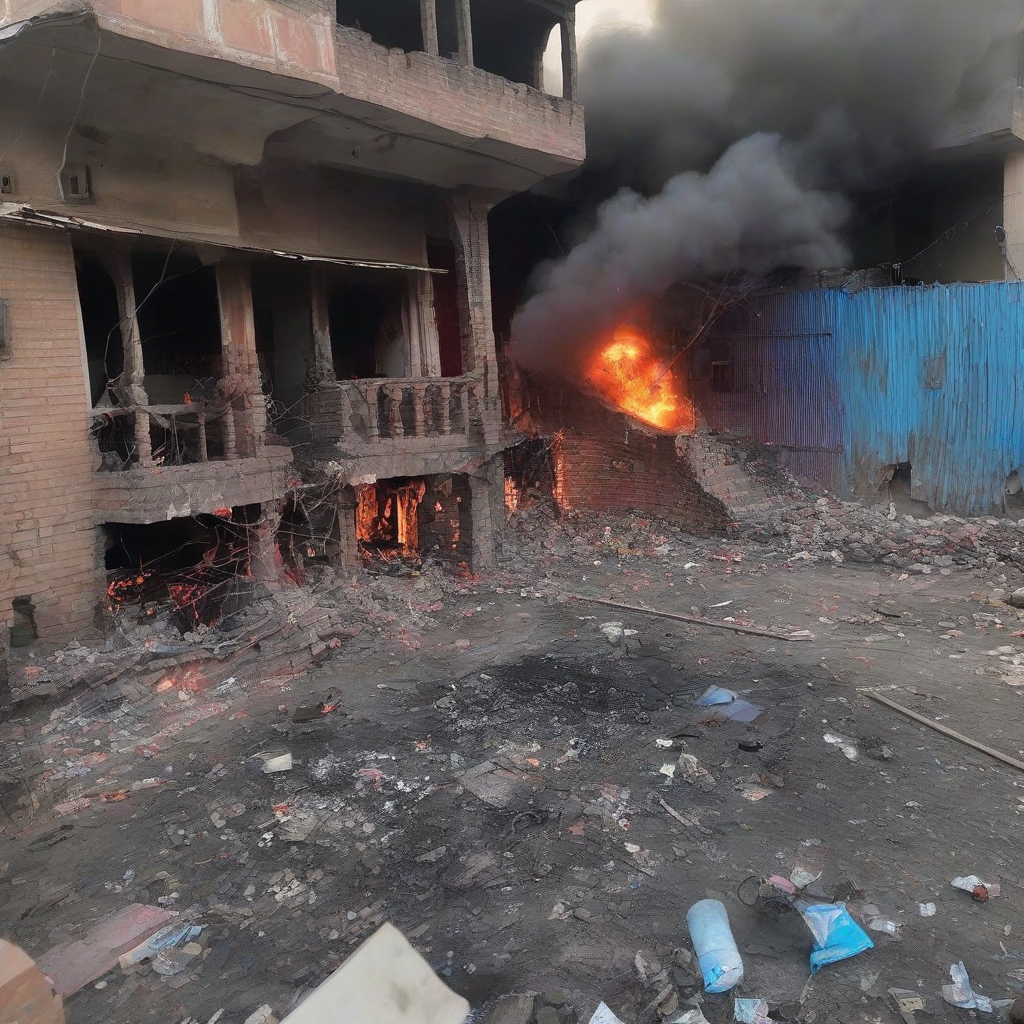
JAIPUR – At least seven people were killed and several others injured Tuesday after a blast triggered a massive fire at an alleged illegal fireworks godown in the Khoh Nagoriyan area of Jaipur.
The incident occurred in a small house within the Ayesha Nagar Talai colony, where firecrackers were allegedly being stored in violation of safety regulations. The resulting explosion and subsequent blaze caused immediate casualties and prompted a large-scale emergency response.
The disaster highlights the ongoing risks associated with the unauthorized storage of explosive materials within densely populated residential zones, where limited access and proximity to other dwellings often exacerbate the scale of such accidents.
Casualties and Medical Response
Dr. Deepak Maheshwari, principal of SMS Medical College and Controller of the hospital, confirmed the fatalities. The hospital serves as the primary tertiary care center for the region and handled the influx of victims following the explosion, with emergency teams activated to manage burn injuries and trauma cases.
According to Dr. Maheshwari, the victims were brought to the hospital after the blaze, where they were declared dead. Several other individuals sustained injuries and are receiving medical treatment, with authorities indicating that the toll could change as critically wounded patients are monitored.
District health officials said they were coordinating with the hospital to ensure the availability of beds, blood units, and specialist care, underscoring how a single industrial-scale accident inside a residential neighbourhood can strain urban health infrastructure.
Emergency Operations in Ayesha Nagar Talai
First responders and local residents engaged in a simultaneous effort to rescue those trapped inside the structure and contain the fire, working against time in narrow lanes that complicated access for heavy vehicles.
The response involved several tiers of emergency services:
- Local residents: Attempted initial rescue efforts and tried to control the flames before the arrival of the fire brigade, pulling people from the debris and alerting nearby households to evacuate.
- Fire services: Deployed multiple fire tenders to extinguish the blaze and prevent it from spreading to adjacent houses, using additional water tankers because of the congested layout and limited hydrant access.
- Police and administration: Secured the perimeter, managed crowds, and coordinated the evacuation and transport of the injured, while beginning on-the-spot documentation and evidence collection.
Additional district magistrate Yugantar Sharma stated that fire tenders, ambulances, police teams, and senior officials rushed to the spot immediately after receiving information about the blaze. He said a preliminary report on the incident will be submitted to the district administration, which is expected to decide on further action, including potential criminal proceedings against those responsible for the alleged illegal storage.
Regulatory Framework for Explosives Storage
Under Indian law, the storage and sale of fireworks are governed by the Explosives Act and the Explosives Rules. These regulations mandate that any facility storing explosive materials must obtain a valid license from the Petroleum and Explosives Safety Organization (PESO) or designated state authorities.
Legal storage requirements typically include:
- Strict minimum distance requirements between the godown and residential buildings.
- Specific ventilation and construction standards to prevent accidental ignition.
- Mandatory fire safety equipment and clear access routes for emergency vehicles.
These rules are designed to mitigate exactly the type of chain-reaction fire seen in Ayesha Nagar Talai, where a single blast can quickly engulf adjoining structures in compact urban settlements such as Jaipur, Rajasthan’s capital city and one of India’s fastest-growing metropolitan centers, known as the “Pink City” for its historic walled core.
The description of the site as an “alleged illegal godown” indicates that the facility may have been operating without these mandatory clearances, increasing the risk of a catastrophic event in a residential colony. Police and district officials remain on-site to conduct a detailed investigation into the cause of the blast and the legality of the storage operation, with officials suggesting that the findings could feed into a broader review of how local authorities identify and shut down unlicensed fireworks units ahead of major festival seasons.
Urban planners and safety experts have long warned that enforcement gaps-rather than the absence of law-often determine the real level of protection for residents living alongside hazardous activities. Tuesday’s blast is likely to intensify pressure on municipal bodies and district administrations to step up inspections, map high-risk clusters, and ensure that complaints about illegal godowns translate into timely action rather than post-disaster inquiries.
Keep reading
- Urban Infrastructure Resilience: How European and Asian Megacities Are Adapting to Extreme Climate Oscillations in 2026
- UN General Assembly 2026 Framework on Autonomous Systems: International Diplomacy Faces Algorithmic Governance
- Study reveals how seven days of fasting changes the human body (archyde.com)
