
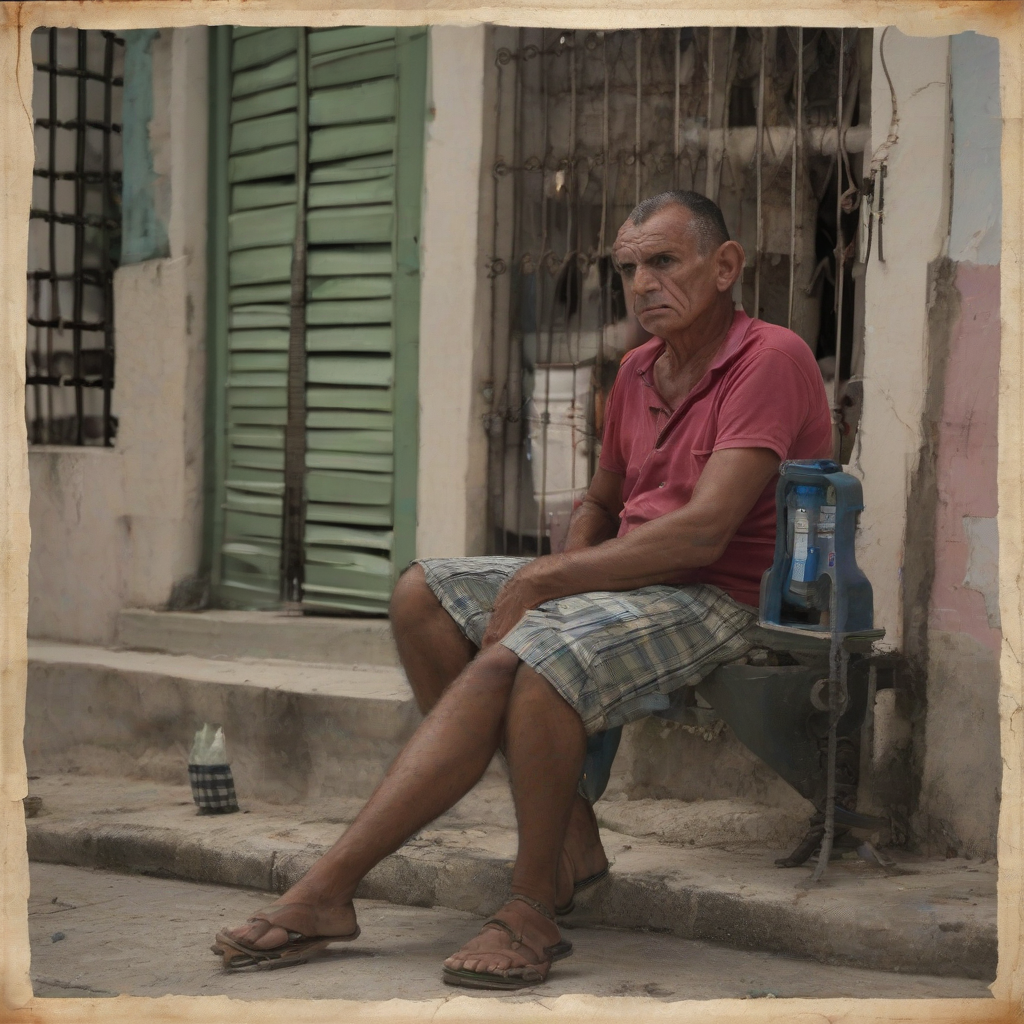
HAVANA – Severe power outages, hyper-inflation, and a tightening US oil blockade have pushed Cuba into a state of systemic collapse, sparking widespread civil unrest and an escalating military standoff with the United States.
The island is currently four months into a US oil blockade that has depleted fuel reserves and crippled the national power grid. The resulting humanitarian crisis is characterized by rolling blackouts, water shortages, and a breakdown of basic services in both the capital and the countryside.
Energy Minister Vicente de la O recently informed the public: “We have no fuel, no more reserves.”
Urban Collapse and Civil Unrest
In Havana, the crisis has manifested in cacerolazos-traditional protests where residents smash pots and pans against windows to signal dissent. While previous reports suggested the countryside suffered more severely, the collapse has now reached the heart of the capital, underscoring how the energy shock is eroding the government’s ability to guarantee basic services even in its most politically sensitive districts.
Residents in the Vedado neighborhood report spending days without electricity. One local doctor described the conditions: “I want to tell you we’ve been four days without light. And without electricity, water is also a problem. And there are mosquitoes everywhere.” Public health officials warn that prolonged blackouts combined with stagnant water raise the risk of mosquito-borne diseases and heat-related illness.
The economic strain is most acute for those on fixed incomes. Martha Pérez, a resident of the Bahía neighborhood, reports that her monthly pension is worth less than $10 due to hyper-inflation. Basic necessities have migrated to an unregulated market:
- Cooking Gas: Now costs US$29 per bottle via online supermarkets, compared to a few cents when sold by the state, putting clean cooking fuel beyond the reach of many retirees.
- Alternative Fuels: Residents have reverted to using charcoal and wood for cooking, a shift that adds pressure on already fragile urban and rural environments.
- Climate Stress: Temperatures in the mid-30s with 75% humidity have left residents unable to sleep without fans, compounding frustration over blackouts and amplifying nightly street protests.
The government has blamed the crisis on US policy and long-standing economic restrictions, while critics inside and outside the country say decades of central mismanagement and delayed economic reforms have left the island uniquely vulnerable to a fuel shock.
Sanctions and Economic Isolation
The US government has intensified pressure through a series of targeted sanctions layered on top of the long-standing embargo first codified in the early 1990s under the Cuban Liberty and Democratic Solidarity Act (Helms‑Burton). New measures have been imposed on President Miguel Diaz-Canel, his family, and members of the Castro family. The US also targeted the Instituto Cubano de Amistad con los Pueblos (ICAP), the state entity responsible for managing international solidarity groups, further limiting Havana’s ability to leverage its historic alliances.
The financial and commercial sectors are experiencing a rapid exodus that deepens the sense of isolation and heightens pressure on the leadership:
- Tourism: The Hotel Paseo del Prado has closed. Major operators including Iberostar, Blue Diamond, and Melia-the latter a presence for 30 years-have severed relations or drastically reduced operations, eroding one of the state’s key sources of foreign currency.
- Banking: The Cuban state bank announced that Visa and Mastercard will no longer function on the island, cutting off a critical payments channel for visitors and for Cubans who receive remittances through international cards.
- Shipping: Two shipping companies responsible for 60% of the island’s imports have suspended all new orders, disrupting food and medicine flows that depend on hard-currency purchases.
- Mining: Sherritt, a Canadian nickel miner, is seeking to sell a majority stake in its operations to Ray Washburne, a former adviser to Donald Trump, raising expectations in Washington that strategic assets could change hands if the current government falls.
Felix Capote, a businessman operating a Mipyme (micro, small, and medium enterprise), expressed concern that these private lifelines will soon run out of food due to the shipping suspensions. “People think the private sector can substitute for the state,” he said, “but if nothing comes in, there is nothing to sell.”

Western diplomats say the economic measures are designed to tighten the screws on Cuba’s ruling elite without formally abandoning existing US commitments to avoid direct intervention, but acknowledge that the scale and speed of the collapse are creating unpredictable social and political pressures.
Military Escalation and Geopolitical Tension
The diplomatic environment has shifted toward potential military conflict and away from the cautious engagement that briefly characterized US‑Cuba relations in the mid‑2010s. Following the May 1 anniversary, the 95-year-old Raúl Castro was charged with murder, a move seen by some analysts as creating a legal opening for abduction, similar to the operation that removed Nicolás Maduro from power in Venezuela on January 3.
US military assets have moved into position, with the USS Nimitz aircraft carrier arriving in Jamaica, south of Cuba, supported by surveillance aircraft. The Pentagon has framed the deployment as a deterrent and contingency posture, but Cuban officials say it is indistinguishable from an invasion threat.
CIA Director John Ratcliffe traveled to Havana to meet with Cuban intelligence leaders; CBS reports that Ratcliffe was accompanied by the operator responsible for the deaths of 32 Cuban security guards during the Venezuelan operation, a detail that has fueled fears among Cuban officials that regime-change tactics used elsewhere in the region could now be replicated on the island.
Michael Bustamante, chair of Cuban and Cuban American studies at the University of Miami, suggests that negotiations have stalled.
“Both sides just seem dug in as all hell. Otherwise Washington may bring about their exit by force anyway, with untold consequences,” Bustamante said. “In either scenario, Washington looks primed to sweep up assets for its friends in a nakedly imperial way.”
European and Latin American governments have quietly urged both sides to de-escalate and return to talks, warning that a violent transition in Cuba would have immediate consequences for regional migration, maritime security, and energy markets.
Defense Readiness and Internal Stability
The Cuban government is preparing for a potential invasion even as it struggles to keep the lights on. President Diaz-Canel warned that such an attack “will cause a bloodbath with incalculable consequences.” Anti-aircraft radars have been deployed around Havana, and state television has broadcast footage of military training, emphasizing neighborhood militias and civil-defense drills.
Cuba’s strategic doctrine, known as the “war of all the people,” envisions the entire population joining an armed resistance. The concept, developed during the Cold War, assumes dispersed, low-intensity conflict that makes any foreign occupation costly and protracted.
However, experts question the viability of this plan given the current state of the military. Hal Klepak, professor emeritus at the Royal Military College of Canada, noted that while morale remains high within the small regular force, the reserve forces have “atrophied” due to a total lack of equipment, funding, and petrol. The same fuel shortages that plunge neighborhoods into darkness are also forcing units to ration training hours and limit mobility.

The World Meteorological Organisation (WMO) has announced it expects an extremely hot and dry summer in the Caribbean, a forecast that increases the risk of fatalities on an island without reliable electricity. Humanitarian agencies and regional disaster officials warn that if temperatures rise as projected and fuel supplies remain strangled, Cuba could face a convergence of political crisis, infrastructure failure, and climate stress with few institutional safety valves.
For now, Havana’s leadership is betting that a mix of mobilization rhetoric, emergency rationing, and appeals to sovereignty will hold the line. But with kitchens going cold, streets in the dark, and war talk growing louder on both sides of the Florida Straits, the country’s endurance-and the parameters of US policy toward it-are being tested in real time.
Related reading
- Urban Infrastructure Resilience: How European and Asian Megacities Are Adapting to Extreme Climate Oscillations in 2026
- UN General Assembly 2026 Framework on Autonomous Systems: International Diplomacy Faces Algorithmic Governance
- Mark Zuckerberg faces harsh onscreen portrayal in The Social Reckoning (archyde.com)
