
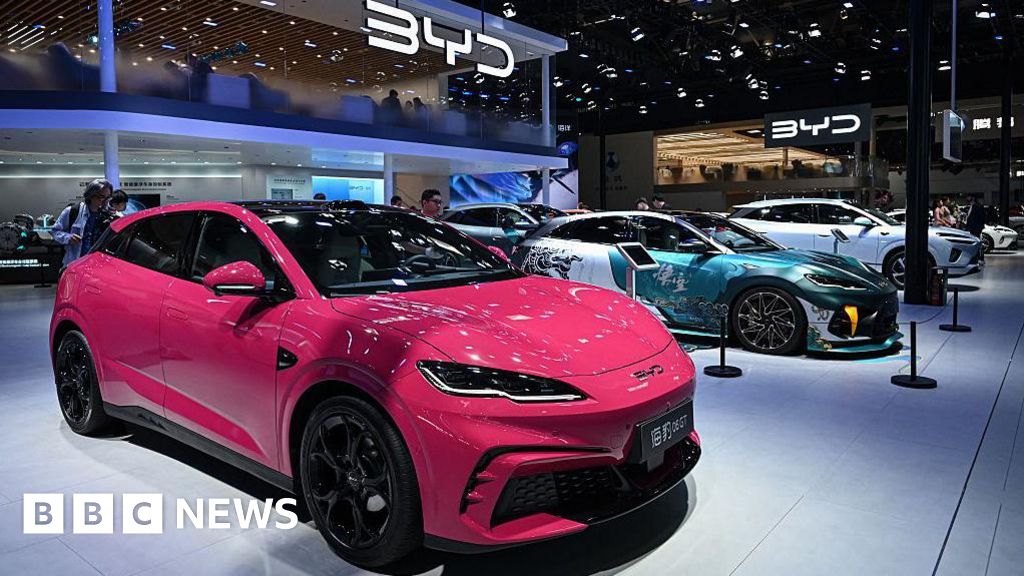
SHENZHEN – BYD is pivoting its global growth strategy to prioritize non-U.S. markets, asserting that the company can maintain its trajectory as a global leader in electric vehicles without access to the United States.
The strategic shift comes as the Chinese automaker navigates an increasingly volatile domestic market characterized by aggressive discounting and a systemic price war among electric vehicle (EV) manufacturers.
The economic friction between Washington and Beijing has created significant barriers for Chinese automotive exports to the U.S., including high tariffs and regulatory scrutiny under measures such as Section 301 duties and tightened national-security reviews. BYD’s willingness to bypass this market reflects a broader corporate strategy to leverage its vertical integration to dominate other emerging and established regions, rather than wait for policy conditions in the U.S. to normalize.
Domestic Price War and Margin Pressure
The competition within China has intensified, with BYD implementing deep discounts to maintain volume and defend share against both established rivals and new entrants. These price cuts are indicative of a broader trend where manufacturers are sacrificing margins to capture market share as consumer demand stabilizes after a period of rapid growth and generous subsidies.
The March sales report for electric vehicles in China indicates that while the market is seeing a slow return to more normal growth rates, BYD continues to emerge as a primary beneficiary of the current volatility, helped by its scale, brand recognition and nationwide dealer footprint.
Recent market movements include:
- Increased discounting across multiple BYD models to counter competitor pricing, particularly in mass-market segments.
- A strategic use of so‑called “price hike” eras by some Chinese manufacturers to counteract sales slumps, though BYD has instead focused on consistent, aggressive pricing to keep plants running at high utilization.
- A continued dominance in sales volume despite a general slowdown in the rate of EV adoption and a more cautious consumer environment.
BYD’s ability to sustain these price cuts is tied to its control over the electric vehicle supply chain, specifically its in-house production of lithium-iron-phosphate (LFP) batteries. This integration reduces reliance on external suppliers and allows for more flexible pricing strategies than those available to traditional legacy automakers that still depend heavily on third-party cell producers.
That cost advantage is central to BYD’s message to investors and policymakers: it can continue to compress prices at home while funding expansion abroad, even as smaller Chinese EV brands struggle to survive prolonged margin pressure.
Global Diversification and Trade Barriers
The decision to deprioritize the U.S. market aligns with the company’s expansion into Southeast Asia, Latin America, the Middle East and Europe, where regulators are still calibrating their long-term stance toward Chinese-built EVs. By diversifying its geographic footprint, BYD reduces its exposure to any single regulatory regime or bilateral dispute.
BYD says it can thrive without access to US market
This positioning is a direct response to current tariff structures and geopolitical tensions that make the U.S. consumer market prohibitively expensive or legally complex for Chinese-made EVs. In parallel, Europe is stepping up scrutiny of state support for Chinese manufacturers through instruments such as the European Union’s foreign-subsidy and anti‑subsidy toolkits, adding another layer of regulatory risk to BYD’s overseas calculus.
The company’s strategy involves establishing local manufacturing hubs in regions like Brazil and Hungary to mitigate trade barriers, comply more easily with local content rules and lower logistics costs. By moving final assembly and, in some cases, component production closer to end markets, the group seeks to reposition itself from a pure exporter into a localized global producer that is harder for governments to shut out through import duties alone.
For host countries, those investments are becoming part of a broader industrial-policy competition to secure EV jobs, battery technology and green manufacturing capacity. For BYD, they are a hedge against future restrictions under frameworks such as the World Trade Organization’s rules on trade remedies and subsidies, which now shape how quickly and cheaply Chinese EV capacity can enter key markets via cross‑border trade.
Market Position and Corporate Governance
BYD operates as a diversified conglomerate, producing not only passenger vehicles but also commercial buses, trucks and battery storage systems for utilities and large-scale projects. This diversification provides a financial cushion that allows the automotive division to engage in prolonged price wars while still presenting a coherent growth story to shareholders and lenders.
The “price hike era” mentioned in recent domestic trends refers to a tactical shift where some firms increase manufacturers’ suggested retail prices (MSRPs) to create a perception of value or to provide room for subsequent, high-visibility discounts. BYD has largely resisted that approach, preferring transparent cuts and limited-time promotions that reinforce its positioning as a volume-driven, value-focused brand.
BYD’s current trajectory is defined by the following business conditions:
| Factor | Strategic Impact |
|---|---|
| Vertical Integration | Lower production costs, battery autonomy and tighter quality control |
| Market Expansion | Shift toward Global South and European markets as primary growth engines |
| Pricing Strategy | Volume-led growth via aggressive discounting and high plant utilization |
Internally, the company remains focused on scaling its production capacity and streamlining product platforms to outpace smaller domestic rivals who lack the capital to survive a sustained period of low margins and heavy investment in new technologies such as advanced driver‑assistance and next‑generation batteries.
For regulators and trade negotiators, BYD’s strategy is a live test of whether large, vertically integrated Chinese EV makers can effectively route around the world’s biggest single consumer market while still reshaping the economics of the global car industry. For now, the company continues to expand its overseas manufacturing footprint while maintaining a dominant volume lead in the Chinese domestic market, betting that scale, integration and regulatory agility will matter more than a U.S. sales presence in the next phase of the EV transition.
