
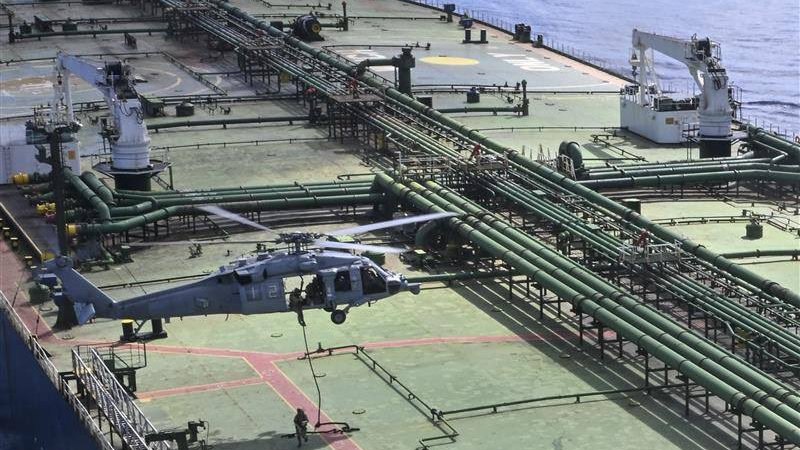
DUBAI – A US-sanctioned supertanker carrying approximately 2 million barrels of Iranian crude oil attempted to transit the Strait of Hormuz on Friday, as the critical maritime chokepoint faces a near-total standstill in commercial traffic.
The vessel, identified as the Yuri, represents a high-stakes test of the current maritime blockade enforced by the United States. The movement comes amid a period of heightened volatility in the Persian Gulf, where the intersection of economic warfare and naval posturing has effectively paralyzed one of the world’s most vital energy arteries.
The Strait of Hormuz is the world’s most important oil transit point, with roughly one-fifth of the global petroleum supply passing through the narrow waterway. Any sustained disruption or successful defiance of sanctions in these waters carries immediate implications for global energy pricing and the stability of international shipping insurance markets, which price risk according to perceived threats to safe passage.
The Yuri had previously disappeared from public view, disabling its Automatic Identification System (AIS) to obscure its movements in violation of standard safety practices for commercial shipping. Tracking data from Kpler and Vortexa indicated the tanker reappeared off Sirri Island earlier this week after loading cargo at Kharg Island, Iran’s primary crude export terminal.
By late Thursday, the supertanker began its approach toward the Strait, subsequently sailing past Larak Island in an apparent attempt to break through the US-led blockade. Maritime security officials in the region said the vessel’s route and speed were consistent with a deliberate attempt to probe the limits of US enforcement rather than routine commercial traffic.
Escalation in the Strait
The maneuver follows a surge in interceptions by American naval forces operating under existing US sanctions law, including the Iran sanctions architecture anchored in the US Treasury’s Iran sanctions program. The US Central Command (CENTCOM) recently reported via social media that 33 vessels have been redirected since the inception of the blockade, with two Iranian oil tankers intercepted earlier this week.
Tehran has responded by asserting its own control over the waterway, employing aggressive tactics to deter commercial shipping and challenge Western naval presence. Iranian forces have reportedly fired upon commercial vessels and seized at least two ships, creating a “double blockade” effect that has caused attempted transits to plummet and left shipowners weighing legal exposure against physical risk.
Regional diplomats say the stand-off has complicated ongoing efforts by Gulf states and Western allies to keep the shipping lane open under the principles of freedom of navigation embedded in the UN Convention on the Law of the Sea, even as none of the parties wishes to be seen as backing down. Insurance brokers, meanwhile, report that war-risk premiums for any vessel approaching the Strait have spiked, with some charterers inserting explicit “Hormuz clauses” that allow last-minute route changes or cancellations.
The impact on non-oil commerce is already evident:
- A bulk carrier delivering food supplies to Iran was observed near the Yuri on Thursday but performed a U-turn within the strait, retreating into the Persian Gulf as naval activity intensified.
- A container ship departing the Iranian port city of Bandar Abbas was tracked sailing south into the Gulf of Oman after four days of navigation within the strait, opting for loitering and diversion rather than a direct transit.
Port agents in the United Arab Emirates and Oman say several scheduled sailings have been delayed or re-routed, underscoring how quickly operational decisions by captains and charterers are feeding into broader supply-chain uncertainty.
The Shadow Fleet and Sanctions
The Yuri is part of a broader “shadow fleet”-a network of elderly or obscured tankers used by sanctioned nations to bypass international trade restrictions and sell oil outside formal financial channels. The vessel was officially sanctioned by the US in 2024 specifically for its role in facilitating Iran’s petroleum exports, making any party that knowingly assists its voyage potentially vulnerable to secondary sanctions.
The opacity of these operations is a systemic feature of the trade. Maritime database Equasis lists no contact details for the Yuri’s owner or manager, a common tactic used to shield the beneficial owners of tankers from legal and financial repercussions and to complicate enforcement by regulators, flag states, and classification societies.
This clandestine shipping network relies on “dark” activity-turning off transponders and conducting ship-to-ship transfers in open water-to avoid detection by satellite surveillance and naval patrols. Compliance officers at major trading houses say such practices have prompted banks and insurers to step up due diligence on any tanker with gaps in AIS history or opaque ownership structures, often refusing coverage outright.
The current impasse in the Strait of Hormuz reflects a broader geopolitical struggle over the enforcement of secondary sanctions and the limits of unilateral measures in a contested international waterway. By attempting to push a supertanker through the blockade, Tehran is testing the threshold of US military resolve and the effectiveness of its maritime interdiction operations, while also signaling to potential buyers that Iranian crude can still reach global markets.
For policymakers in Washington and European capitals, the episode will feed directly into debates over sanctions strategy, energy security, and the balance between economic pressure and escalation risk. Gulf governments, meanwhile, face mounting pressure from domestic constituencies and trading partners to guarantee continuity of shipping through a corridor that underpins their own fiscal stability.
The Yuri remains under observation by maritime tracking services as it navigates the contested waters of the Strait, its progress closely watched by navies, traders, and regulators alike.
