
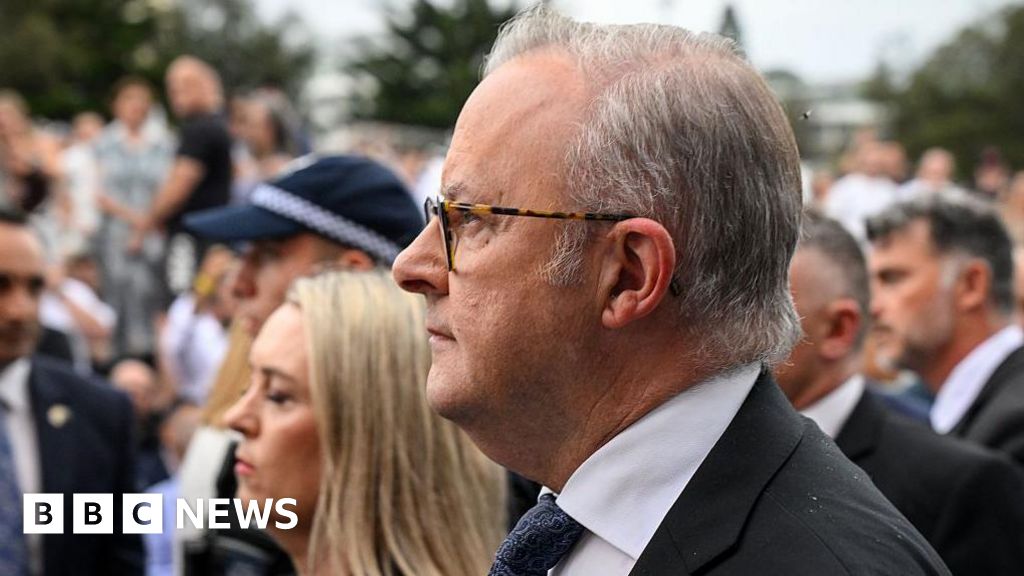
CANBERRA – Australian Prime Minister Anthony Albanese on January 8, 2026 announced a royal commission – the country’s most powerful form of independent inquiry – into the December 14, 2025 shooting at Bondi Beach that targeted a Jewish festival and left 15 people dead.
The decision marks a reversal after weeks of public pressure from victims’ families and prominent Australians, and folds earlier government reviews and policy proposals into a single inquiry with coercive powers.
“I’ve repeatedly said that our government’s priority is to promote unity and social cohesion, and this is what Australia needs to heal, to learn, to come together in a spirit of national unity,” he told reporters in Canberra. “It’s clear to me that a royal commission is essential to achieving this.”
Mandate and scope
Albanese said the commission will examine four areas, with terms of reference agreed by cabinet and to be formally issued under the Royal Commissions Act 1902:
– The “nature and prevalence of antisemitism” in Australia and its “key drivers”.
– Recommendations for enforcement, border, immigration and security agencies to tackle antisemitism.
– The circumstances surrounding the Bondi attack, including any intelligence, policing or coordination failures.
– Any additional recommendations to strengthen social cohesion and counter ideological and religiously motivated extremism.
Officials emphasized that a royal commission can summon witnesses, compel documents and provide protections to whistleblowers, making it the primary instrument successive Australian governments have used to probe systemic failures in institutions ranging from banking to aged care.
Government’s shift and stated rationale
Until late December, Albanese had resisted calls for a royal commission, arguing that tightening gun ownership rules, strengthening hate speech laws, taking steps to address antisemitism and conducting a targeted review of intelligence and law enforcement would provide the fastest response.
He said he changed course after “tak[ing] the time to reflect,” receiving briefings from security agencies and meeting with members of the Jewish community and survivors’ families, who argued a fragmented series of reviews risked missing systemic issues.
Since the December 14 attack, families of victims and a coalition of lawyers, business figures and athletes mounted an almost daily public and media campaign urging the government to establish a royal commission, framing it as a test of Canberra’s willingness to confront rising antisemitism and violent extremism.
Leadership, timing and legal assurances
Former High Court justice Virginia Bell has been appointed to lead the inquiry as sole commissioner. Albanese said he has asked Bell to deliver her report by December 2026, adding, “This royal commission is the right format, the right duration and the right terms of reference to deliver the right outcome for our national unity and our national security.”
Addressing concerns about overlap with criminal proceedings against the alleged gunman who survived, Albanese said: “It’s one of the reasons why we chose someone who has a criminal law background, has been in senior positions in the Supreme Court and the High Court of Australia. That is, she’s the most qualified person we could possibly consider.” He stressed that the commission would be required to conduct its work without prejudicing ongoing prosecutions.
Speaking alongside the prime minister, Attorney General Michelle Rowland described Bell as “an eminent and highly capable former Justice of the High Court of Australia, and I have no doubt that she will examine the complex issues ahead with impartiality and precision.” The attorney general said her department would work with Bell’s office to ensure clear protocols on information-sharing between the commission, police and prosecutors.
Albanese also said the inquiry is not intended to “provide a solution on Gaza or on the Middle East” and added, “The truth is that some people have held Jewish Australians to account for views or actions that that they’re opposed to, that have nothing to do with them.” He framed the commission’s work as focused on domestic security, social cohesion and the protection of minority communities rather than foreign policy.
Integration of existing security review
The ongoing review of intelligence and law enforcement by former spy chief Dennis Richardson will be folded into the royal commission, with his work expected to form the backbone of its examination of how agencies tracked and shared information before the attack.
An interim report from that work is expected in April 2026, providing the commission with early findings on operational gaps, resourcing and coordination between federal and state bodies. The government has signalled that it may act on urgent recommendations ahead of the royal commission’s final report if Richardson identifies critical security shortcomings.
Policy steps taken since the attack
State and federal leaders agreed on new measures in the days after the Bondi shooting. According to the government, these immediate policy responses are intended to run in parallel with, and be stress-tested by, the commission’s work:
– Gun controls will be tightened, including limits on the number and types of firearms an individual can hold, and a buyback scheme to remove certain weapons from circulation.
– Hate speech reforms will include penalties for preachers and leaders who promote violence and a new federal offence of “aggravated hate speech.”
– The government intends to adopt recommendations issued in July by antisemitism commissioner Jillian Segal, including clearer reporting channels for hate incidents and stronger obligations on public institutions to respond.
Segal’s July report drew criticism from some for its implications for free speech, including proposals to monitor universities and arts organisations and withhold funding if they were deemed to have failed to act against antisemitism. Standing with Albanese on Thursday, Segal welcomed the decision to proceed with a royal commission, calling it “the right one and an important one” and saying “It does reflect the seriousness of the growth in antisemitism and its impact on our country and our democracy.”
Reactions and concerns
Rumours of Bell’s appointment had drawn criticism from some within the Jewish community, exposing early tensions over how representative and trusted the inquiry’s leadership would be. Before the announcement, former treasurer Josh Frydenberg said he had been told by Jewish leaders there were “serious concerns” about her appointment, without specifying what they were.
Community groups have also raised questions about how the commission will engage with Muslim and other minority communities, given its broader remit on extremism and social cohesion. The government has promised extensive public hearings and outreach but has released few details on how victim participation and community testimony will be supported.
Royal commission powers and process
Royal commissions in Australia are established at the federal level under the Royal Commissions Act 1902 and are independent inquiries with the authority to:
– Compel testimony and documents from individuals and institutions, including government agencies and private organisations.
– Hold public or private hearings and take evidence under oath, with protections for vulnerable witnesses.
– Make findings of fact and issue recommendations to government, which typically provides a formal response and is expected to publicly justify any decision not to implement them.
Once established by letters patent from the governor-general, a royal commission operates at arm’s length from the government of the day, but its findings can drive major shifts in legislation, funding and institutional design, as seen in previous inquiries into child sexual abuse and financial services.
Key dates
– December 14, 2025: Shooting at Bondi Beach targeting a Jewish festival; 15 people killed.
– January 8, 2026: Prime minister announces a royal commission and names Virginia Bell as commissioner.
– April 2026: Interim report from the Richardson security and law‑enforcement review expected and to be provided to the commission.
– December 2026: Bell asked to deliver the royal commission’s final report, with the government expected to table a formal response in parliament.
Status: The government has established the inquiry’s terms and leadership; the interim security review report is due in April 2026, and the royal commission is now the central vehicle for Australia’s policy and institutional response to the Bondi Beach attack.
Keep reading
