
Russia is moving to wall off its internet from the world in a piecemeal but fast‑intensifying campaign of blackouts, throttling and targeted blocks that now increasingly cut everyday users off from core services, according to network data and digital rights researchers. The escalation has focused in recent days on Telegram, the country’s dominant messenger, with access deteriorating across hundreds of networks since March 20 and officials hinting at a full block in early April.
The Kremlin’s approach differs from Iran’s headline‑grabbing nationwide blackouts: Russia’s internet is more decentralized, making censorship harder to implement and easier to disguise as routine outages. As a result, the campaign has been opaque, regionally uneven and technically varied, but it is steadily splintering Russia’s “Runet” from the global internet.
“This is a step backward – a step 100 years back. They might as well switch to paper mail, telegraphs and horses soon,”
Ukrainian president Volodymyr Zelenskyy wrote on X as Telegram access faltered across Russia.
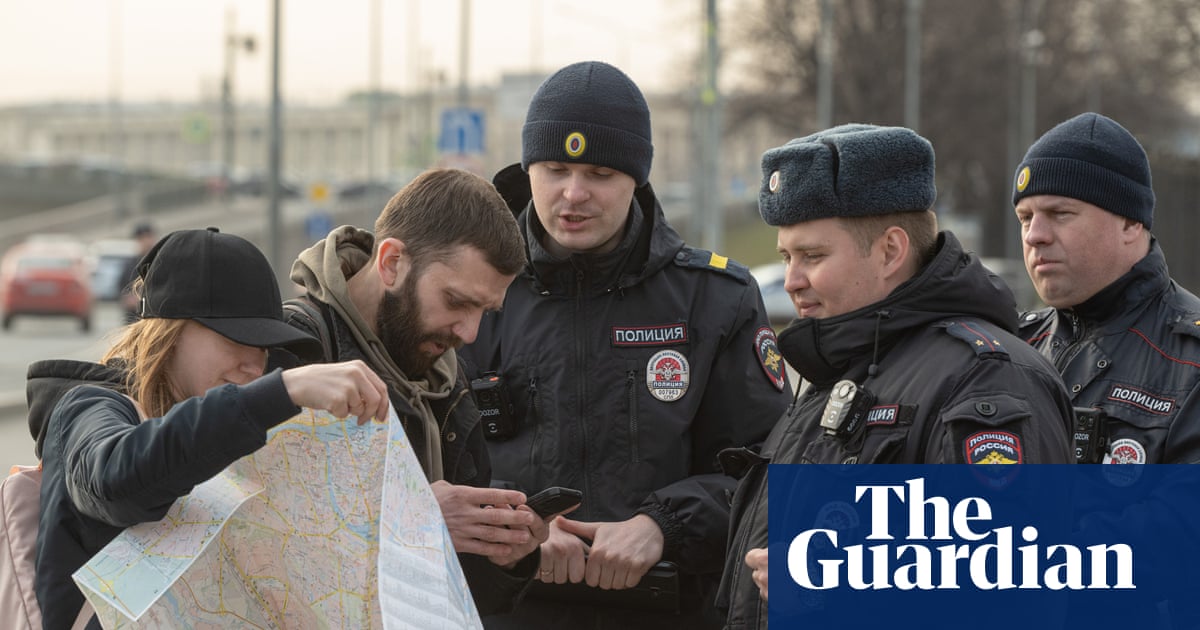
Escalating blocks have coincided with mobile internet shutdowns in cities and regions, including a complete cut to mobile data in central Moscow earlier this month that disrupted banking, transport and business operations. Russian retailers reported a run on pagers, paper maps and basic handsets as people improvised around the outages.
Nut graph
The fragmentation of Russia’s connectivity is not only a domestic civil‑liberties story. It is a live test of state‑engineered “splinternet” in a G20 economy, with consequences for cross‑border communications, sanctions enforcement, cyber‑security planning and the universality of the internet. It pushes millions of Russians toward government‑approved services and data pathways while normalizing shutdowns that international bodies have repeatedly condemned as incompatible with human rights law. The legal and technical architecture Russia has built since 2019 enables rapid isolation of Runet from the global network-and other governments, regulators and security agencies are watching as they debate how far states can go in controlling core digital infrastructure under international norms.
How the shutdown works
Arturo Filastò of the Open Observatory of Network Interference (OONI), which monitors censorship globally, says Russia’s shutdown is “quite a bit more opaque and less visible” than Iran’s because Russia has “many more internet service providers that operate and manage their network a bit more independently.” The result is a patchwork of interference methods that vary by carrier and region, complicating both technical mitigation and legal oversight.
Authorities have leaned on a nationwide “whitelist” regime during mobile outages, allowing only pre‑approved sites-government portals, major state‑aligned platforms and selected marketplaces-while everything else times out. Russia’s digital ministry has acknowledged the whitelist exists and said it will be updated regularly; business media and local officials have reported such restrictions in dozens of regions since late 2025. For companies, that means a growing need to route critical services through approved channels or risk being cut off with little notice.
The legal basis rests on the “sovereign internet” law that took effect on November 1, 2019. It mandates that providers install government‑controlled “technical means for countering threats” (known by the Russian acronym TSPU), enabling Roskomnadzor-the state communications regulator-to filter, reroute, or shut traffic centrally using deep packet inspection (DPI). Human Rights Watch and the Internet Society warned at the time that the law greatly expanded the state’s capacity for opaque, extrajudicial censorship and partitioning of Runet.
Telegram in the crosshairs-and the state’s alternative
Russia tried and failed to block Telegram between 2018 and 2020; authorities quietly lifted the ban after it proved unenforceable and politically costly. Today’s measures appear broader and technically more capable, with probes indicating interference on 500+ networks and users reporting slowdowns and failures to connect across different regions, operators and devices.
In March, the head of state telecoms provider Rostelecom publicly dismissed WhatsApp as “dead” and said Telegram would soon follow-signaling a political decision to sever access entirely rather than a purely technical or security‑driven measure. For diplomats, multinationals and aid organizations that have relied on Telegram channels to reach audiences inside Russia, the prospect of a full block raises fresh questions over how to maintain communication in a more tightly controlled environment.
Analysts at Amnezia VPN, a censorship‑circumvention developer, say the new blocks are “more sweeping and indicate greater technical capability” than before and are visible across regions including Moscow and St. Petersburg. They add that censors are “blocking more crudely and on a much larger scale, no longer worried that something might break or spiral out of control”. According to the firm, Roskomnadzor is now “testing how the economy will function under strict restrictions at any time of the year,” forecasting that “shutdowns in Moscow will become more or less routine.”
The pressure campaign coincides with an aggressive state push for Max, a government‑backed messenger developed by VK and integrated with public services. By government order, Max has been pre‑installed on new phones and tablets in Russia since September 2025, part of a broader digital‑sovereignty drive; officials and state media have promoted it as the “national” messenger even as critics warn of surveillance risks and the consolidation of communications data under state‑linked platforms.
Moscow’s blackout and the daily cost
In early March, mobile internet in central Moscow was switched off entirely, interrupting payments, transit updates and app‑based services. Russian media and business outlets estimated the cost of the capital’s disruption at roughly 1 billion rubles (about $11-12 million) per day, while the digital ministry’s evolving whitelist left many banking and communications apps unreachable. For municipal planners and corporate risk officers, the outage exposed how quickly smart‑city systems and cashless commerce can grind to a halt when connectivity is treated as a lever of public‑order policy rather than essential infrastructure.
“I’m switching to pigeon post,” said one Russian internet user in a televised clip. “I pay for the internet and I feel I am being robbed every month. They just take my fucking money and I don’t use the benefits of civilisation!” The frustration reflects a widening gap between official narratives of digital sovereignty and the lived reality of disrupted services, longer queues and rising transaction frictions.
From DPI to disconnection drills
Russia has spent years building the tools now deployed. Beyond the TSPU filtering layer, the country maintains SORM, a nationwide lawful‑interception system that enables direct security‑service access to networks. Together, TSPU and SORM give authorities both the capability to monitor traffic and the technical levers to degrade or sever it at scale.
Authorities have also rehearsed Runet isolation, conducting tests in 2019 and again in 2021 to ensure domestic routing would continue if Russia were cut off from the global internet or chose to disconnect. State media and industry outlets described these exercises as successful. For foreign governments and international regulators, those drills were an early signal that Moscow was not only planning for cyber‑conflict contingencies but also building a template for managed disconnection that other states could seek to emulate.
Rights and rules
UN human rights standards affirm that the same rights people have offline must be protected online, and the Human Rights Council has condemned intentional internet shutdowns. Under Article 19 of the International Covenant on Civil and Political Rights, restrictions on expression must meet strict tests of legality, necessity and proportionality-criteria rights groups argue blanket or prolonged shutdowns do not satisfy.
Digital‑policy experts say Russia’s current campaign will likely feature in future UN debates over whether and when states may intentionally disrupt connectivity. For regulators in other jurisdictions, it sharpens a dilemma: how to uphold commitments to an open, interoperable internet while major powers showcase increasingly sophisticated toolkits for selective disconnection and domestic information control.
Platforms already squeezed
Russia blocked Facebook and Instagram in March 2022 and later designated parent company Meta an “extremist” organization-an order that did not initially extend to WhatsApp. Authorities have since restricted calling features in WhatsApp and Telegram and moved to throttle or block foreign platforms seen as non‑compliant with data‑localization rules, content‑takedown orders or wartime information controls. The result is a layered system in which platforms may face partial restrictions long before a formal ban, blurring the line between technical congestion and regulatory punishment.
Comparisons-and limits
Russia’s model differs from China’s largely centralized Great Firewall and Iran’s periodic nationwide blackouts. The country’s thousands of ISPs and complex peering arrangements mean censorship often appears as “failures” or degraded quality rather than a single switch being flipped-precisely why, researchers say, Russia’s system can be both less visible and harder to predict for users and businesses. That unpredictability complicates the work of compliance teams and crisis planners, who must now treat connectivity itself as a variable rather than a given.
Key milestones
- April 2018-June 2020: Court‑ordered Telegram ban proves unworkable; authorities lift the restriction after users and businesses route around it and enforcement becomes politically and technically costly.
- November 2019: “Sovereign internet” law enters into force; providers must install TSPU filtering equipment, formalizing Roskomnadzor’s central role in managing traffic flows.
- March 2022: Facebook and Instagram blocked; Meta designated “extremist” (WhatsApp initially exempt), marking a sharp escalation in platform‑level sanctions.
- Mid‑2025: Nationwide rollout of mobile “whitelists” during regional shutdowns; calling features restricted in WhatsApp and Telegram as the state tests more granular levers of control.
- February-March 2026: State push intensifies for Max; Moscow mobile blackout; Telegram access increasingly blocked across Russia as officials signal a possible full ban.
Arturo Filastò notes the Kremlin’s censorship is harder to spot than Iran’s precisely because of Russia’s network diversity. Amnezia’s analysts warn that “updates appear to be rolled out as soon as they are ready,” and that censors are no longer trying to minimize collateral damage-a shift that leaves companies, local authorities and foreign missions with little time to adapt.
Status: As of March 31, 2026, mobile internet restrictions remain in effect across parts of Russia, central Moscow has experienced complete mobile data shutdowns this month, OONI probes show widespread interference with Telegram on more than 500 networks since March 20, and officials have signaled a full national block of Telegram in early April. For policymakers and corporate boards, Russia’s experiment has moved from hypothetical scenario to operating reality: a major economy demonstrating, in real time, how far a state can go in re‑wiring the internet within its borders.
Related reading
