
The United States‘ bombardment of Venezuela and the capture of President Nicolás Maduro mark a historic rupture in the hemisphere: the first direct U.S. military attack on a South American country after two centuries of interventions elsewhere in Latin America and the Caribbean. At a press conference after Maduro’s capture, Donald Trump said that “American dominance in the western hemisphere will never be questioned again”.
The operation instantly reframes U.S.-Latin America relations, tests the legal guardrails of the United Nations and the inter-American system, and jolts global energy markets given Venezuela’s outsized oil endowment. It also revives-explicitly-the logic of the Monroe Doctrine as updated by the Trump administration’s recently released national security strategy, which promises an expanded U.S. military footprint across the Americas.
“American dominance in the western hemisphere will never be questioned again”.
A doctrine revived-by design
The White House’s late-2025 national security strategy introduced what senior officials have called a “Trump Corollary” to the Monroe Doctrine, pivoting resources to the Western Hemisphere and signaling more assertive U.S. military operations “close to home.” Defense officials have described the doctrine as “stronger than ever,” a framing that helps explain why the first direct U.S. strike in South America is occurring now-and why allies and rivals alike are recalibrating.
For Latin American governments, the renewed doctrinal language lands in a region that had spent decades trying to move beyond great‑power spheres of influence. The explicit revival of a U.S. claim to regional primacy now forces presidents, foreign ministers, and defense chiefs from Mexico City to Buenos Aires to re‑assess alliance structures, basing agreements, and the future of regional security forums.
Brazil, South America’s largest democracy and economy, condemned the intervention as crossing “an unacceptable line,” underscoring how quickly the move is polarizing regional diplomacy. Brasília urged a firm UN response even as it offered to facilitate talks-an early indicator of how difficult hemispheric consensus will be and how sharply views may diverge between governments that see Maduro’s removal as an opening and those that see the means as a destabilizing precedent.
The law: from New York to Washington to Washington, DC
Under the UN Charter, states must refrain from the threat or use of force against the territorial integrity or political independence of any state-except with Security Council authorization or in self-defense under Article 51. That baseline is why an emergency Security Council session is now set for Monday and why the debate there will focus on whether Washington can credibly claim self‑defense, some form of collective defense, or a sui generis doctrine that many member states are likely to reject.
In the Americas, the Organization of American States Charter codifies non‑intervention and the inviolability of territory; the Inter‑American Democratic Charter commits members to democratic norms; and the Rio Treaty (TIAR) provides for collective measures-including, in theory, collective self‑defense-when regional peace is endangered. The TIAR was controversially reactivated over Venezuela’s crisis in 2019, but its parties have never authorized the use of force. Whether any TIAR signatories now try to retroactively frame the strikes as a collective measure will be a key test of the treaty’s contemporary relevance and of regional willingness to normalize extra‑territorial regime change.
U.S. domestic process matters too. The War Powers Resolution requires the president to notify Congress within 48 hours of introducing forces into hostilities and limits deployments without explicit authorization or a declaration of war to 60 days, plus a 30‑day withdrawal period. That timeline turns the Venezuela operation into an immediate governance question on Capitol Hill: committees will seek classified briefings, party leaders will be pressed on whether to authorize or restrain the mission, and any perceived bypassing of Congress could re‑ignite long‑running disputes over the balance of war‑making powers between the executive and legislative branches.
History rhymes: interventions that shaped the neighborhood
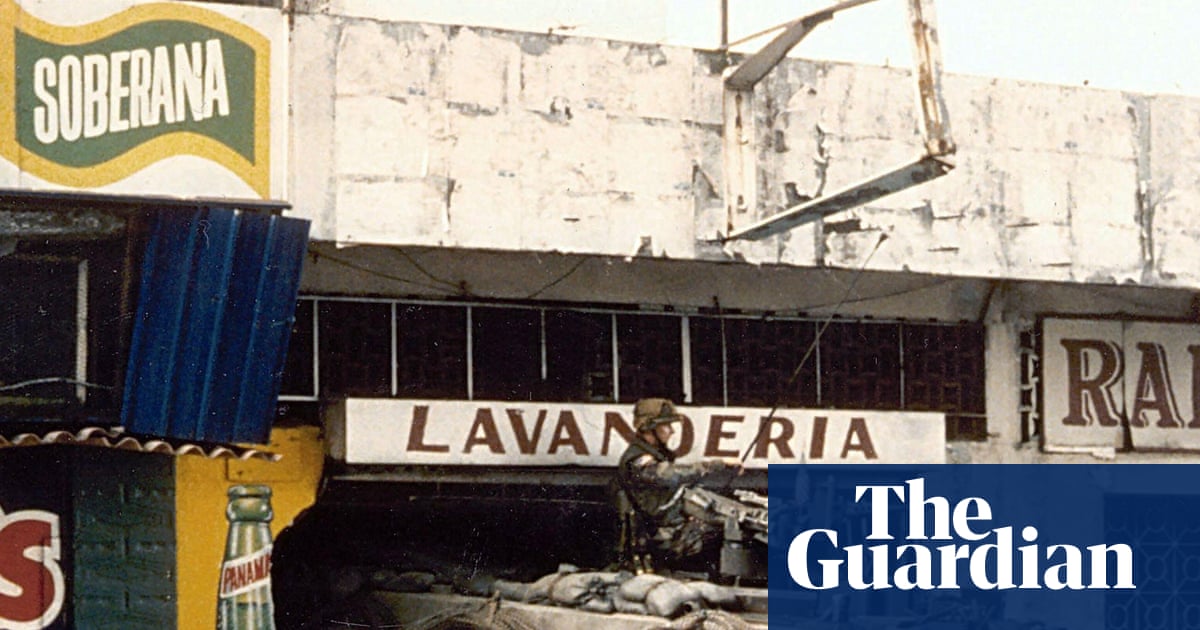
Scholars note that while Saturday’s action is “in line” with a long roster of U.S. interventions, it is “shocking because nothing like this has happened since 1989.” The closest analogue remains the capture of Panama’s Manuel Noriega during the 1989 invasion, after which Washington installed declared winner Guillermo Endara as president. “One might have thought that this era of naked imperialism – of the US getting the political outcomes it wants in Latin America through sheer military force – would be over in the 21st century, but clearly it is not,” said Alan McPherson, a historian of U.S. interventions.
In Panama, Pentagon figures reported 516 Panamanian deaths (314 soldiers and 202 civilians) and 23 U.S. troops killed; human-rights groups and Panamanian sources have long argued the civilian toll could be higher-discrepancies that foreshadow contentious casualty debates around Venezuela. As images and testimonies emerge from Venezuelan cities hit in the bombardment, similar disagreements over methodology, access, and intent are likely to shape the human‑rights narrative and fuel calls for independent inquiries.
Below are landmark episodes that define the regional backdrop:
- Mexico (1846-1848): The U.S. invaded, occupied Mexico City, and compelled the Treaty of Guadalupe Hidalgo, under which Mexico ceded about 55% of its territory-now parts of California, Nevada, Utah, Arizona, New Mexico, Colorado, and Wyoming.
- Cuba (1898-1902; 1906-1909; 1917-1922): U.S. intervention ended Spanish rule; the Platt Amendment and 1903 treaties gave Washington a perpetual lease at Guantánamo Bay and formalized a sweeping right to intervene-an arrangement later repealed in 1934, except for the base.
- Haiti (1915-1934): U.S. Marines seized fiscal and political control for 19 years; supporters called it stabilization, critics pointed to repression and forced labor.
- Guatemala (1954): A CIA‑backed operation toppled democratically elected President Jacobo Árbenz, inaugurating decades of internal conflict.
- Dominican Republic (1965): U.S. forces intervened amid civil war-one of several Cold War landings in the Caribbean basin.
- Brazil (1964): Washington staged “Operation Brother Sam,” positioning a naval task force off Brazil to support a coup that ousted President João Goulart; landings proved unnecessary, but the show of force was explicit.
- Grenada (1983): U.S.-led forces invaded after a Marxist putsch; 19 U.S. service members were killed.
- Panama (1989): “Operation Just Cause” removed Noriega; casualties remain disputed and the OAS and UN criticized the invasion’s legality.
The Venezuela operation now drops into this lineage, but with one crucial distinction: it targets a government that, despite international disputes over election integrity and human‑rights abuses, still holds formal recognition from some states. That split recognition will complicate how foreign ministries and multilateral bodies describe Maduro’s status in the hours and days ahead.
Head‑of‑state capture and immunity questions
The forcible seizure of a sitting head of state raises complex issues under customary international law, which generally accords personal inviolability and immunity to senior officials while in office. The International Court of Justice has affirmed such immunities for incumbent foreign ministers; national courts have debated their scope for heads of state in cases involving mass‑atrocity allegations. How this precedent interacts with battlefield detention by a foreign military-outside extradition or international‑court processes-will be central to the legal fight now unfolding.
Key questions for governments and courts include whether Maduro is treated as a prisoner of war, a criminal suspect, or some sui generis category; which jurisdiction, if any, claims authority to prosecute him; and how third states respond if U.S. aircraft carrying him transit their airspace. Each of those choices carries implications for future conflicts: lawyers warn that eroding head‑of‑state immunity in one case can make it easier to justify similar actions elsewhere, including against democratic leaders.
The energy stakes: Venezuela’s barrels and U.S. refiners
Venezuela holds the world’s largest proven crude reserves-around 303 billion barrels, much of it extra‑heavy oil in the Orinoco Belt-yet chronic under‑investment, technical decay, and years of sanctions have left output a fraction of historic peaks. The U.S. Energy Information Administration estimates those reserves account for roughly 17% of the global total.
Because Gulf Coast refineries are configured to process heavy sour crude, any redirection of Venezuelan barrels back toward the U.S. would be commercially significant, though structural recovery of production will take years and vast capital. Analysts note that sanctions reshaped flows toward China in recent years; a policy shift could swing volumes-but slowly-given damaged infrastructure and legal claims against PDVSA assets. For energy and finance ministries across the hemisphere, the immediate task will be to map potential supply disruptions, hedge against price volatility, and anticipate how any post‑Maduro government might revisit contracts, licensing rounds, and debt restructuring.
Inside the administration’s rationale-and pushback
Maurício Santoro, an international-relations scholar in Rio de Janeiro, called the strike the “first direct US military attack on a South American country” and said it “signals a major shift in foreign and defence policy – one that is made explicit in the new national security strategy published by the Trump administration a few weeks ago”. The strategy labels the shift a “Trump corollary” to the Monroe Doctrine and calls for an “expansion” of the U.S. military presence across the region.
Inside Washington, aides argue that the move demonstrates resolve against authoritarian leaders they accuse of destabilizing neighbors and hosting extra‑hemispheric adversaries. But critics-across Latin America and within parts of the U.S. foreign‑policy establishment-counter that bypassing negotiated transitions in favor of a lightning military operation risks normalizing armed regime change and undercutting the very norms the United States has long said it supports.
Alan McPherson, a historian of U.S. interventions, said Saturday’s operation is “in line” with many past actions but “shocking because nothing like this has happened since 1989,” adding: “One might have thought that this era of naked imperialism – of the US getting the political outcomes it wants in Latin America through sheer military force – would be over in the 21st century, but clearly it is not.” His view echoes a broader concern among regional diplomats that the operation could chill already‑fragile democratic gains, embolden hard‑liners on all sides, and push contested leadership questions out of electoral and judicial arenas and back onto the battlefield.
As of Sunday, January 4, 2026, the UN Security Council is scheduled to convene on Monday to consider the U.S. action in Venezuela. The outcome will not only determine the degree of formal censure or endorsement Washington faces; it will also signal to presidents, parliaments, and courts worldwide whether the capture of a sitting head of state by force is treated as an aberration-or as an emerging, if deeply contested, tool of statecraft.
Worth a look
- Global Food Security Alliances: How Climate-Resilient Agricultural Corridors Are Stabilizing Wheat and Rice Supplies
- Cross-Border Renewable Energy Grids: North Sea and Mediterranean Subsea Cable Networks Enter Phase Two
- Flydubai co-pilot attacked pilot with axe in attempted 'terrorist attack', UAE says (globallypulse.com)
