
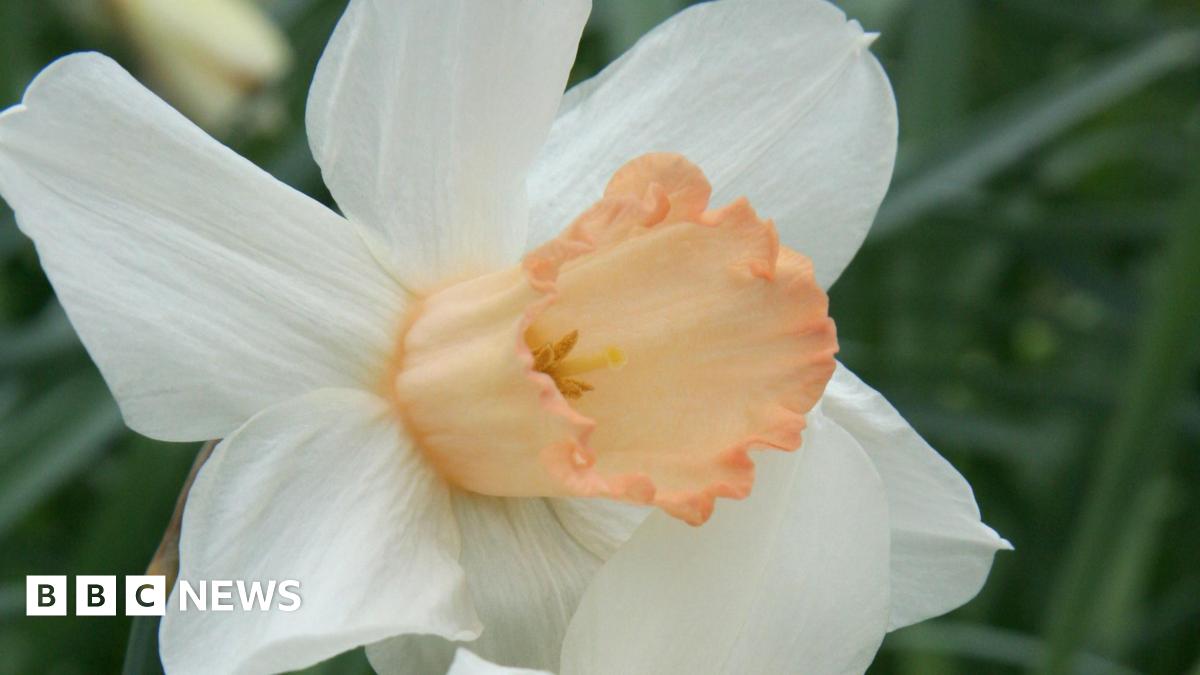
The Royal Horticultural Society has launched a public hunt for a once-ubiquitous pink daffodil, turning a heritage plant search into a real-world test of how citizen science, lab verification, and responsible plant movement can work together. “Yellow daffodils are far and away the most popular, not unsurprising, for their welcome burst of colour,” said Dr Kalman Konyves, the RHS’s principal plant scientist. “But it is interesting to note that the more adaptable pinks have proven less popular than we might have assumed, and green and red varieties negligible, highlighting the importance in maintaining cultivated diversity in gardens.”
The appeal centers on rediscovering Narcissus ‘Mrs R.O Backhouse’-a salmon‑pink cultivar once widely grown-and on re-establishing it in cultivation at scale. “The public will be able to report suspected pink daffodils to the RHS by sending in photographs, which will be sent to expert botanists to examine.” “Speaking to BBC Radio Wales, RHS chief horticulturist Guy Barter said they would then ask the participants to send in a bulb so they could grow them at the John MacLeod Field Research Facility at Wisley, Surrey.” “Experts across the country would then be able to “examine and give us a definitive answer” if those discovered by the public are Narcissus ‘Mrs R.O Backhouse’.” “‘Mrs R.O Backhouse’ was named after plant breeder and horticulturist Sarah Backhouse, who created the first true pink daffodil.” “The variety became the most well-known and widely grown pink daffodil for over 90 years.” “The garden charity hopes the now rare salmon-pink flower will be able to be bred and returned to wider cultivation before it disappears entirely.” “The RHS, in partnership with the conservation charity Plant Heritage, are also looking for two other rare daffodils – the white double flowered ‘Mrs William Copeland’ and orange and yellow double flower ‘Sussex Bonfire’.”
Citizen discovery meets verifiable botany
This is a classic crowdsourcing problem with biological and regulatory consequences: thousands of potential sightings, uneven image quality, and a need for definitive identification before any propagation effort or movement of plant material. The project’s strength is the handoff from public reporting to expert validation and controlled growing at Wisley. Framed correctly, it also becomes a live demonstration of how public institutions can steward cultivated biodiversity under modern plant health rules.
A modern verification stack can make that pipeline faster, auditable, and resilient to errors, while giving regulators, conservation charities and commercial growers confidence that any reintroduced stock is what it claims to be-and that the route from a garden border to a nursery bench can withstand official scrutiny.
Verification pipeline that scales
| Stage | Purpose | Key controls |
|---|---|---|
| Intake and triage | Collect photos and metadata; route likely matches to specialists | Timestamped submissions; GPS (optional) and region notes; habitat descriptions; duplicate detection; queuing by confidence score and regional priority |
| Image assessment | Phenotypic screening of candidate blooms | Reference panels for corona hue/shape; color calibration using on‑device cards; glare/blur checks; adversarial or obviously synthetic image detection |
| Bulb request and custody | Obtain living material for grow‑out | Unique IDs tied to the original report; tamper‑evident packaging; chain‑of‑custody logs; quarantine to mitigate pest/pathogen spread and demonstrate compliance with plant health conditions |
| Greenhouse grow‑out | Confirm traits across flowering cycles | Controlled light/temperature; side‑by‑side with authenticated reference stock; photographic time series; structured scoring of diagnostic traits |
| Molecular support (where needed) | Resolve ambiguous cases | Standard plant barcodes (rbcL, matK); herbarium voucher creation; documentation for long‑term curation and future cross‑checking |
| Propagation and distribution | Rebuild clean, true‑to‑type supply | Pathogen screening; indexed mother stock; propagation under documented conditions; traceable plants to nurseries and collections, giving buyers and regulators a transparent paper trail |
Data that makes public sightings useful
For household gardeners and estate managers alike, the most valuable contribution is not just a striking flower, but a record that specialists can interrogate. The more structured that record, the more efficiently curators and regulators can distinguish genuine candidates from lookalikes.
- Whole‑plant images plus close‑ups of trumpet (corona), perianth, and foliage.
- Natural‑light shots with a neutral colour or grey card, avoiding heavy filters.
- Approximate location (garden/region) and bloom date; no precise home addresses required.
- Context: planting age (if known), whether bulbs were inherited with the property, soil and shade conditions, nearby cultivars.
- Original files with EXIF intact for basic provenance checks and to support any later audit of the discovery trail.
Risks and safeguards for a crowdsourced botany programme
Inviting the public into a conservation effort inevitably introduces noise-and potential abuse-into the system. The design challenge for the RHS and Plant Heritage is to harness enthusiasm without compromising plant health, personal privacy or institutional credibility.
- Misidentification at scale – mitigated by standardized photo prompts, clear examples of what does and does not look like the target cultivars, and multi‑step expert review.
- Generative image submissions – limited by raw‑file or unedited‑photo uploads, EXIF checks, and synthetic‑image screening that flags obviously AI‑generated pictures.
- Biosecurity – reduced through quarantine, clean‑stock indexing, pest/pathogen testing before propagation, and explicit alignment with UK and devolved‑nation plant health guidance.
- Privacy – protected by collecting only the minimum data needed for scientific value and by clearly explaining, in plain language, how locations and personal details will be stored and used.
Regulatory and governance footing in the UK
The pink‑daffodil hunt may feel like a gentle spring story, but it sits squarely inside the UK’s formal plant‑health regime. Any movement of bulbs must align with the statutory framework overseen by the UK’s National Plant Protection Organisation and implementing bodies such as the Animal and Plant Health Agency, which take their mandate from the retained EU plant health regime now consolidated under the Plant Health (EU Exit) Regulations 2019.
- Plant health rules apply when moving bulbs; senders should only ship material when formally requested and follow the packaging and labelling instructions provided by project staff, who are responsible for ensuring compliance with inspection and notification requirements.
- Custody documentation and quarantine logs help demonstrate compliance during any inspection or audit and give public bodies confidence that rediscovered cultivars are not vectors for regulated pests.
- Voucher specimens and living accessions should be recorded with stable identifiers to support collection management, future research use, and integration into national plant‑collection registers.
Why resurrecting heritage cultivars is a technology and policy story
Recovering a cultivar is part biological rescue, part data and supply‑chain rebuild. Robust digital records, photographic standards and traceable propagation are what turn a handful of rediscovered bulbs into a reliable, market‑ready plant that gardeners can trust. For public institutions, the same infrastructure underpins risk management: a clear line from a photograph in a private garden to an accession number in a collection database and a saleable bulb in a nursery.
The work also strengthens cultivated diversity, an often‑overlooked layer of resilience for public gardens, municipal plantings and home landscapes. In an era of climate stress and emerging plant diseases, governments and arm’s‑length bodies increasingly view cultivated diversity as part of their adaptation toolkit, not merely an aesthetic choice.
How to engage responsibly
For readers tempted to check the far corner of a border or an inherited clump of daffodils at a family home, participation is straightforward-but must follow the project’s rules.
- Share clear photographs and basic context; keep the bulb in the ground unless specifically asked to lift it.
- Do not mail plant material without written instructions from the organisers; unsolicited packages risk breaching plant health conditions and may be destroyed.
- If contacted, follow packing and hygiene guidance precisely to protect plant health and ensure admissible chain‑of‑custody in any subsequent testing or official inspection.
Further details on reporting suspected finds and horticultural guidance are available from the Royal Horticultural Society. Information on conserving cultivated plant diversity and National Plant Collections, including how they relate to national conservation policy, can be found via the conservation charity Plant Heritage’s own resources.
Keep reading
