
NBA Fantasy Power Rankings: Wembanyama, Dončić Set Fierce Early Pace as Murray Cracks Top 10
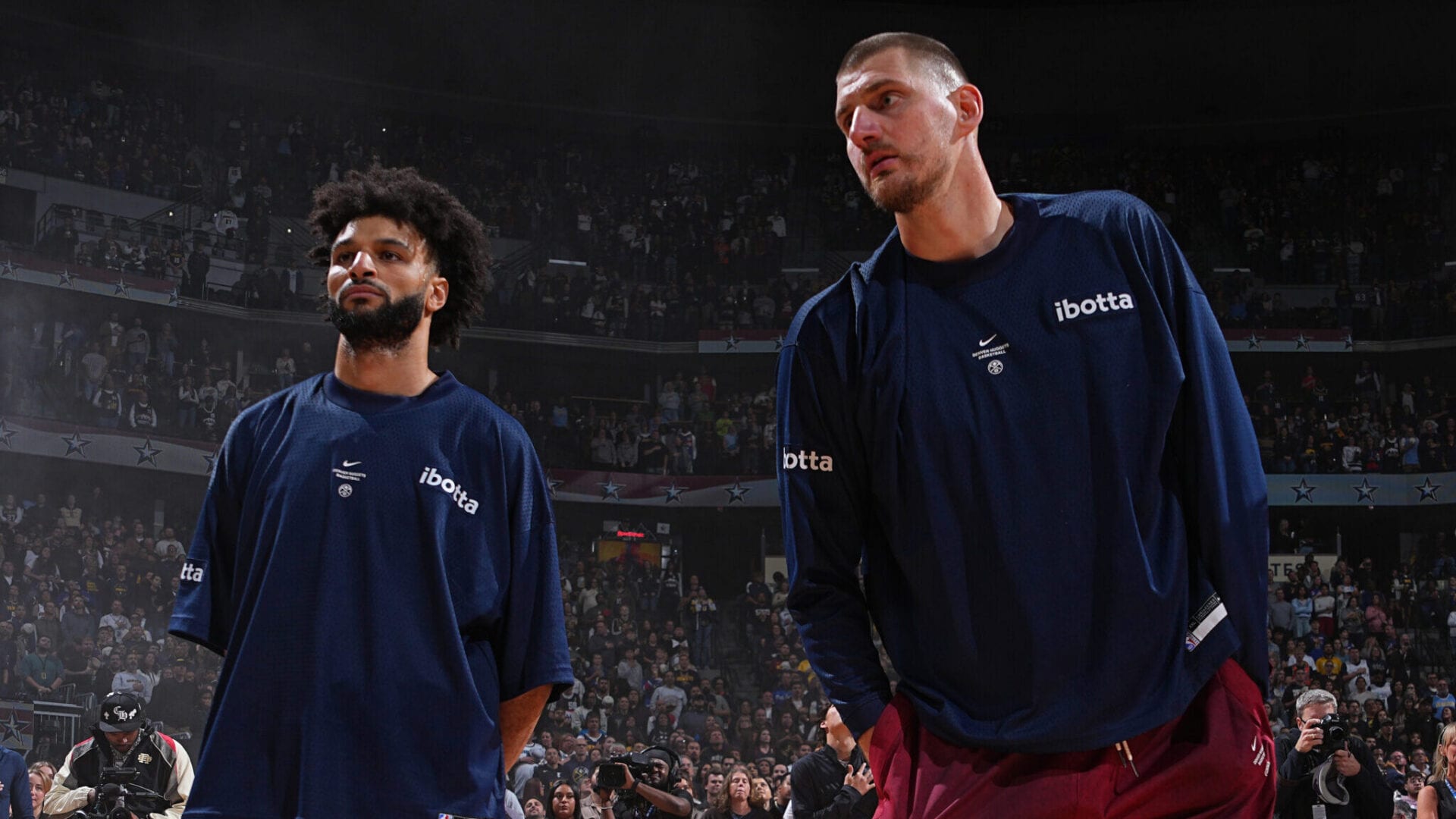
Jamal Murray is off to a hot start for the Denver Nuggets, with five 30-point performances through 10 games.
The opening weeks of the NBA season have delivered a dense cluster of elite fantasy performances, reshaping early draft hierarchies and placing unusual pressure on managers in competitive leagues. With several stars producing historic offensive numbers and a new generation of forwards impacting every statistical category, roster decisions in fantasy formats built around points, rebounds, assists and defensive “stocks” (steals plus blocks) have rarely felt this unforgiving.
This edition of GlobalHeadlinez’ Fantasy Power Rankings reflects that intensity. The current top 10 retains most of last week’s names but sees one key new entrant, notable movement within the top tier, and a clear – if narrow – gap between Victor Wembanyama and Luka Dončić at the very top.
All performances sit within the framework of the NBA’s regular season, which is contested under the competition regulations overseen by the National Basketball Association. While the rankings are fantasy-focused, they mirror broader trends that could influence team strategies, award races and ultimately postseason positioning.
10. Jamal Murray, Denver Nuggets
Last week: NR↑
Murray enters the rankings on the back of an emphatic scoring surge. After a difficult season-opener, the Denver guard has averaged 28.4 points, 4.4 rebounds and 6.2 assists across his next nine games, including five 30-point outings and a 42-point showcase.
That production has lifted him to eighth in the league in scoring, where he is tied with Ty Jerome, and translated into an average of 48.4 High Score fantasy points. In fantasy terms, Murray profiles as an ideal secondary star: not the foundational piece of a roster, but a highly efficient No. 2 whose scoring outbursts can swing weekly head-to-head matchups.
For Denver, this level of offensive responsibility from Murray helps support Nikola Jokić’s dual role as scorer and facilitator. For managers, it reinforces the value of investing in high-usage guards on contending teams, where late-game possessions and overtime scenarios often add incremental fantasy value.
9. Tyrese Maxey, Philadelphia 76ers
Last week: 9
Maxey holds his place in the top 10 after what would be considered a solid rather than spectacular week by his new standards. Over the last seven days he has averaged 22.7 points and 5.0 assists on 51.2% shooting, while taking only 14.3 field-goal attempts per game.
That shot volume sits below his season average of 18.5 attempts. Any return to that higher usage level would likely unlock additional scoring without undermining efficiency, preserving his value in both points-based and category leagues.
From a broader perspective, Maxey’s status illustrates how quickly expectations can adjust once a guard becomes a primary on-ball option. For fantasy managers, his profile – efficient perimeter scoring with reliable playmaking – is central to roster balance in leagues where guard-heavy builds must offset centers dominating rebounds and blocks.
8. Alperen Şengün, Houston Rockets
Last week: 10↑
Şengün continues his climb with a stretch that underlines his versatility as a modern center. In 10 games he has produced six double-doubles and averaged 21.1 points, 9.4 rebounds and 7.9 assists, figures that place him seventh in High Score fantasy output at 52.9 points per game.
Houston’s 9-3 record, achieved while Kevin Durant has not consistently carried the offensive load, reflects how much responsibility has shifted to the team’s young core. Şengün’s playmaking from the interior is central to that evolution, providing managers with a rare big who contributes at near-guard levels in assists while still offering traditional frontcourt production.
In fantasy formats that reward across-the-board contribution, Şengün’s profile reduces the need to chase pure assist specialists in later rounds, freeing managers to address defensive categories or three-point shooting instead.
7. Jayson Tatum, Boston Celtics
Last week: 8↑
Tatum edges upward after a week in which he averaged 25.0 points, 6.3 rebounds and 6.8 assists across four games, driving a five-game winning streak for Boston. For fantasy purposes, the key development is not just the scoring, but his sustained playmaking load within a high-functioning offense.
As a five-time All-NBA forward operating as a primary option on a team in strong form, Tatum offers rare stability. Managers benefit from his capacity to contribute even on nights when his shooting volume is muted: rebounding and assists remain steady, and his minutes are secure in competitive games.
In the wider league context, Boston’s strong run with Tatum at the center of its offense underlines the connection between real-world success and fantasy reliability. High-usage stars on winning teams tend to face fewer rotation shocks and late-season rest risks, both critical considerations for managers planning for fantasy playoffs.
6. Cooper Flagg, Dallas Mavericks
Last week: 7↑
Flagg’s leap in his second NBA season is highly unusual for a 19-year-old. With Dallas at 7-4, the forward is averaging 25.9 points, 6.9 rebounds, 6.9 assists and 2.2 steals, while maintaining the defensive and rebounding levels expected of him and adding expanded offensive creation.
His most recent standout line – 43 points, 10 rebounds, 6 assists and 4 combined steals and blocks – came in a win over Indiana and extended a four-game double-double streak. For fantasy managers, that combination of usage, efficiency and defensive activity places him in the same strategic tier as established two-way stars, even if his sample size at this level is still relatively short.
In terms of squad construction, Flagg’s profile eases the pressure to spend early draft capital on traditional point guards, as his assist numbers support a more flexible approach to backcourt depth. If sustained, this production could also influence Dallas’ long-term roster planning, with a young forward capable of shaping both regular-season results and eventual postseason matchups.
5. Shai Gilgeous-Alexander, Oklahoma City Thunder
Last week: 5
Gilgeous-Alexander remains firmly in the top five as an elite scorer who has already topped 30 points in six of 12 games this season. Over the past week he has averaged 28.8 points, but only 4.5 assists, a drop from the 6.6 assists he delivered last season.
The reduced playmaking output comes in the context of absences for Chet Holmgren, Cason Wallace and Jalen Williams, limiting the Thunder’s established finishing options around him. For fantasy managers who drafted him expecting a repeat of last year’s assist numbers, that shift narrows his ceiling unless he can compensate through additional rebounds or defensive production.
From a competitive standpoint, Oklahoma City’s ability to keep Gilgeous-Alexander in his preferred role – attacking off the dribble with multiple reliable outlets – will influence both their seeding ambitions and the guard’s sustainability as a top-tier fantasy asset across an 82-game schedule.
4. Giannis Antetokounmpo, Miami Heat
Last week: 4
Miami’s 0-4 start has given way to a steadier 5-6 mark, with Antetokounmpo providing the anchoring production that keeps him firmly in the fantasy elite. He is averaging 56.5 High Score points, routinely pairing 30-point scoring with double-digit rebounding.
The Heat’s offensive structure places significant value on his ability to draw defensive attention and create open looks for shooters. Klay Thompson, now Miami’s leading spot-up threat, has looked improved compared with last season despite being 36 years old, a development that could support an increase in Antetokounmpo’s assist numbers if maintained.
For managers, Antetokounmpo’s consistency offers insulation against volatility elsewhere on a roster. From Miami’s perspective, a revival in perimeter shooting around him is central to pushing back toward the upper half of the Eastern Conference, which in turn reduces the likelihood of rotation instability later in the season.
3. Nikola Jokić, Denver Nuggets
Last week: 3
Jokić holds at No. 3 after a familiar all-around week: 23.7 points, 13.3 rebounds, 8.3 assists and 2.3 combined steals and blocks across three games. His near triple-double baseline remains one of the most reliable platforms in fantasy basketball.
The Serbian center’s passing continues to dictate Denver’s half-court structure, and his partnering with Murray’s hot start only reinforces his assist totals. For fantasy managers, Jokić’s value is not just in overall output but in his low variance; it is rare for him to post a line that decisively harms a team’s weekly prospects in points formats.
Even so, with two players above him delivering historically strong scoring and shot-blocking numbers, his position in these early rankings is under genuine pressure, underlining the unusually high standard at the top of the fantasy landscape.
2. Luka Dončić, Los Angeles Lakers
Last week: 2
Dončić remains in second place despite what, by his recent standards, counts as a relatively modest run of back-to-back 32-point games. The Lakers star is still averaging 38.6 points, 7.5 rebounds and 7.6 assists while leading all players in High Score fantasy production at 69.6 points per game.
Los Angeles has started 11-2 and sits atop the league in points, field-goal percentage, effective field-goal percentage and offensive rating. That level of offensive efficiency is critical for fantasy managers: it suggests Dončić’s usage is being converted into points at a rate that supports both individual and team objectives, rather than being diluted by low-percentage attempts.
The balance between his scoring and playmaking also gives managers flexibility in draft and trade strategies. With Dončić anchoring points and assists, roster construction can pivot toward defense and specialist categories, reducing the need to chase multi-category guards in the middle rounds.
1. Victor Wembanyama, San Antonio Spurs
Last week: 1
Wembanyama retains the top spot and, at this stage of the season, sets the standard by which every fantasy roster is measured. He leads the league in total High Score points at 772 and, over four games this week, has averaged 32.8 points, 10.3 rebounds and 4.3 blocks while shooting 69.1% from the field.
The San Antonio forward has already been named Fantasy Player of the Day five times in his first 12 games, an indicator of how frequently he delivers week-defining performances. His combination of elite scoring efficiency, rim protection and rebounding compresses multiple roster needs into a single slot.
For managers, Wembanyama’s early output validates his status as a universal No. 1 pick across league formats. From a competitive and regulatory standpoint, his impact also underscores how quickly the balance of power can shift within an NBA season governed by salary caps, draft mechanisms and long-term roster controls: a single transformational player can alter both fantasy hierarchies and franchise timelines.
Shifting Fantasy Landscape Around a Historic Start
The presence of multiple forwards and bigs in the top half of these rankings – Wembanyama, Dončić, Jokić, Antetokounmpo, Flagg and Tatum – reflects a continued move toward multi-dimensional frontcourt players who handle the ball, create for others and protect the rim.
For fantasy managers, that trend has clear strategic consequences:
- Premium picks increasingly flow toward do-it-all forwards and centers who secure points, rebounds and defensive stocks in a single roster spot.
- Guards such as Murray, Maxey and Gilgeous-Alexander remain vital, but their value is now framed by how well they complement dominant bigs rather than carry entire builds on their own.
- Injury or rotation changes around high-usage stars, as seen in Oklahoma City, can quickly alter assist and efficiency profiles, underlining the importance of tracking team context rather than relying solely on individual talent.
Within the official competition structure of the NBA regular season, these patterns will continue to evolve as teams adapt tactically and manage workloads. For now, however, Wembanyama and Dončić sit in a tier of their own, with a group of versatile leaders – Jokić, Antetokounmpo, Gilgeous-Alexander, Flagg, Tatum, Şengün, Maxey and Murray – shaping both fantasy outcomes and the early contours of the league campaign.
Worth a look
