
Wallabies at a crossroads: flashes of brilliance, a year to find conviction
There are moments when Australia look like a team that can take on the world. Moments when they’re trailing by two in the 83rd minute at Twickenham and all of a sudden Len Ikitau has snapped an underhand pass through to Max Jorgensen and he’s haring down the wing to score in the corner. Moments when Joseph-Aukuso Suaalii has ripped his way around Tom Curry, inside Bundee Aki, and over Tadhg Beirne, to send Tom Wright racing into the empty space of the British and Irish Lions backfield. Moments when they’re down to 11 men and defending a four-point lead with five to play against the Springboks, and somehow come out of it with a win.
And then there’s the rest of it. There’s never yet been a Wallabies team that didn’t have these flickers and sparks of ability in them, but it has been a long time since there has been one that could do it often enough, for long enough, to win, and then all over again in the next Test and the one after.
They lost all four Tests on tour in Europe last autumn, and two more in the summer besides. Then they went on an unbeaten run through six more against Italy, Japan, Argentina and South Africa before being knocked on to their backsides by the All Blacks in back-to-back defeats in the Bledisloe Cup, 31 points one week, 22 the next.
The question has never been whether Australia have enough good players, but whether anyone can ever knit them together into a great team.
High-risk talent and a pivotal Twickenham Test
Against England this Sunday they will have Tom Wright at full-back, Jorgensen on one wing and Suaalii on the other, as well as Ikitau back in the midfield. There’s enough cut and thrust there to shred any defence.
Up front, Harry Wilson and Fraser McReight are in the back row, and they’ve picked Jeremy Williams at No 6 behind Josh Canham and Lukhan Salakaia-Loto, which means they have three locks in the pack with the mighty Rob Valetini lurking on the bench to come on and cause havoc later in the game. The whole thing is anchored by a pair of props who have been around the block and back again, Angus Bell and Allan Alaalatoa.
For England, this Twickenham fixture offers a direct look at where Australia really stand a year out from a home World Cup. Under the international calendar managed by World Rugby, November tours in Europe are one of the few windows in which southern-hemisphere sides can test themselves away from home against full-strength northern-hemisphere opposition. Results on this tour will shape seeding debates, public expectations and, within Rugby Australia, selection and contract decisions as the World Cup squad comes into focus.
Haunted by 2015 and the search for identity
But the wonder is what it will all add up to. You have to go back over a decade to the 2015 World Cup to find the last Wallaby team who carried themselves with a ringing sense of conviction about who they were and how they were going to beat you.
They were a gnarly lot, built around the back row of Michael Hooper, David Pocock and Scott Fardy, and a wild array of attacking talent behind them. Even then there was a sense that everything had clicked for them in the months before the tournament. Their coach, Ewen McKenzie, had resigned a year before the World Cup, and the team had come together under his successor Michael Cheika.
That side set a benchmark for modern Australian rugby: fast, combative, tactically clear and mentally sure of itself on the biggest stage. The current generation has inherited the expectation but not yet the continuity of performance. The coming year is less about discovering whether Australia can still produce world-class moments, and more about proving they can do it through a full northern tour, a Rugby Championship campaign and then into a home World Cup without the now-familiar collapses in between.
Four coaches in three years and a fragile rebuild
A year out from the next World Cup, their home tournament, there is an unavoidable sense that everyone is watching, waiting, to see whether something similar is going to happen for them all over again.
This time around it’s Les Kiss who has the job of stitching them together. He is their fourth head coach in three years. The decision to sack Dave Rennie in 2023 only looks worse the longer New Zealand go on improving under his leadership, and his replacement Eddie Jones seemed to do so much damage during his short tenure that it felt like his successor Joe Schmidt spent most of his time patching them back up again.
Each change has altered playing style, selection hierarchy and staff structures around the squad. That churn has direct competitive consequences: combinations in key decision-making positions have been repeatedly broken up, and players have been asked to adapt to new tactical frameworks in rapid succession. Kiss inherits a group that has been challenged as much by governance and strategic missteps as by anything happening between the touchlines.
Kiss’s message: one year, one tour, one kick-off
“We understand what next year is, and the nature of what will come with it, the type of demands and expectation,” Kiss said on Friday. “We know that this tour is an opportunity to set up next year in a way, but we’re just not getting too far ahead of ourselves. We want to stay focused on what we can do right here and right now. I’m going to do a bit of coach talk here – the only thing that matters is we get this kick-off right and we get every minute right.”
Kiss worked as Schmidt’s assistant with Ireland, and a lot is riding on whether he can build on the foundations laid by his old boss. The Australian public may prefer AFL and NRL, but they’ll fall right behind a winning team in a home World Cup, and this tournament is a once-in-a-generation opportunity to revive the sport.
The stakes for this tour are therefore layered. In performance terms, it is a rare extended block of time in which Kiss can test his preferred spine of the team under the pressure of full Tests. Institutionally, it is the clearest audition yet for a coaching ticket that Rugby Australia must either back through the World Cup cycle or disrupt yet again.
Selection pressure from veterans and cross-code arrivals
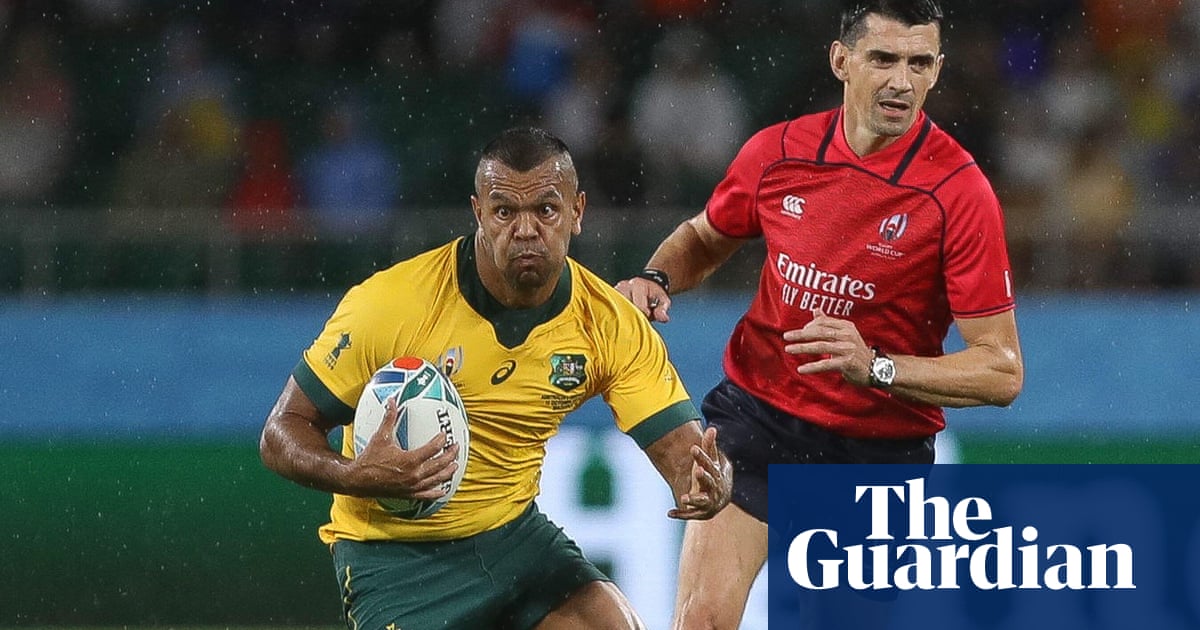
Kiss has options. Maybe more than he knows what to do with. There are questions about whether he is going to turn to the old hands still around from that 2015 team who have said they have hopes of making the squad; he’s already called up Kurtley Beale while James O’Connor, Bernard Foley and Nick Phipps have all just signed single-year deals for Australian clubs because they want one last hurrah.
Then there are the players who have come over from the NRL to fit in. Mark Nawaqanitawase is back playing in Japan, and Angus Crichton has just signed for the Waratahs. Crichton has been in with the squad this week. “He was over here on his holidays,” Kiss explained. “His partner is from the north of England, and he took the opportunity just to pop in and say hello and see the guys.”
The mix leaves the Wallabies balancing several selection pressures at once:
- younger test players such as Jorgensen, Suaalii, Wilson and McReight who represent the medium-term core of the side
- experienced campaigners from the 2015 era seeking a final World Cup
- dual-code or cross-border players whose presence reflects both talent pathways and the commercial pull required to keep leading athletes in the 15-a-side game
Every cap handed out on this tour feeds directly into those debates. A veteran recalled now will expect a clear path to the tournament; a newcomer trusted at Twickenham can stake a claim for a starting jersey in a World Cup opener on home soil.
A jersey to be earned, not gifted
So far Kiss is resisting the temptation to use them because he wants to see whether this team clicks.
“It won’t be gifted,” he said, “We’re not desperate for anyone – we want people to earn their position. This jersey is not just given. That’s for sure.”
It is a message as much for the wider player pool as for those already in camp. With the calendar tightening towards a home World Cup, the Wallabies cannot afford another year of experimentation without clarity. The England Test, and the tour around it, is where a core game model must hold under pressure, or be exposed as not yet ready.
For now, the flashes remain: a break down the touchline at Twickenham, a scramble win over the Springboks, a backline move that opens up a Lions defence. The next 12 months will determine whether those moments become the building blocks of a coherent challenge on home turf, or remain isolated highlights from another era in which Australia almost came together.
Related reading
