
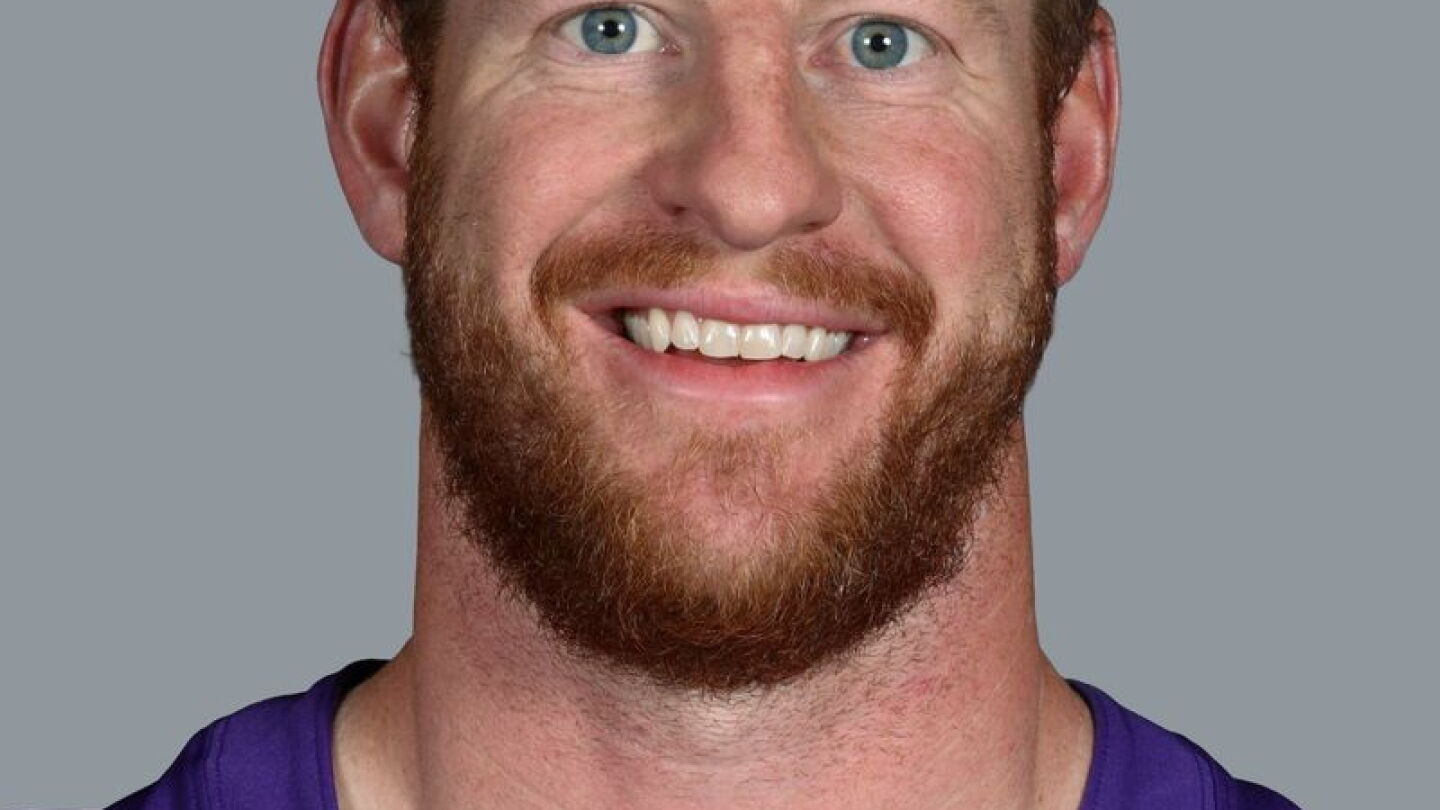
Vikings Quarterback Picture Shifts Again as Wentz Emerges and Murray Management Continues
The Minnesota Vikings’ quarterback depth chart is back under the spotlight, with signs pointing toward Carson Wentz taking first-team duties against the Buffalo Bills while the club continues to manage Kyler Murray’s hamstring issues and reassess the balance of its offense.
The developments arrive at a critical phase of the season in the National Football League, where marginal gains at quarterback can shape postseason prospects in an increasingly parity-driven competition.
Signals That Wentz Is Moving Toward QB1 Versus Buffalo
There are indications the Vikings are “trending toward” starting Carson Wentz when they face the Bills. That language reflects an internal lean rather than a formal announcement, but it underlines how rapidly the depth chart has moved from contingency planning to a likely change at the top of the position.
Wentz, a former high draft pick with multiple NFL teams on his résumé, offers Minnesota a different profile at quarterback – one built on starting experience and a history of running complex offenses. For a Vikings side trying to stabilize their attack, leaning into an experienced option rather than accelerating an injured starter’s return is a logical competitive calculation.
In practical terms, a Wentz start would have several implications:
- Scheme emphasis: Expect a focus on defined reads and protection structures that limit exposure to heavy hits and allow Wentz to work from the pocket.
- Continuity for playmakers: Receivers and tight ends benefit from a week of first-team reps with the same quarterback likely to open under center.
- Risk management: With an extended schedule and conference tiebreakers often razor-thin, preserving quarterback health can be as important as chasing a single early-season win.
Kyler Murray’s Hamstring and the Risk-Reward Equation
Complicating the picture is Kyler Murray’s hamstring issue, which has introduced fresh uncertainty into how aggressively the Vikings can use him in upcoming games. The team has been dealing with the reality that a hamstring problem can limit one of Murray’s defining strengths: his ability to extend plays and threaten defenses as a runner as well as a passer.
A quarterback whose game relies on acceleration and sudden changes of direction is more exposed when managing a soft-tissue concern. For Minnesota, the decision is therefore broader than simply “can he play?” and edges into “can he play his game without elevating the risk of a setback?”
That tension explains why the club appears open to a Wentz-led approach in the short term. If Murray is available but restricted, the coaching staff must weigh:
- whether a limited version of Murray still presents more upside than a fully available alternative;
- the risk that an aggravated hamstring narrows future options at a more decisive point in the season;
- the message it sends to the locker room about performance, health, and long-term planning.
O’Connell’s Injury Updates and Offensive Self‑Assessment
Head coach Kevin O’Connell has addressed the club’s injury picture and offered his own assessment of the Vikings’ offense after Week 8, outlining both the personnel status and the areas where execution must improve. His remarks form part of a broader pattern: Minnesota is publicly acknowledging that the unit has not consistently matched its talent level.
O’Connell has highlighted themes that resonate across the league:
- Situational performance: Efficiency on key downs and in the red zone remains central to whether the Vikings can turn drives into points.
- Protection and timing: With quarterback decisions under review, keeping the pocket stable is crucial, whether the starter is a mobile threat or a traditional drop-back passer.
- Injury management: The staff is monitoring players’ availability and workload, seeking to keep core contributors on the field without overextending them.
In the context of the NFL’s salary-cap and roster rules, where depth is finite and mid-season personnel flexibility is limited, these injury and usage decisions play directly into a club’s capacity to compete over 17 games.
Film Room: Warner Highlights Missed Opportunities with Jefferson
Former NFL quarterback Kurt Warner has broken down Kyler Murray’s recent performances on film, repeatedly identifying situations where star receiver Justin Jefferson appeared to be available but the ball went elsewhere. The review underscores a central tension in Minnesota’s passing game: possessing an elite route-runner whose separation is not always reflected in targets or completions.
From a strategic standpoint, that kind of analysis reinforces several points for the Vikings:
- Progressions and trust: Quarterbacks must marry the designed progression with confidence that Jefferson will win his matchups, even against top cornerbacks.
- Structural design: Concepts can be tailored to create clear first reads to Jefferson in high-leverage moments, balancing coverage attention against the risk of becoming too predictable.
- Quarterback evaluation: When detailed film study shows open receivers left unused, it informs internal assessments of timing, field vision, and fit within the offensive system.
For an international audience, this dynamic illustrates how modern NFL passing attacks are evaluated: it is not only about box-score totals, but about whether high-value opportunities generated by the scheme and receiver talent are being consistently converted.
Why the Quarterback Call Matters for the Vikings’ Season Arc
In the NFL’s conference-based structure, where playoff berths are determined by a combination of overall record, head-to-head results and tiebreakers, early- and mid-season choices at quarterback can reverberate months later. Minnesota’s handling of Wentz, Murray and the broader offensive identity will help determine whether they can stay aligned with postseason ambitions.
Key factors shaping the stakes include:
- Division competition: With every divisional matchup carrying tie-break implications, the Vikings need stability under center before the schedule intensifies against familiar rivals.
- Health over the long haul: Managing Murray’s hamstring responsibly may defer short-term upside but protect the team’s options deeper into the campaign.
- Locker-room clarity: Players across the roster benefit when the coaching staff communicates a clear plan at quarterback, reducing uncertainty around roles and responsibilities.
At the same time, these decisions unfold within a strict regulatory framework: roster sizes, injured lists, and practice-squad rules all constrain how many quarterbacks a team can carry and elevate on a weekly basis. The Vikings’ apparent readiness to give Wentz a starting opportunity while continuing to integrate Murray is an attempt to navigate those structural realities without losing competitive edge.
For Minnesota, the coming weeks will test not only the skill sets of its quarterbacks but also the organization’s capacity to blend health management, schematic clarity, and roster strategy into a coherent pathway through a demanding NFL season.
Worth a look
