
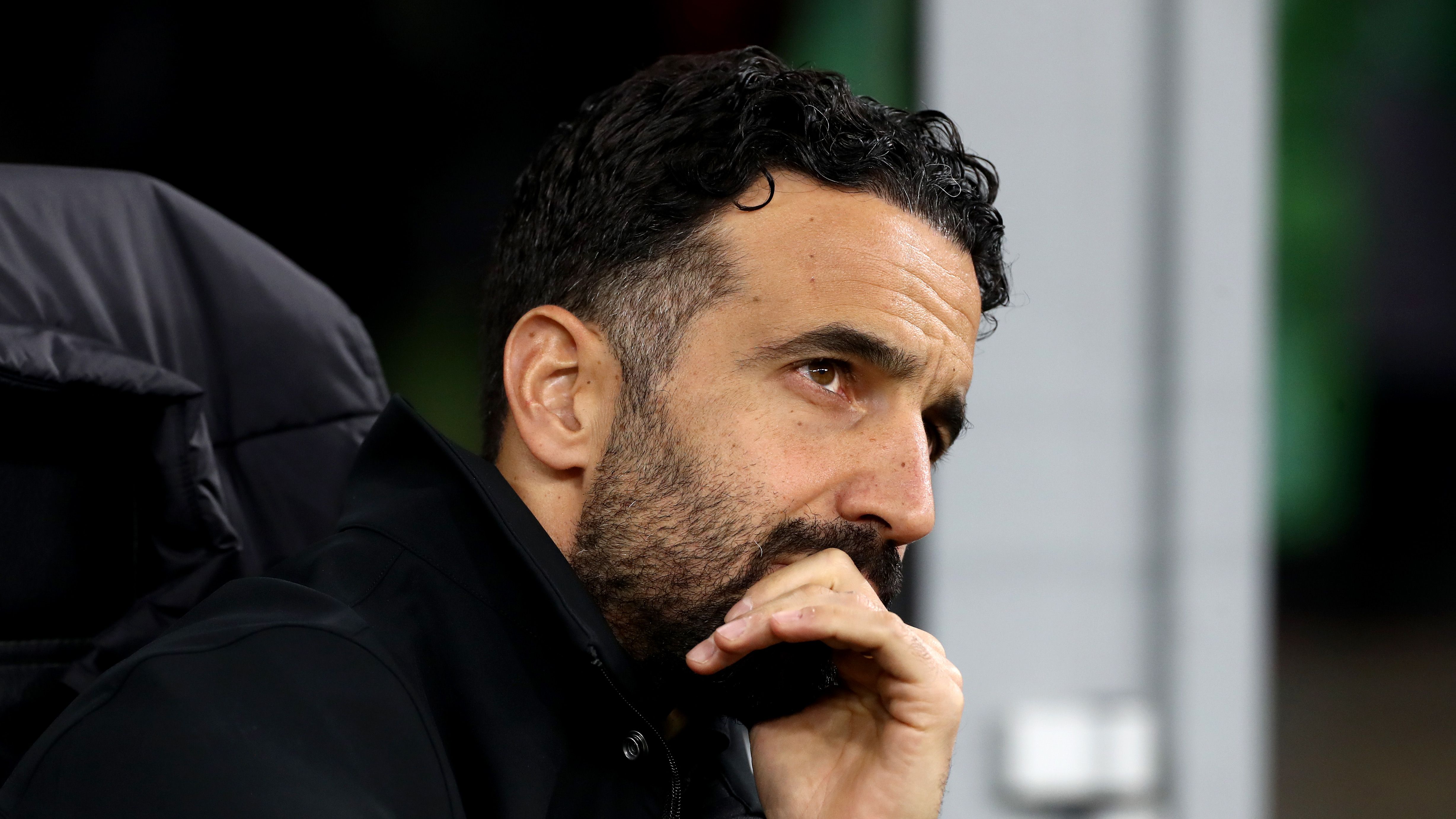
Amorim’s Measured Revolution: Milan’s Derby Statement and the Long Road to the Scudetto
Ruben Amorim has admitted that while winning the Scudetto remains a concrete goal for AC Milan, the club must remain realistic about the timeframe required for such a project. The Portuguese tactician guided the Rossoneri to a vital victory over rivals Inter, marking their fourth consecutive win in Serie A.
Scudetto talk framed by long-term rebuild
In the aftermath of a commanding Derby della Madonnina performance, Ruben Amorim struck a notably cautious tone. The AC Milan head coach, who watched his side dismantle Inter in one of the most high‑pressure fixtures in Italian football, was clear that one result – even in a derby – does not suddenly place his team on the brink of the title.
While club owner Gerry Cardinale has set explicit objectives for the management group, Amorim stressed that the project at Milan remains a work in progress rather than a finished product. The Scudetto, he argued, must be treated as a structured target rather than an emotional reaction to a single night’s success.
“Cardinale gave us a goal, but the important thing is to win these games. Things won’t change in a month, two months, or a year. It takes time, but also magical nights like this. This victory won’t change our situation. The Scudetto? It’s possible, but I don’t know when. We have to be honest. People aren’t stupid, but they understand and see that this team is improving,” Amorim told Sky Sport Italia.
His comments speak directly to the competitive reality of Serie A, organised by the Lega Serie A, where consistency across 38 league matches, not the intensity of individual derbies, ultimately defines a title challenge. Milan’s fourth consecutive league win underlines a positive trend, but Amorim repeatedly pointed to the need for sustainable growth rather than short‑term euphoria.
Derby win as a benchmark, not a turning point
Amorim could not hide his satisfaction after witnessing his Milan side dismantle Inter in a high-stakes Derby della Madonnina. Yet even as he acknowledged the significance of beating their city rivals, he framed the result as a confirmation of recent work rather than a defining turning point.
The derby arrived at a delicate stage of the season and at a moment when Milan are attempting to reassert themselves among Italy’s elite. A fourth straight Serie A victory enhances their position in the domestic race and strengthens internal belief that the current project is moving in the right direction. At the same time, Amorim’s insistence that “this victory won’t change our situation” is aimed at moderating external expectations and reinforcing a culture where performance standards must hold regardless of the opposition.
By asking supporters and media “to be honest about the journey,” the coach effectively placed the derby within a broader institutional context: a club adjusting to new leadership targets, reshaped squads and the financial and sporting demands of staying competitive in a league that regularly feeds teams into European competitions under UEFA’s regulatory framework.
Tactical discipline and mentality after a tight schedule
The Rossoneri manager was particularly keen to highlight the psychological and tactical maturity his players showed in the derby, especially given the congested calendar. The match followed quickly on the heels of a midweek fixture against Bologna, leaving little time for recovery or detailed preparation.
“It’s especially important after Wednesday’s game. We wanted to celebrate even more. I’m proud of what the lads achieved with so little rest after Bologna. I’m happy and proud,” Amorim said, underlining how the short turnaround can expose any lack of depth or mental focus in a squad competing on multiple fronts.
From the touchline, the Portuguese coach sensed early that Milan were in the right frame of mind. “I always try to interpret what the team tells me, but right from the start I had the feeling we were competitive; the team was focused and calm, and that’s why I always had confidence,” he added.
For a club with ambitions of returning to the very top of Serie A and sustaining runs in European competition, responding to fixture congestion with tactical discipline is a core requirement. Nights like the derby offer strong evidence that Amorim’s approach – blending clear roles with in‑game adaptability – is being absorbed across the group.
Collective responsibility behind creative stars
On the pitch, leading names such as Christian Pulisic, Luka Modric, and Adrien Rabiot inevitably drew attention for their quality in possession and creative influence. Yet Amorim was careful to reposition the narrative around the derby as a collective achievement rather than an individual showcase.
He singled out the less heralded elements of the performance, particularly the defensive concentration and readiness of players who have stepped into bigger roles in recent weeks. That included praise for the way the backline was structured and the contributions of those entrusted to protect it.
“It’s not just those three players, but I like the concentration of the whole team, like Pavlovic and De Winter and the way they took the field, then there are Rabiot, Pulisic and Moreira but we were all very good,” he stated.
The ability to rotate profiles such as Matteo Gila while maintaining cohesion is particularly significant in a league campaign that demands stable defensive mechanisms against a wide range of attacking styles. For Milan, building a reliable collective platform is also a prerequisite for sustaining any future Scudetto push, as defensive fragility is often exposed over the course of an entire season.
Squad depth, rotations and competitive demands
Amorim’s emphasis on players stepping in without disrupting balance speaks to one of the central strategic challenges facing clubs with title ambitions: developing depth that can withstand injuries, suspensions and inevitable dips in form. While the coach did not provide specific squad numbers or fitness data, his public messaging made it clear that internal competition for places is being framed as an asset rather than a source of friction.
In practical terms, this means:
- Key creative players such as Pulisic, Modric and Rabiot are expected to set standards in decision‑making and ball circulation.
- Defensive options like Pavlovic, De Winter and Gila are judged on concentration and positioning as much as on individual duels.
- Squad selections are designed to preserve a recognisable team structure, even when line‑ups change from one high‑intensity match to the next.
Within the constraints of a long domestic season and additional commitments, those principles are central to how Milan can realistically transition from a team enjoying strong runs of form to one capable of sustaining a title challenge under the competitive framework of Serie A.
A united dressing room at the core of the project
Questions about the relationship between Amorim and his players were also addressed in the post‑match press conference. The coach rejected any notion of a fractured dressing room, instead pointing to the intensity of the squad’s off‑the‑ball work as the clearest indication of where the group stands.
“They are giving everything, and it is the only thing I ask of them. Therefore they will always have me by their side, they will have my protection as long as they continue to give everything. Sometimes we will win, sometimes we will lose, sometimes we will play badly, but they are working hard. Whether they are with the coach or not? I don’t know, I feel it. What I know for sure is that I am with my players one hundred percent, because on the pitch they are giving everything,” Amorim concluded.
That stance reinforces a clear internal contract: full commitment in training and matches in exchange for public backing from the head coach. For a club attempting to stabilise under clear ownership objectives and with an eye on the Scudetto, aligning the dressing room behind that message is as important as any tactical adjustment on the pitch.
Milan’s derby win over Inter and their sequence of four consecutive Serie A victories offer tangible proof that Amorim’s methods are beginning to translate into results. Yet the coach continues to present the Scudetto as a destination that can only be reached through sustained performance, structural discipline and a united squad – not through a single emphatic night, however symbolic the opponent.
Related reading
