
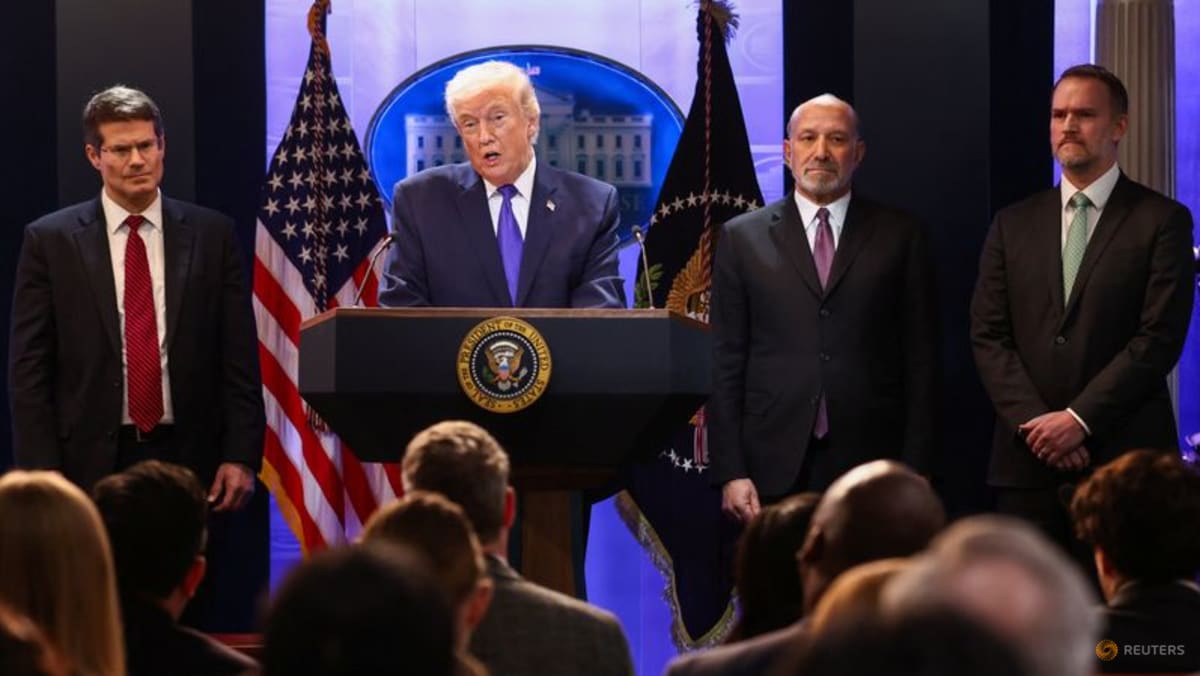
Donald Trump moved to raise the global duty on imports into the United States to 15 per cent under Section 122 of the Trade Act of 1974, a temporary measure that lapses after 150 days unless Congress acts, following a Supreme Court ruling that barred the use of the International Emergency Economic Powers Act (IEEPA) for sweeping country-based tariffs.
The action keeps tariffs at the center of U.S. trade policy but shifts the next decision to Capitol Hill and leaves companies and allies facing a short, legally defined window of uncertainty over pricing, contracts and compliance.
What changed and why it matters now
– A Supreme Court decision barred the use of IEEPA to impose country-based tariffs.
– Trump announced a 15 per cent global duty under Section 122 of the 1974 law.
– The Section 122 authority is time-limited to 150 days; further steps require Congress.
– Other trade tools remain available under existing statutes.
The ruling does not remove IEEPA from the president’s emergency powers but sharply narrows how it can be used in trade, blocking its deployment for broad, country-focused tariff programs. By pivoting to Section 122 of the Trade Act of 1974, the White House is relying on a long-standing but rarely used authority that is inherently temporary and explicitly time-bound.
For Congress, the shift forces an accelerated policy choice: either endorse, modify or allow the additional duty to lapse, with implications for inflation, supply chains and relations with key partners.
How Section 122 works, in brief
– Authorizes a temporary, across-the-board import duty adjustment.
– Capped at 15 per cent.
– Expires after 150 days unless Congress intervenes.
– Can be extended or made more permanent only through new legislation.
In practice, Section 122 allows the administration to move first, but any longer-term realignment of U.S. tariff levels becomes a legislative question. Officials and traders will be watching how customs systems, contracts and exemptions handle the across-the-board rate during the limited window, including how it interacts with existing tariff schedules and country- or product-specific relief.
Other levers still on the table
The administration retains additional statutory paths:
– Section 301 (Trade Act of 1974): targets unfair trade practices such as discriminatory licensing, forced technology transfer or market access barriers.
– Section 232 (Trade Expansion Act of 1962): addresses national security concerns and is already in place for industry-specific tariffs on steel, aluminium, lumber and automobiles.
Trade lawyer Edmund Sim emphasized the scope of those tools: “(Trump) can always impose higher rates above the 15 per cent … because of other sections of the law,” said Edmund Sim, a partner at Appleton Luff International Lawyers in Washington DC. That means the 15 per cent global duty could, in practice, sit alongside additional, targeted surcharges on particular countries or sectors.
Business and ally concerns
Market participants say the immediate issue is operational clarity rather than the headline rate itself, as companies work out how the new duty layers onto existing schedules, exemptions and trade preferences.
“For the next 150 days, there will be much more uncertainty as to how tariffs are stacked up, how they apply, if the existing trade deals still apply, etc.,” Heng Koon How, head of markets strategy at UOB, told CNA’s Asia First programme.
Heng said mustering congressional approval will be difficult, noting that some Republican lawmakers have openly opposed tariffs on close allies such as Canada. Business groups are also expected to press lawmakers over the coming weeks, arguing that a miscalibrated tariff package could raise costs for U.S. manufacturers and consumers while inviting retaliation.
Agreements face renewed scrutiny
The Supreme Court’s decision has also raised questions about a series of trade deals concluded in recent months, including arrangements that were negotiated against the backdrop of the now-invalidated IEEPA tariffs. While Trump has indicated some agreements would stand, the specifics remain unclear. Some trade partners are concerned they may have to pay the 15 per cent global rate on top of rates they have already negotiated with Washington.
“So, it’s a consideration for every country (if) they want to … on a diplomatic level disturb the status quo. It would be difficult for countries, for example, those at last week’s Board of Peace meeting, to revisit agreements they already have with the US,” Sim said.
For U.S. allies, the episode underscores that market access now depends not only on negotiated texts but also on how the administration and Congress choose to deploy existing statutory tools. That is likely to feed into wider diplomatic conversations on predictability and the rule-based trading system, including at the World Trade Organization and in regional forums.
The immediate checklist for companies
– Verify whether the 15 per cent duty applies on top of preferential rates under existing agreements, and reprice contracts accordingly.
– Track any use of Sections 301 and 232 that could raise rates above the temporary 15 per cent for specific products or origins.
– Monitor congressional signals as the 150-day clock runs, including any draft bills to extend, narrow or replace the measure.
– Review supply-chain diversification and inventory strategies in case the surtax is allowed to expire abruptly or is converted into a more targeted regime.
The tariff measure is temporary and expires after 150 days. After that, Congress has to step in — either by codifying a new tariff framework or allowing the additional global duty to fall away — turning a legal setback for one set of presidential powers into a high-stakes policy test for the legislative branch.
- Urban Infrastructure Resilience: How European and Asian Megacities Are Adapting to Extreme Climate Oscillations in 2026
- UN General Assembly 2026 Framework on Autonomous Systems: International Diplomacy Faces Algorithmic Governance
- Jay Clayton named White House AI czar by Trump to lead task force (globallypulse.com)
