
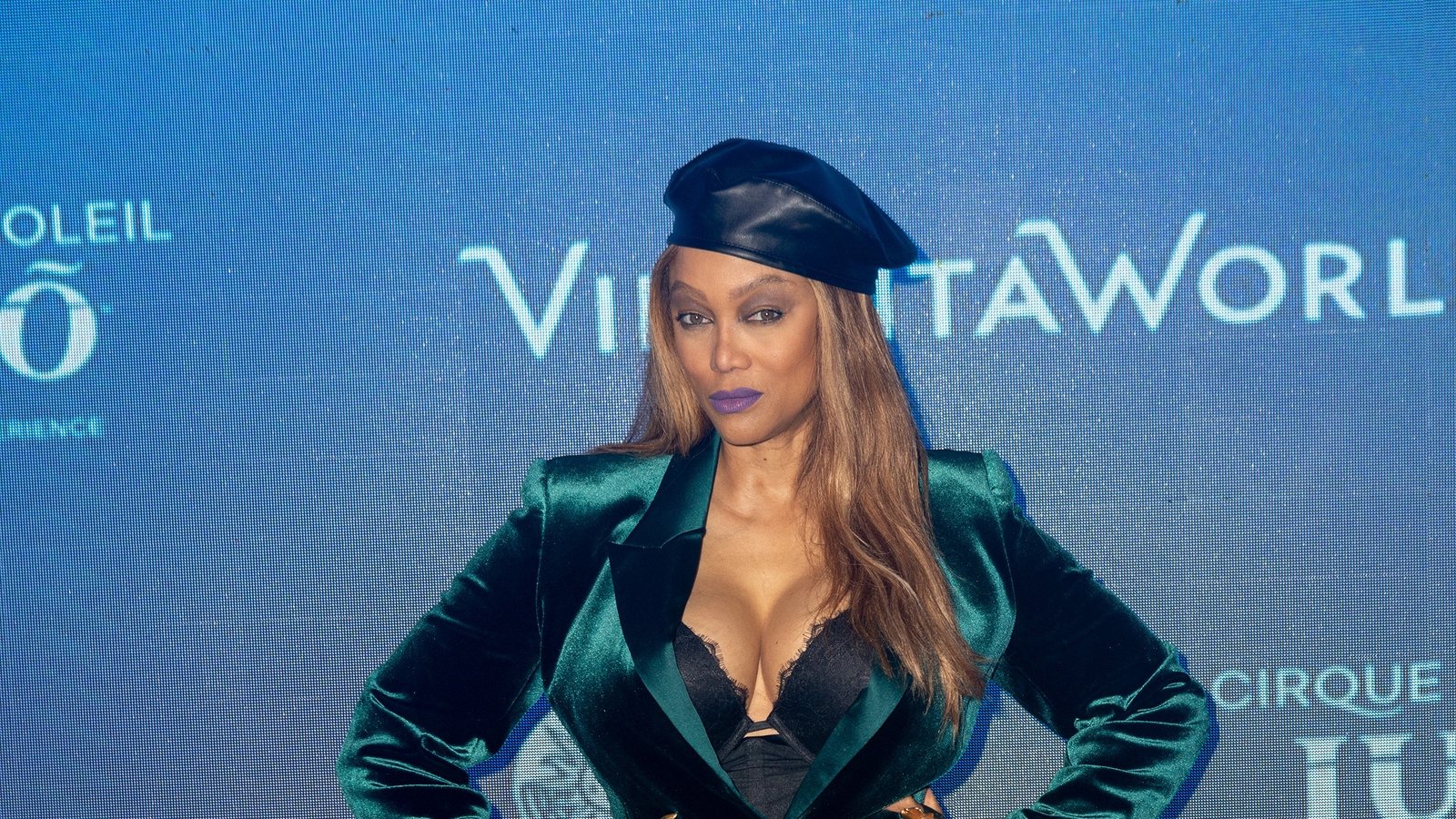
SYDNEY — Tyra Banks has said she “went too far” during a widely circulated confrontation with contestant Tiffany Richardson on America’s Next Top Model, addressing the moment as part of a new Netflix documentary series revisiting the reality franchise and several of its most criticised production choices.
Banks, 52, spent more than a decade as the face of the U.S. competition series in which aspiring models vied for a career-launching opportunity in the modelling industry. Netflix’s three-part documentary, Reality Check: Inside America’s Next Top Model, brings together judges, producers and former contestants to reconsider the programme eight years after it ended, at a time when duty-of-care standards and on-set safeguarding expectations have shifted across much of the global reality TV industry.
In the documentary, Banks is shown a clip of herself shouting at Richardson in season four—a sequence that has continued to circulate online and “has gone viral on platforms such as TikTok.”
Fashion photographer Nigel Barker, appearing in the documentary, recalls the moment’s impact on set: “Tyra really scared all of us. We literally jumped out of our seats.”
Banks said: “I went too far. I lost it. It was probably bigger than her.
“It was family, friends, society, black girls, all the challenges we have. So many people saying we’re not good enough.
“I think all of that was in that moment. That’s some black girl stuff that goes real deep inside of me, but I knew I went too far.”
For Netflix, the series functions as a catalogue-adjacent piece of programming: a reflective, interview-driven format that can reframe familiar clips for a streaming audience that often encounters legacy reality television through algorithmic resurfacing, short-form recirculation, and platform-specific virality. For the underlying franchise, it is also a reminder that the cultural afterlife of unscripted TV is frequently shaped by what persists online—especially moments that now read differently against contemporary standards for duty of care, representation, and consent.
Those standards are increasingly articulated not just by audiences and advocacy groups but by formal broadcast and streaming rules in major markets, including Ofcom’s protections for participants and fairness codes in the UK and the U.S. Federal Communications Commission’s broadcast regulations on indecency, fairness and harm.
On-camera decisions under renewed scrutiny
Reality Check: Inside America’s Next Top Model does not focus solely on the Richardson incident. The documentary also revisits episodes in which Banks was shown pressuring contestants to undergo dental procedures, and moments in which the show encouraged models to “adopt another race for a photoshoot.”
One segment revisits model Dani Evans and a dental procedure to fix a gap in her teeth. In the documentary, Evans says Banks implied she would be kicked off the show if she did not do it.
Banks addresses that sequence directly in the documentary, saying: “I’ve actually apologised for the issue with Dani and what happened. That was between a rock and a hard place for me, because there were agents that would tell me, ‘she will not work with those teeth, it’s just not going to happen’.
“I could’ve been quiet and just let them handle it – but hindsight is 20/20 for all of us. It just so happens that a lot of the things that are 20/20 for me happened in front of the world.”
The documentary also revisits a photoshoot that involved white contestants undergoing “blackface,” with models tasked with dressing as different races. Banks says she did not anticipate the reaction at the time: “I didn’t think it was controversial, I was in my own little bubble in my own little head.
“This was my little way of showing the world that brown and black is beautiful. But we put it out there and the world was like, ‘are you crazy, have you lost your mind?’”
Those scenes now sit within a wider industry reckoning over race, power and informed consent on set, echoing recent revisions to casting, content notes and complaints processes across unscripted formats. In industry terms, the themes raised by these segments are familiar across long-running unscripted series: the ongoing tension between producer-driven “makeover” narratives and participant autonomy; the way creative that was once framed as “edgy” or “educational” is later evaluated through different ethical frameworks; and the particular permanence of reality TV’s raw materials—contestants’ bodies, identities, and personal histories—once those moments are recorded, repeated, and redistributed on global platforms.
Revisiting an on-screen management moment: the 2013 judge shake-up
Beyond creative controversies, the documentary also touches on a personnel decision that played out publicly: Banks recounts telling co-stars Nigel Barker, Jay Manuel and J Alexander that they had been “axed” from the show in 2013 after almost a decade in what is described as a network “switch-up.”
Banks calls it “the hardest news I ever had to deliver in my existence,” and says she “cried myself to sleep” after telling them they would no longer be on the show.
In the production economy of long-running reality series, on-air panels and host-juror formats are not only editorial devices but also part of the show’s public-facing brand architecture. Changing that on-camera ensemble can be both a creative reset and a business decision tied to network positioning and audience strategy—choices that, as Banks describes, can still land as deeply personal for the people delivering them, particularly when colleagues have worked together for years.
The segment also underscores how employment decisions on high-profile unscripted series are increasingly scrutinised through the same lens as corporate restructures or newsroom shake-ups, with questions about transparency, diversity and workplace culture extending beyond the frame of the show.
A franchise reassessed—by its creator and by its audience
Banks frames the documentary’s critical reappraisal as part of a broader process of accountability and revision. “I thank you for that,” she says of criticism directed at the show. “That is the only way you change, that is the only way you get better – by somebody calling you out on your sh*t. It is important.”
America’s Next Top Model was cancelled in 2018, with the documentary attributing the end to a decline in viewership and the rise of social-first fashion and beauty influencers who now bypass traditional television competitions altogether.
Since the modelling competition series, Banks has hosted programmes including Dancing With The Stars and America’s Got Talent, moving from creator-judge to front-of-camera host for franchises owned and overseen by larger entertainment groups. The documentary also notes she has launched a flagship ice cream store in Sydney, Australia, where she now lives, positioning herself as both a media figure and bricks-and-mortar entrepreneur.
For streamers and commissioners, the series doubles as a case study in how legacy reality brands are being recontextualised for contemporary audiences—part reputational risk management, part catalogue marketing. For viewers, it offers something closer to an after-action report on an era of television that helped normalise high-stakes emotional confrontation on screen, and that is now being measured against evolving expectations of how entertainment treats the people who make it.
Reality Check: Inside America’s Next Top Model is available to watch on Netflix.
Worth a look
