
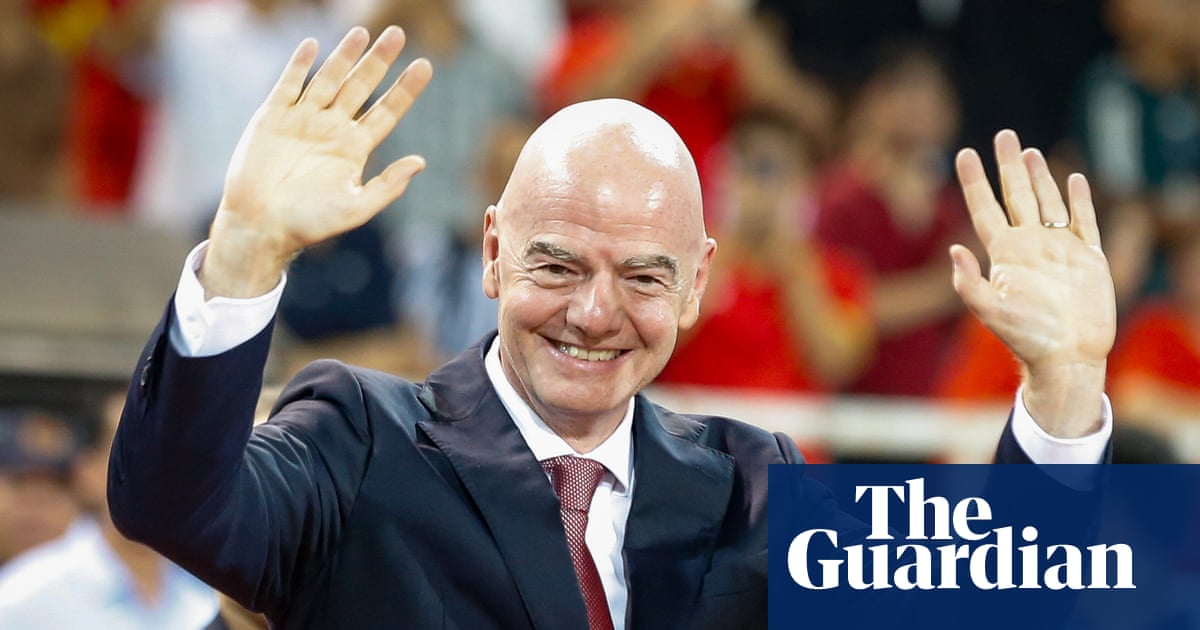
Uefa moves to escalate legal fight with Infantino over failed Fifa investment plan
Uefa is preparing to file a criminal complaint in Switzerland against Fifa president Gianni Infantino for alleged “criminal mismanagement” linked to his failed Fifa Forward Enterprise investment proposal, and has formally moved to obtain documents relating to how the plan was conceived and negotiated.
Transatlantic legal action targets Fifa document trail
In a marked escalation of the institutional conflict at the top of world football, Uefa has submitted separate applications in the United States for access to information held by entities based there, including material from Fifa itself.
The European confederation is using a “section 1782” application, a mechanism in US law that allows parties involved in foreign legal proceedings to seek discovery of documents or testimony from individuals or organisations within US jurisdiction. The filings state that Uefa and other interested parties are “preparing to bring criminal claims in Switzerland against Infantino and possible other Fifa officials and advisers for criminal mismanagement under Article 158 of the Swiss Criminal Code”.
Article 158 of the Swiss Criminal Code, which governs offences involving mismanagement of assets, is routinely cited in cases where officials are alleged to have failed in their fiduciary duties to an organisation or its stakeholders. Its use in this context underlines that the dispute has moved decisively from political argument to a potential criminal-law confrontation centred on the stewardship of football’s central commercial rights.
Valuation of Fifa’s flagship tournaments under scrutiny
The court materials place particular emphasis on the projected valuation underpinning Infantino’s investment proposal. The documents criticise what they describe as an “absurdly low enterprise value of only approximately $20bn” implied by a plan to sell a 20% stake in Fifa’s competitions portfolio for $4.2bn.
The contested valuation, the filings argue, was “neither the product of an open, competitive auction, nor tested by any independent valuer”. At issue is not only the headline number attached to Fifa’s future revenues, but also the process by which a long-term equity-style interest in global tournaments – including the men’s and women’s World Cup and other Fifa events – would be priced and allocated.
For domestic leagues, national associations and clubs that depend heavily on distributions from the international calendar, the way Fifa packages and monetises its rights is central to long-term budgeting. Any perception that core assets have been underpriced or locked into opaque arrangements risks sharpening existing tensions over fixture congestion, revenue-sharing and the balance of power between global and continental bodies.
Document preservation orders reach senior leadership
Earlier this month, Uefa’s legal representatives wrote to Infantino and Fifa instructing them to “take immediate steps to identify, locate, and preserve all documents and electronically stored information described in this notice that are in your or Fifa’s possession, custody, or control”.
The correspondence listed 14 executives who, Uefa said, must “specifically preserve all such materials in their possession, custody, or control”. Such preservation demands are typically deployed ahead of formal proceedings to ensure that emails, contracts, presentations and internal analyses cannot be deleted or altered once litigation is anticipated.
If Swiss prosecutors ultimately accept a complaint and open a case, any digital and physical records covered by these steps could form a key evidential base in assessing whether Fifa’s leadership met the standards set out in the country’s criminal law on mismanagement.
Power struggle at the heart of global football governance
The legal manoeuvres land at a time when Uefa’s relationship with Infantino is under acute strain. Several European associations have already moved to withdraw previous letters backing his re‑election as Fifa president, reflecting deep unease over both the failed investment scheme and broader governance decisions in Zurich.[[1]]
For European clubs and leagues, Uefa remains the organiser of elite competitions such as the Champions League and European Championship, while Fifa controls the global calendar and the World Cup. Any sustained breakdown between the two bodies raises questions about how international windows are structured, how player workloads are managed and how income from major tournaments is distributed back into the professional and grassroots game.
The failed Fifa Forward Enterprise plan has become a focal point in this wider struggle over control of commercial strategy. The central concern for many stakeholders is that long-term external investment could limit future flexibility in scheduling reforms, new tournament concepts or changes to qualification pathways if a third party secured rights tied to specific events or revenue streams.
Implications for players, clubs and national teams
While the dispute is being fought in legal filings and boardrooms, its consequences are likely to be felt on the pitch. Any uncertainty around Fifa’s financial projections and governance could influence:
- How future World Cup cycles are structured, including the balance between qualifiers, play-offs and final tournaments.
- The calendar slots allocated to international football versus domestic leagues, with knock‑on effects on player fatigue and injury risk.
- The scale and predictability of solidarity and development payments to national associations and regional confederations.
For national team coaches and clubs alike, stability in the international match calendar underpins squad planning, commercial partnerships and long-term investment in training facilities and youth systems. Any significant restructuring driven by budgetary pressures or legal outcomes could force rapid adjustments by technical and executive staff across the sport.
Infantino’s position and next steps
Gianni Infantino, who has led Fifa since 2016 after a long spell as a senior official at Uefa,[[2]] now faces intensifying resistance from within the European game. Uefa’s move to prepare criminal complaints shifts that opposition from political debate into a potential courtroom setting in Switzerland, where Fifa is headquartered.
The outcome of Uefa’s section 1782 applications in the US will help determine how much of the internal decision‑making around the failed investment plan becomes accessible to investigators. If the requested discovery is granted and later used in Swiss proceedings, it could offer an unusually detailed view of how Fifa approached one of the most contentious commercial proposals of Infantino’s tenure.
Fifa was contacted for comment.
Worth a look
