
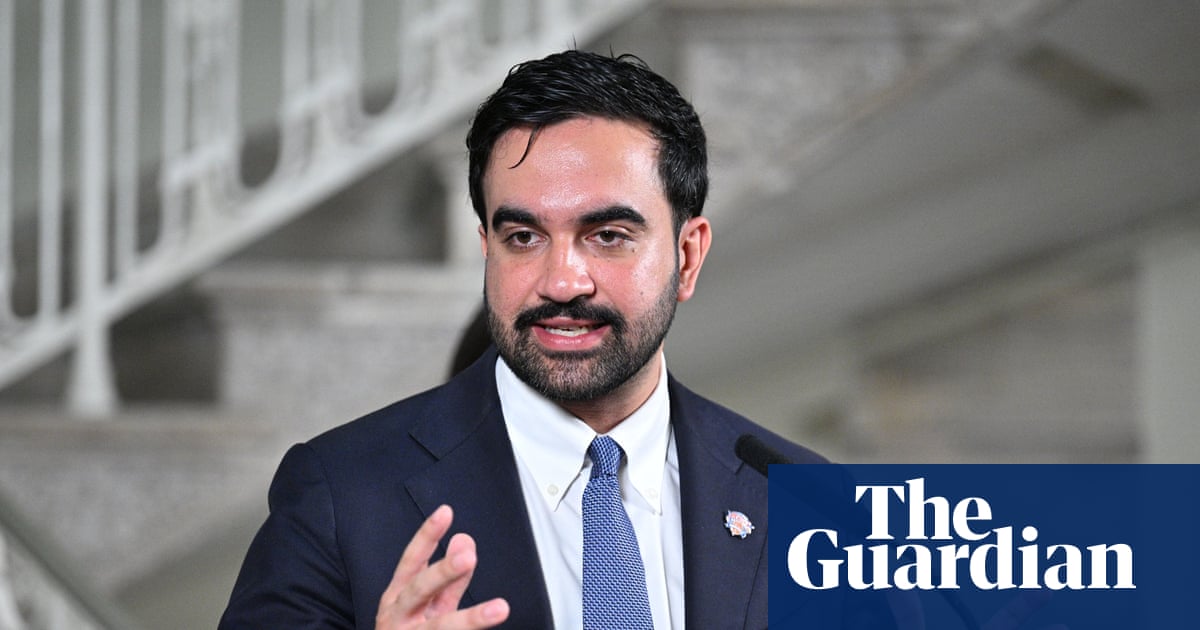
NEW YORK – New York City Mayor Zohran Mamdani has intensified his campaign against Israeli Prime Minister Benjamin Netanyahu, calling on the United States federal government to join the International Criminal Court (ICC) and execute arrest warrants for the Israeli leader should he visit the city this autumn.
The demand places the municipal leader in direct confrontation with both the Trump administration and the established legal framework of U.S. foreign policy, highlighting a widening rift between grassroots pro-Palestinian advocacy in major American cities and federal diplomatic priorities.
The dispute centers on the upcoming United Nations General Assembly in September, an annual event that traditionally brings world leaders to New York. While the city hosts the assembly, the security and diplomatic immunity of visiting heads of state are managed at the federal level by the U.S. Department of State and the Secret Service under longstanding agreements governing the U.N. headquarters district.
“I call on the federal government to join the international criminal court and to execute both this warrant as well as any warrant the international criminal court holds,” Mamdani told reporters at a press conference on Wednesday, referring to arrest orders issued by the court’s prosecutor.
The mayor’s remarks follow a social media statement on Tuesday in which he described Netanyahu as a “war criminal” who is “not welcome in New York City.” During that statement, Mamdani acknowledged the limits of his own power, admitting he lacks the legal authority to direct the New York Police Department to arrest a foreign head of state or pierce the protections afforded under U.S. diplomatic commitments.
Mamdani had previously indicated he was “in conversation” with city lawyers to explore whether the municipal administration could independently facilitate an arrest, a pledge he had made during his mayoral campaign last year. Those discussions, he has suggested, are aimed at clarifying how far a city government can go in signaling opposition to foreign leaders who face international charges without colliding with federal control over immigration, foreign policy and national security.
The Legal Conflict of the Rome Statute
The tension stems from arrest warrants issued by the ICC in 2024 against Benjamin Netanyahu and former Israeli defense minister Yoav Gallant. The court accused the officials of war crimes and crimes against humanity, specifically citing “starvation as a method of warfare, and … murder, persecution, and other inhumane acts” in Gaza, allegations they strongly deny.
However, the execution of such warrants is complicated by the fact that neither the United States nor Israel are parties to the Rome Statute, the treaty that established the ICC. Membership in that treaty system is what normally creates a duty for states to detain and transfer individuals subject to ICC warrants.
Because the U.S. is not a member, it has no legal obligation under the Rome Statute to cooperate with the court’s requests or enforce its warrants. Historically, the U.S. has maintained a protective stance toward its own nationals and key allies regarding the ICC, often citing the court’s lack of jurisdiction over non-member states and passing domestic legislation to limit cooperation.
At the same time, federal control over treaty-making means Mamdani’s demand that Washington join the ICC would require action by the president and the U.S. Senate, far beyond the remit of a city mayor.
“I believe that prime minister Netanyahu belongs in The Hague,” Mamdani told the New York Times last week.
The current U.S. administration has moved beyond mere non-cooperation toward active opposition. Secretary of State Marco Rubio recently threatened to “dismantle” the ICC by pressuring other member nations to abandon the institution, framing the court’s actions as an infringement on U.S. sovereignty and on the ability of allies to conduct military operations.
Political Repercussions and Domestic Friction
Mamdani’s insistence that the U.S. government arrest Netanyahu has drawn sharp condemnation from pro-Israel officials and members of Congress, who view the mayor’s actions as an overstep of municipal authority and a distraction from local governance priorities.
Jonathan Harounoff, Israel’s former international spokesperson at the United Nations, told NY1 that Mamdani should “stay in his lane,” characterizing the mayor’s efforts as “political theater” with little chance of changing federal policy.
Senator John Fetterman of Pennsylvania, a staunch supporter of Israel, dismissed the mayor’s position during a Fox News interview.
“America’s not even part of that corrupt court,” Fetterman said. “That’s really not your purview.” He further described Mamdani as a “clown” who should “sit down.”
Within New York, the controversy has sparked legal scrutiny. State Assemblymember Simcha Eichenstein has called on the state attorney general to review whether the mayor’s public comments regarding Netanyahu violate state law, including provisions governing misuse of office or incitement against protected officials. The attorney general’s office has not announced any formal action.
Conversely, some legal scholars and pro-Palestinian advocates have defended the mayor’s approach as a necessary moral stance and a legitimate use of the bully pulpit of municipal office. Adil Haque, a legal scholar, argued that Mamdani is mirroring the response the city would take toward other indicted figures.
“My mayor is doing what any NYC mayor would do if Vladimir Putin or any other indicted war criminal planned to visit NYC,” Haque said. “He is exploring every legal avenue and exhausting all legal options. If his hands are tied, he will use his voice.”
For supporters, the episode underscores how local elected officials, especially in heavily immigrant cities, are increasingly using their platforms to challenge federal foreign policy from below-even when they lack formal authority over the outcomes.
Federal Defiance
The prospect of a federal arrest appears nonexistent under the current administration. President Donald Trump has explicitly ruled out any such action.
“Netanyahu will not be arrested on US soil,” Trump stated in a social media post, arguing that the Israeli prime minister is “fighting against the Islamic Republic of Iran.” Trump added that the only individuals who should be arrested are those who led Iran into its current “spiral of death and destruction.”
The White House has reiterated that decisions regarding visiting heads of government are guided by U.S. strategic interests, existing treaty obligations and security assessments carried out in coordination with the Secret Service and State Department, not by municipal preferences.
The Israeli Prime Minister’s Office has remained dismissive of the mayor’s threats. In a statement last week, the office claimed Mamdani was attempting to “divert public attention from his follies” and referred to the ICC as a “kangaroo court.”
Mamdani continues to argue that the humanitarian crisis in Gaza is a matter of global concern that resonates locally. He stated that Israel’s actions have “offended the conscience, the morals, the mere humanity of so many New Yorkers,” pointing to large street demonstrations and campus protests in the city over the last year.
For now, the ICC warrants for Benjamin Netanyahu and Yoav Gallant remain active, though their enforcement depends entirely on the cooperation of member states or the voluntary surrender of the accused. In practical terms, that leaves any decision about Netanyahu’s treatment if he attends the U.N. General Assembly in the hands of federal authorities-and cements Mamdani’s campaign as a high-profile test of how far a big-city mayor can go in publicly confronting the foreign policy choices of his own national government.
Keep reading
