
HONG KONG – On a scorching summer morning, more than a hundred Chinese tourists stepped ashore on Tree Island, a remote outpost in the hotly contested Paracel Islands.
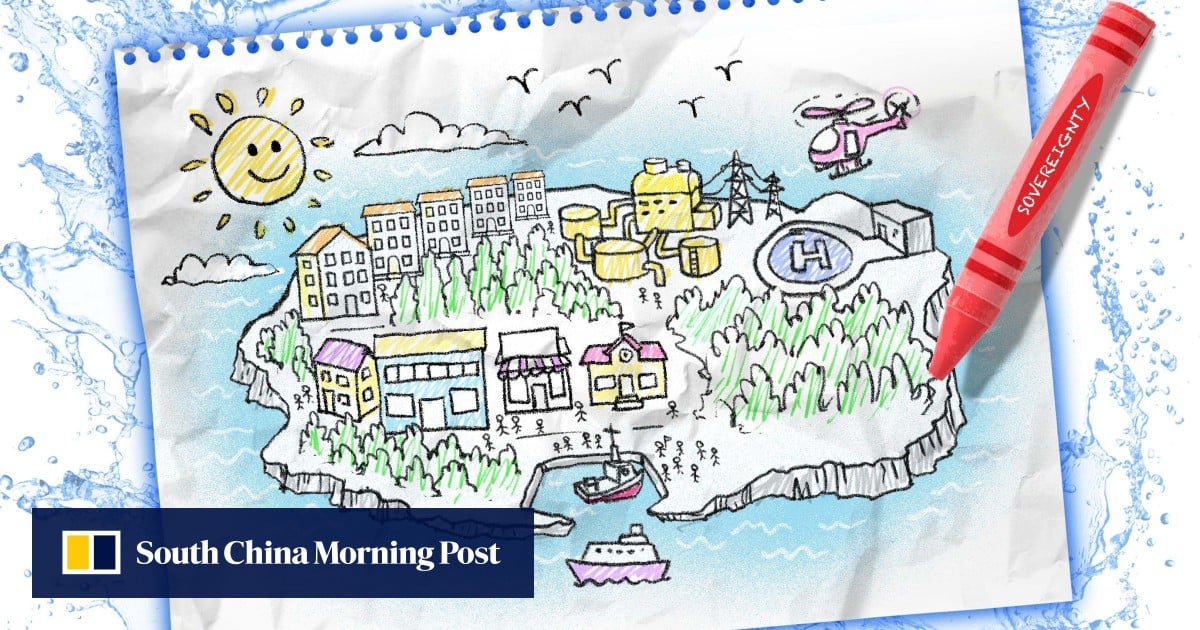
The visitors, including schoolchildren on summer break and a retired teacher traveling alone, were greeted by a landscape that blends turquoise waters with an expansive array of modern state infrastructure. The island-known as Zhaoshu in China and Dao Cay in Vietnam-now features well-paved roads, two-storey houses, air-conditioned government offices, and electric sightseeing buggies that whisk tourists across the terrain in minutes.
The proliferation of civilian amenities-including supermarkets, a helicopter pad, a waste-water plant, power stations, and even a prison-signals a calculated effort by Beijing to normalize its presence in a region where its territorial claims are fundamentally disputed.
This expansion arrives a decade after the Permanent Court of Arbitration in The Hague issued a landmark ruling that dealt a severe legal blow to China’s maritime ambitions. The tribunal, formed under the United Nations Convention on the Law of the Sea (UNCLOS), rejected Beijing’s “nine-dash line” claim, asserting that there was no legal basis for China to claim historic rights to resources within the sea areas falling within the line.
The Divide Between Law and Presence
Despite the 2016 ruling, the gap between international legal frameworks and the geopolitical reality on the water has widened. China has consistently dismissed the tribunal’s decision as “null and void,” opting instead for a strategy of physical occupation and administrative integration that is designed to withstand legal and diplomatic pressure.
The transformation of Tree Island into a tourist destination is part of a broader pattern of “civilianizing” contested features to solidify sovereignty. By establishing permanent residents, installing local branches of state agencies and inviting domestic tourism, Beijing creates a fait accompli that is far more difficult to reverse than a legal decree.
“The island is 90 per cent covered in vegetation,” an island-based guide told the visitors.
The emphasis on the island’s natural beauty and ecological state serves to mask the strategic utility of the site. The Paracel Islands sit astride key sea lanes used for regional energy shipments and commercial trade and provide access to rich fishing grounds and potential hydrocarbon reserves, making them a focal point of friction between China and Vietnam.
For regional governments and defense planners, the sight of family tour groups disembarking on Tree Island is therefore not just a travel story but a visible indicator of how quickly facts on the ground can outrun formal diplomatic processes.
The Institutional Conflict
The tension in the South China Sea is rooted in the clash between the UNCLOS framework, which defines Exclusive Economic Zones (EEZ) based on land territory, and China’s assertion of “historic rights” extending far beyond its coastline.
The 2016 ruling specifically addressed several key points:
- The Nine-Dash Line: The court ruled that any historic rights China may have claimed were extinguished if they were incompatible with the EEZs provided for in UNCLOS, undercutting the legal basis for Beijing’s sweeping map of jurisdiction.
- Status of Features: The tribunal found that none of the features in the Spratly Islands are legally “islands” capable of generating an EEZ, meaning they cannot be used to claim vast swaths of the ocean and must instead be treated as rocks or low-tide elevations with limited or no maritime entitlements.
- Environmental Damage: The court criticized China’s large-scale land reclamation and construction of artificial islands, which caused irreparable harm to the coral reef ecosystem and violated its obligations to protect the marine environment.
While the Philippines, which brought the case, and the broader international community have called for adherence to the ruling, the lack of an enforcement mechanism within the PCA leaves the resolution to diplomatic pressure, naval deterrence, and ad hoc arrangements among claimant states. For policymakers in Southeast Asian capitals, this has turned the South China Sea into a live test of whether treaty-based norms can constrain a major power once it has entrenched physical control.
Strategic Normalization
The infrastructure on Tree Island represents a shift from purely military fortification to administrative governance. The presence of government offices and prisons suggests that Beijing is no longer merely defending a perimeter, but is actively managing the islands as domestic territory, folding them into regular provincial-style planning and budget cycles.
This approach puts neighboring claimants, particularly Vietnam and the Philippines, in a precarious position. As China integrates these features into its domestic tourism and administrative circuits, the cost of challenging the status quo shifts from legal arguments to direct physical or military confrontation, raising the stakes for any freedom-of-navigation operations or new legal filings.
The Paracels remain a flashpoint of sovereignty, with Vietnam continuing to claim the entirety of the archipelago and lodging regular diplomatic protests. However, the current reality on Tree Island is one of curated accessibility and state-led development, complete with patriotic education displays aimed at reinforcing Beijing’s narrative of rightful ownership to visiting citizens.
The South China Sea remains governed by a precarious overlap of UNCLOS mandates and unilateral territorial assertions, with no current mechanism for a binding bilateral resolution between the claimant states. Until regional diplomacy produces a more robust code of conduct or crisis-management framework, each new road, pier or guesthouse on Tree Island will be read in foreign ministries as much as an assertion of policy as an invitation to holidaymakers.
- Global Food Security Alliances: How Climate-Resilient Agricultural Corridors Are Stabilizing Wheat and Rice Supplies
- Cross-Border Renewable Energy Grids: North Sea and Mediterranean Subsea Cable Networks Enter Phase Two
- Services Supplied About Two-Thirds of China's 4.6% Nine-Month Growth (daybreakwire.com)
