
The Cognitive Shift of Deep Space Exploration
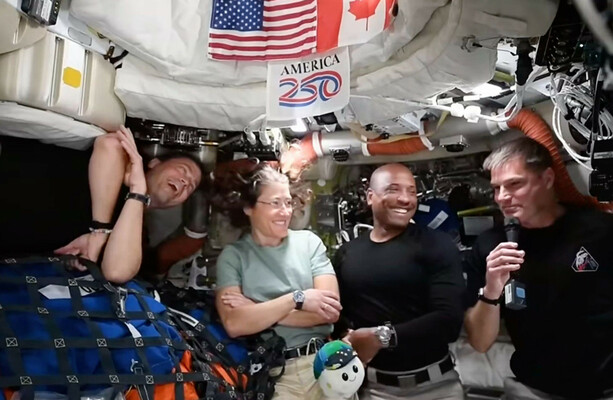
The psychological impact of venturing beyond low Earth orbit manifests as more than mere awe; it is a fundamental cognitive restructuring. As the Artemis II crew navigates the void, they have described the experience of the lunar flyby as “chills” that continue to wash over them. This phenomenon, often referred to as the Overview Effect, occurs when astronauts view the Earth as a tiny, fragile ball of life hanging in a void, leading to a profound shift in perspective regarding national borders and global unity. For some, the experience is visceral, as “it really bent your mind.”
This cognitive shift is not merely an emotional response but a critical factor in human spaceflight mission design. As humanity moves toward a sustained lunar presence, formalized in part through the Artemis Accords, understanding the mental resilience and psychological evolution of crews is essential for long-duration missions to Mars and beyond. For mission planners and policymakers, the way astronauts process risk, isolation, and planetary perspective increasingly shapes crew selection standards, training regimes, and even international cooperation in space governance.
Thermal Management and Atmospheric Re-entry
As Flight Day 9 progresses, the focus shifts from exploration to the high-risk phase of returning to Earth. The Orion spacecraft must transition from the vacuum of space to a controlled descent through the atmosphere, a process that culminates in a “fireball” re-entry. This is not a metaphor but a physical reality: the spacecraft hits the atmosphere at approximately 25,000 miles per hour, compressing the air in front of the heat shield and creating a sheath of superheated plasma.
At this stage, engineering margins become a de facto public-safety regime. The integrity of the Avcoat heat shield is the primary potential failure point during this phase. The shield must dissipate temperatures reaching 5,000 degrees Fahrenheit to protect the crew cabin and preserve the mission’s certification envelope for future flights. This process requires precise trajectory alignment; a few degrees of deviation could result in the capsule skipping off the atmosphere like a stone on water or entering too steeply, leading to catastrophic structural failure. Those parameters, monitored in real time by flight controllers, feed directly into how national regulators and international partners will judge the design’s fitness for carrying subsequent crews.
Mapping the Lunar Far Side
Beyond the human experience, the mission provides critical data on the moon’s far side-the hemisphere that remains permanently hidden from Earth’s view. The imagery captured during the flyby offers a window into the lunar south pole and the far-side topography, which is significantly more cratered and devoid of the large basaltic plains (maria) found on the near side. The visual data has been described as captivating, with the sentiment that “there is something in every image that surprises me.”
Scientifically, these images inform where future robotic landers and human surface missions might safely touch down and where volatile-rich regions, such as permanently shadowed craters, may support in-situ resource utilization. Strategically, they feed into how partner nations allocate investments under the Artemis program and other national lunar strategies. Processing these images requires robust data transmission infrastructure. The Deep Space Network is utilized to maintain the telemetry and high-bandwidth links necessary to transmit these high-resolution assets back to ground control without corruption, ensuring the data record that underpins future exploration decisions remains intact.
Orion System Criticalities and Re-entry Parameters
The transition from lunar orbit to Earth’s surface involves a complex layering of automated systems and manual overrides to ensure crew safety. Within NASA’s own human-rating standards and the broader U.S. commercial and civil spaceflight oversight ecosystem, these systems are the basis for certifying that Orion can repeatedly carry crews beyond low Earth orbit.
| System Layer | Primary Function | Critical Risk |
|---|---|---|
| Thermal Protection System (TPS) | Ablative heat shield for plasma dissipation | Material spallation or breach |
| Guidance, Navigation, & Control (GNC) | Precise entry corridor alignment | Trajectory overshoot or undershoot |
| Parachute Deployment System | Velocity reduction from supersonic to subsonic | Deployment failure or line entanglement |
| Communication Array | Maintaining link before and after plasma blackout | Total signal loss beyond the expected outage window |
Each of these layers is instrumented not only to protect the crew, but also to generate the engineering and safety data that U.S. civil aviation and spaceflight regulators, including the Federal Aviation Administration’s Office of Commercial Space Transportation, use to refine human-spaceflight rules and licensing practices over time.
Infrastructure Dependencies for Lunar Return
The success of the return phase relies on a distributed network of ground-based and orbital infrastructure. The coordination between the crew and mission control is governed by strict protocols to manage the “blackout” period-a window where the plasma shield blocks all radio signals and autonomy takes precedence over real-time human intervention. Those procedures, refined since the Apollo era, now sit within a more complex ecosystem of international tracking assets and shared situational awareness.
- Trajectory Correction Maneuvers (TCM): Precise engine burns used to align the capsule with the narrow atmospheric entry corridor, preserving both crew safety and compliance with established re-entry safety corridors over populated areas.
- Plasma Shielding: The chemical composition of the heat shield allows it to burn away (ablate), carrying heat away from the capsule and ensuring the spacecraft meets its certified performance envelope for subsequent crewed missions.
- Recovery Operations: Maritime and aerial assets positioned in the Pacific Ocean for immediate crew extraction post-splashdown, operating under joint protocols that align with national search-and-rescue obligations and evolving norms for human spaceflight recovery.
Taken together, these technical, psychological, and infrastructural elements define more than a single mission’s success. They are steadily building the operational rulebook-and the diplomatic and regulatory playbook-for how nations will live, work, and cooperate beyond low Earth orbit in the decades ahead.