
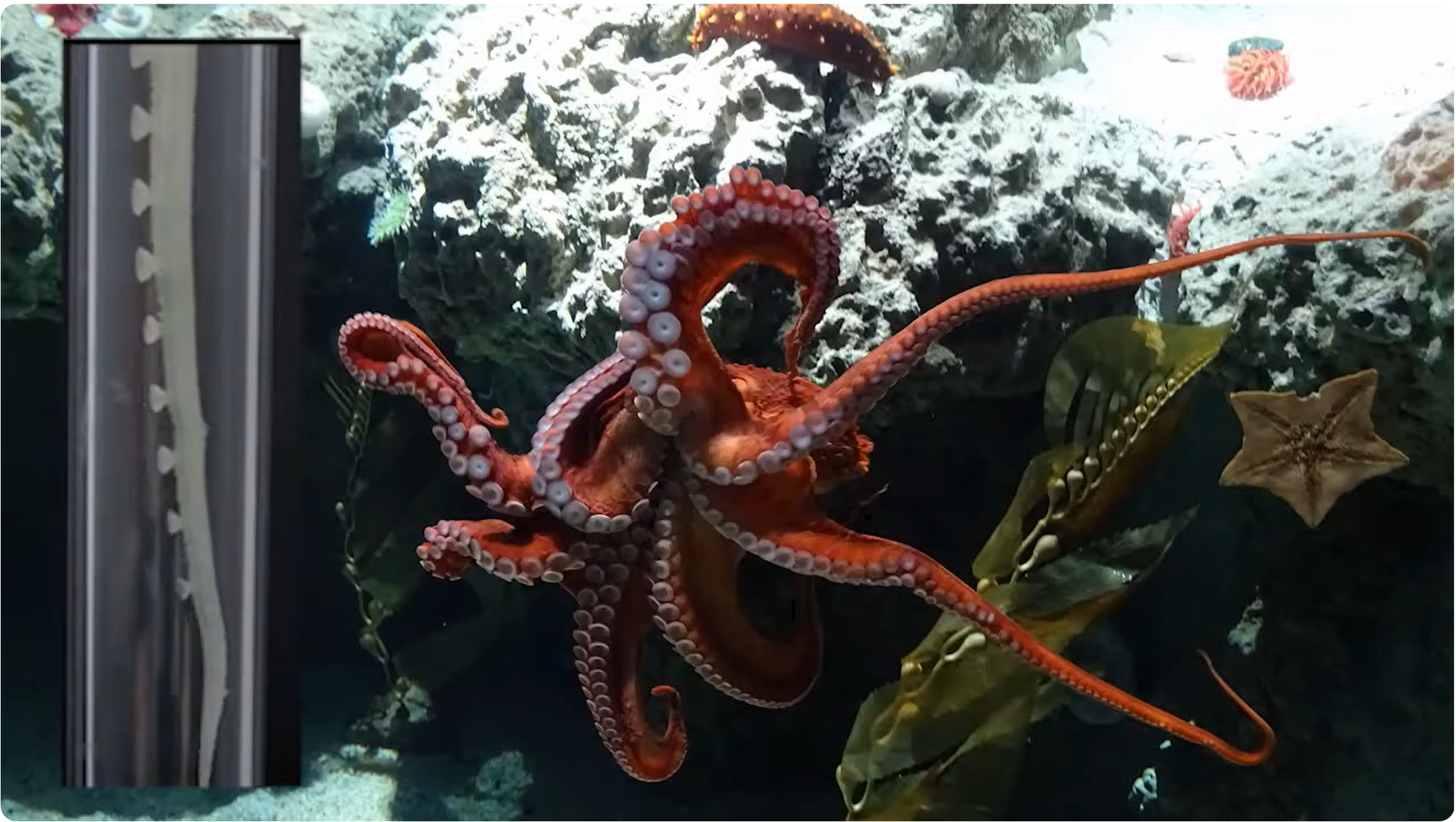
The paradigm of robotic design is shifting away from the rigid, centralized architectures that defined the industrial era. A breakthrough from the Istituto Italiano di Tecnologia (IIT) is pushing this evolution further, moving toward “embodied intelligence” where the physical structure of the machine handles a portion of the computational load. By mimicking the decentralized nervous system of an octopus, researchers have developed a soft robotic arm capable of autonomous sensing and adaptation in unpredictable environments.
Traditional robotics relies on a “sense-think-act” loop, where sensors send data to a central processor that then commands an actuator. In complex or underwater settings, this lag and the rigidity of the hardware often lead to failure. The IIT project bypasses this limitation by integrating perception and action directly into the limb’s anatomy.
“We drew inspiration from the octopus to develop a robotic system in which perception and action are integrated and distributed throughout the body,” said Barbara Mazzolai, who directs the Bioinspired Soft Robotics laboratory.
The Architecture of Decentralized Sensing
The core innovation lies in the arm’s tactile interface. Rather than relying on a remote computer to interpret touch, the arm utilizes artificial suction cups made of soft silicone that function as both grippers and sensory organs. These cups employ integrated optical components, including light-emitting diodes (LEDs), to track physical deformation in real time.
When the silicone structure makes contact with an object, the resulting change in shape alters the reflection of light within the cup. This optical shift is immediately translated into data regarding the intensity and direction of the applied force. This design allows for a level of sensitivity that protects fragile objects while maintaining a secure grip.
“By integrating sensors and signal processing directly into the suction cups, the arm reacts to contact in real time and precisely, without relying on centralized control,” said Emanuela Del Dottore, first author of the study.
The technical capabilities of this sensory system are outlined below:
| Feature | Technical Implementation | Operational Benefit |
|---|---|---|
| Sensing Mechanism | Embedded LEDs and optical deformation tracking | High-sensitivity touch and pressure detection |
| Control Logic | Decentralized/distributed processing | Reduced latency and autonomous local reaction |
| Actuation | Tapered soft body with internal tension cables | Multi-axis bending, twisting, and wrapping |
| Environment | Amphibious (air and water) | Operational stability under hydraulic pressure |
Morphological Computation in Unstructured Environments
By adopting a soft, tapered shape, the arm utilizes morphological computation-where the physical properties of the material solve problems that would otherwise require complex algorithms. Because the arm can adapt its shape to the object it touches, it does not require a precise geometric map of its surroundings to function.
This capability is critical for deployments in “unstructured” environments, such as deep-sea exploration or disaster recovery zones, where rigid robots often struggle with obstacle avoidance and delicate manipulation. The arm’s ability to operate underwater is particularly significant for the maintenance of critical subsea infrastructure, including telecommunications cables and offshore energy arrays, both of which are increasingly recognized as strategic assets under emerging national critical-infrastructure protection regimes and cybersecurity directives.
Infrastructure, Safety Standards and Industrial Implications
The modularity of the system allows it to be tailored for specific sector requirements. By adjusting the density and placement of the suction cups, the arm can be optimized for different load-bearing capacities or sensory resolutions. This flexibility suggests a move toward highly specialized soft-robotic tools that can be swapped based on the mission profile-an attractive proposition for operators managing regulated assets such as offshore platforms, chemical facilities or nuclear-adjacent logistics hubs.
Beyond marine science, the integration of soft robotics into industrial workflows aligns with the growing demand for industrial automation standards that prioritize human-robot collaboration (HRC). Rigid robots require extensive safety cages to prevent human injury; however, soft robotic systems are inherently safer, potentially reducing the footprint of safety infrastructure in factories. As regulators and notified bodies update conformity assessment under frameworks such as the EU Machinery Regulation, designs that minimize impact forces and enable fine-grained tactile sensing are likely to find a clearer path to approval.
Potential high-impact applications include:
- Healthcare: Handling sensitive biological samples or assisting in minimally invasive surgical procedures where tissue trauma must be minimized, supporting hospital risk-management policies and stricter device liability regimes.
- Subsea Maintenance: Inspecting and repairing offshore pipelines and ship hulls without damaging the substrate, offering operators a way to meet tightening environmental and safety rules while limiting downtime.
- Hazardous Material Handling: Recovering fragile artifacts or chemical containers in environments where human entry is prohibited, complementing occupational-safety regulations that increasingly mandate remote or robotic intervention.
Scaling Bio‑mimetic Intelligence
The transition from laboratory prototype to enterprise-grade hardware will require addressing the durability of soft polymers under extreme chemical or thermal stress. While the current system has proven durable in repeated trials, long-term deployment in corrosive saltwater or high-pressure deep-sea trenches remains a primary engineering hurdle, and one that risk officers and insurers will scrutinize before certifying the technology for mission-critical work.
Future iterations are expected to integrate more sophisticated sensing arrays and increase the payload capacity of the internal cable system. For policymakers and standards bodies, that evolution raises new questions about how to classify and test devices that blur the line between sensor, actuator and controller-particularly as they move from isolated tools to networked fleets managed via cloud or edge platforms.
By merging biological principles with advanced material science, the Istituto Italiano di Tecnologia is demonstrating that the next leap in robotic intelligence may not come from faster processors, but from a fundamental redesign of the robotic body itself. For governments, regulators and boardrooms now drafting their next generation of automation and safety strategies, octopus-inspired soft robots offer a glimpse of a future in which compliance, resilience and embodied intelligence are engineered into the hardware from the start, rather than bolted on after deployment.