
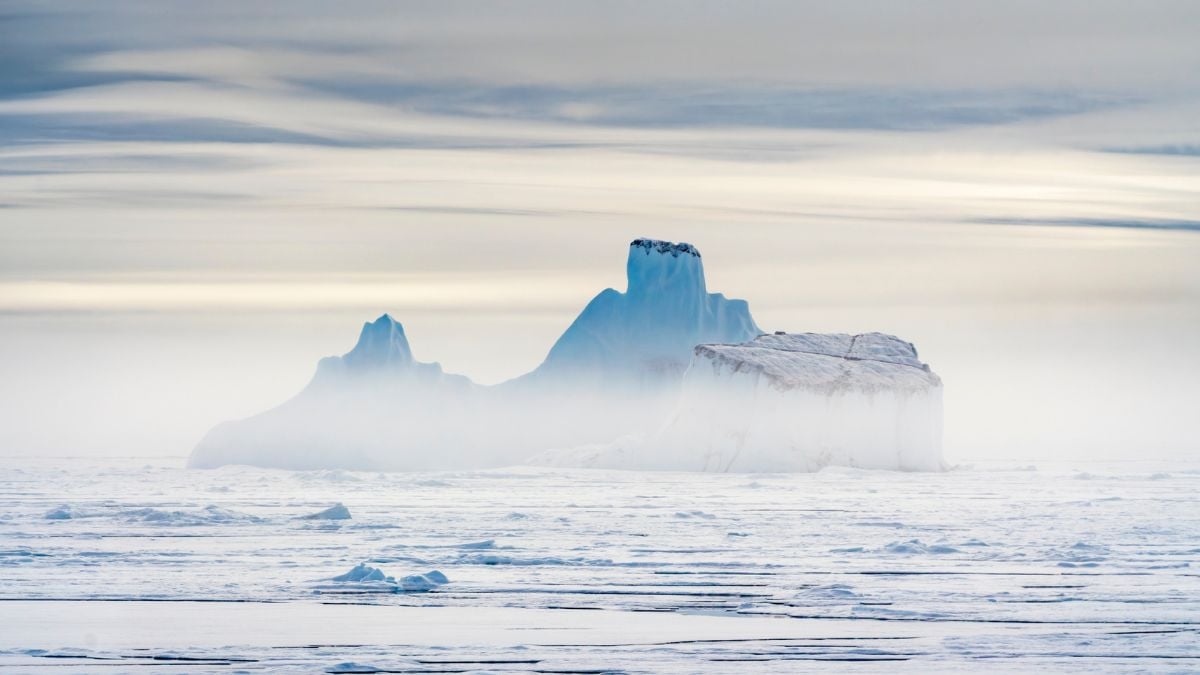
The accelerating fragmentation of Greenland’s glaciers is fundamentally altering the Arctic’s physical and biological landscape, creating a cascading effect that reaches from the surface ice to the deep ocean floor. New data reveals that these glaciers are now releasing four times as many icebergs as they were 25 years ago, a shift that introduces significant volatility into maritime navigation and deep-sea ecological stability.
“Our results indicate a direct, climate-driven connection between glacier change at the surface, amplified iceberg traffic, and the increased availability of hard-bottom habitats on the deep seafloor,” the study’s authors note, describing what they call a previously underappreciated pathway linking atmospheric warming to seafloor change.
Navigational Hazards in Emerging Arctic Corridors
The surge in iceberg activity is coinciding with the opening of new northern shipping routes as sea ice thins seasonally, creating a high-risk environment for commercial, research, and fishing vessels. The Fram Strait, situated between Svalbard and northeast Greenland and functioning as a key gateway between the Arctic Ocean and the North Atlantic, has become a primary focal point for this increase.
“When the Greenland ice melts, sea levels rise. But we can also see that the changes affect the entire Arctic,” the researchers emphasize, pointing to a systemic reconfiguration of the region’s shipping lanes, ecosystems, and climate feedbacks.
The scale of the increase in ice mass displacement is summarized below:
- Iceberg Frequency: The occurrence of icebergs in the Fram Strait has quadrupled since 2000, dramatically narrowing the margin for navigational error.
- Cluster Growth: Groups consisting of more than five individual icebergs have increased by 4.5% per decade, raising the likelihood of vessels encountering dense, fast-changing ice fields rather than isolated hazards.
- Primary Sources: The majority of these clusters originate from the Russian Arctic and Greenland, underscoring that the phenomenon is pan-Arctic rather than confined to a single national jurisdiction.
This environment necessitates stricter adherence to the IMO Polar Code, which mandates specific ship construction, crew training, and equipment standards for vessels operating in ice-covered waters. For Arctic states and shipping companies, compliance is shifting from a box-ticking exercise to an operational survival strategy.
As iceberg density increases, the reliance on real-time Synthetic Aperture Radar (SAR) and AI-driven ice-tracking algorithms becomes critical to prevent catastrophic hull failures, oil spills, and search-and-rescue emergencies in areas where response times can stretch into days. Maritime insurers and regulators are already factoring heightened iceberg traffic into route planning, seasonal access windows, and risk pricing, effectively turning glaciological change into a boardroom and cabinet-level concern.
Benthic Transformation and Deep-Sea Infrastructure
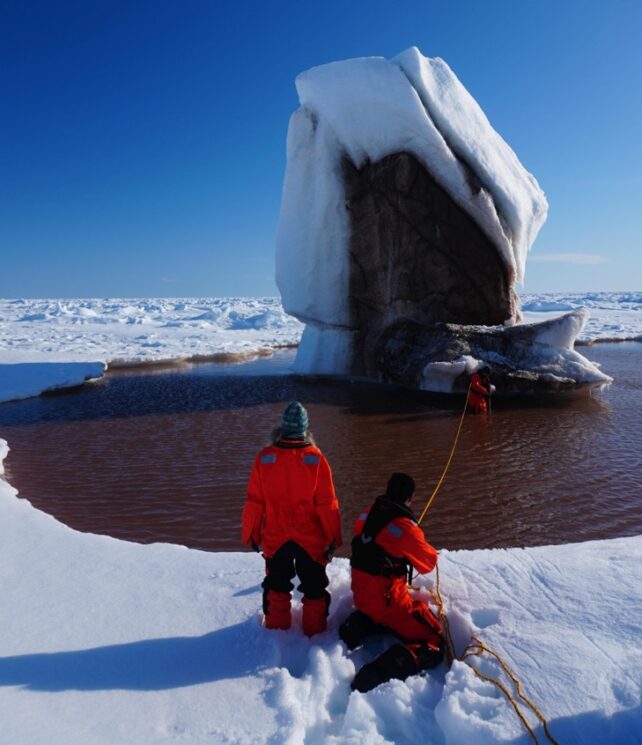
The impact of glacier melt extends beyond surface navigation, influencing the composition and stability of the ocean floor across key Arctic basins. Icebergs act as conveyor belts, transporting massive quantities of terrestrial rocks and sediments hundreds of kilometers from the coast before sinking. This process creates “hard-bottom” habitats in areas previously dominated by soft sediment, fundamentally altering the biological makeup of the seabed and the food webs that depend on it.
“The new study shows that the consequences do not stop at rising sea levels, but directly affect deep-sea ecosystems far from the glaciers,” the authors write, arguing that traditional climate risk assessments have underestimated changes occurring in the deep ocean.
From a technical and infrastructure perspective, these changes introduce new variables for deep-sea operations at a time when governments and industry are expanding Arctic subsea infrastructure. The deposition of coarse stones and sediments can interfere with the deployment of underwater sensor networks, complicating long-term climate and ecosystem monitoring. It also affects the stability and routing of subsea cables and pipelines that carry data and energy between continents.
The shift in seabed topography can create unexpected physical barriers or abrasion risks for infrastructure designed for soft-bottom environments, forcing operators to revisit engineering assumptions, maintenance schedules, and environmental impact assessments. Regulators responsible for approving new cables, pipelines, and resource projects in the Arctic now have to factor in a moving, rock-strewn seafloor shaped not by tectonics but by accelerating glacial loss.
As these terrestrial materials settle, they not only provide new footholds for marine life but also change the geochemical profile of the deep ocean, influencing oxygen levels, carbon storage, and nutrient cycling. In effect, Greenland’s disintegrating glaciers are re-engineering the Arctic abyss, tightening the feedback loop between atmospheric warming, ocean dynamics, and the human infrastructure that increasingly depends on a stable seafloor.
Keep reading
