
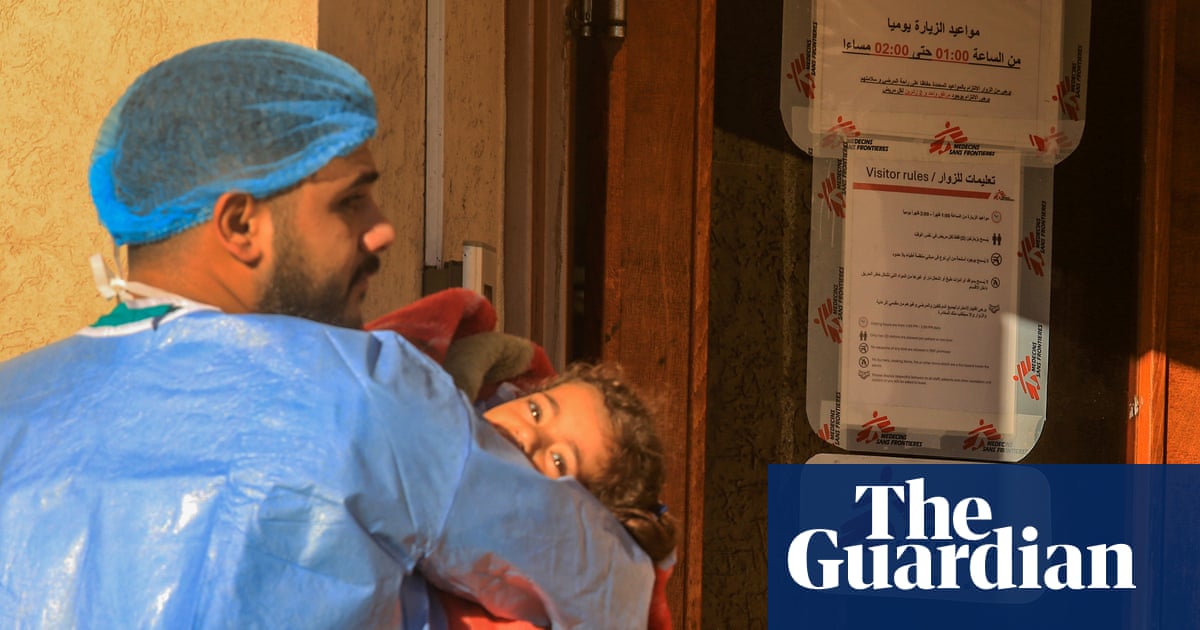
KHAN YOUNIS, Gaza Strip –
A 27-day-old girl, Aisha Ayesh al-Agha, died of hypothermia in Khan Younis on Saturday after arriving too late to be saved at Nasser Medical Complex, Gaza’s main referral hospital in the south. Her death brought to eight the number of children in Gaza who have succumbed to cold this winter, according to the Palestinian health ministry and medical staff who spoke to Anadolu. (aa.com.tr)
The infant’s death lays bare how a bitter winter, mass displacement and a battered health system are intersecting to lethal effect even under a ceasefire that took hold in October. UNICEF’s James Elder said this week that “more than 100 children have been killed in Gaza since the ceasefire of early October. That is roughly one girl or boy killed every day. During a ceasefire.” (unicef.org)
Ceasefire violence and a worsening winter
Although front-line fighting has eased, Gazans remain under what the United Nations describes as a highly volatile ceasefire, with sporadic strikes and exchanges of fire continuing near densely populated areas. The UN’s humanitarian office reported that from 11 October 2025 through 15 January 2026, at least 463 Palestinians were killed and 1,269 injured, even as storms battered displacement sites across the Strip. Between 12 and 15 January alone, severe weather damaged or destroyed 3,455 tents and makeshift shelters and left seven people dead and 34 injured. (ochaopt.org)
Earlier in the week, high winds collapsed walls onto flimsy tents and shelters along Gaza’s coast, killing at least five people; a one‑year‑old also died of hypothermia, according to on-the-ground reporting. (apnews.com) Local authorities say many of the most exposed families have already been displaced multiple times since the war’s onset, leaving them with little more than plastic sheeting and thin blankets as temperatures fall.
Hospitals stretched as cold and displacement collide
Nasser Medical Complex, where baby Aisha was taken, has remained a critical lifeline but is chronically over capacity and short of basic supplies, from fuel to pediatric medication. Health partners have tried to expand services under the ceasefire, adding 140 beds for specialized care at Nasser and establishing a small neonatal intensive care unit at Al‑Awda Hospital with five incubators. The scale of need, however, still far outstrips capacity, and doctors say power cuts and staff shortages routinely delay or interrupt lifesaving care. (ochaopt.org)
Aid agencies warn that tents and tarpaulins cannot keep pace with winter storms or with the number of families still living outdoors or in damaged buildings. UN updates in January described thousands of shelters flooded or blown down, supply routes disrupted by weather, and more than a million people still in urgent need of adequate winter shelter support. (ungeneva.org) Public health specialists caution that without rapid reinforcement of shelter and medical services, the combination of cold, crowding and chronic malnutrition will drive a further rise in hypothermia, respiratory infections and other preventable deaths among children.
A maternal and newborn emergency
Two recent investigations by Physicians for Human Rights, in collaboration with the Global Human Rights Clinic at the University of Chicago Law School and Physicians for Human Rights-Israel, link the crisis for mothers and infants to the war’s destruction of care pathways, displacement, and deepening malnutrition. Between January and June 2025, Gaza recorded a steep drop in births and a surge in preventable complications.
“2,600 miscarriages, 220 pregnancy-related deaths, 1,460 premature births, over 1,700 underweight newborns and over 2,500 infants requiring neonatal intensive care” between January and June 2025.
The same period saw just 17,000 recorded births, a 41% fall from the equivalent months in 2022, UNFPA and health ministry data show-evidence of a system buckling under siege conditions and repeated displacement. (phr.org) Obstetricians say women are often forced to travel through damaged roads and checkpoints while in labor, or to give birth in overcrowded shelters without skilled attendants or sterile equipment.
The medical consequences of cold exposure map onto this broader collapse: premature and low‑birth‑weight babies are highly vulnerable to hypothermia and infection in overcrowded shelters without electricity, heating or clean water. Health partners have warned for months that persistent fuel and supply constraints put incubators, oxygen plants and neonatal care at continual risk. (prezly.msf.org.uk) In some facilities, staff describe wrapping newborns in layers of cloth and placing them next to adult patients for warmth when electric heaters fail.
Obligations under international law
Under international humanitarian law, parties to conflict must protect civilians and allow and facilitate rapid, unimpeded humanitarian relief; they must also ensure care for the wounded and sick and safeguard medical facilities and personnel. The International Committee of the Red Cross notes that even during sieges, parties must permit relief operations and refrain from tactics that deprive civilians of essentials needed for survival. (icrc.org)
Those obligations were reinforced by the International Court of Justice, which in January and March 2024 ordered Israel to take “all measures within its power” to prevent acts proscribed by the Genocide Convention and to enable the provision of urgently needed basic services and humanitarian assistance across Gaza. The court’s provisional measures, adopted under the Statute of the ICJ and the 1948 Convention on the Prevention and Punishment of the Crime of Genocide, require regular reporting by Israel to demonstrate steps taken to comply. (icj-cij.org)
Diplomats and humanitarian lawyers say the mounting number of deaths linked to cold, displacement and lack of medical care is likely to feature prominently in future assessments of whether parties have met their obligations to protect civilians and to ensure that relief supplies-such as fuel for hospital generators and materials for winterized shelter-can reach those in need.
Cold’s toll on the displaced
As winter deepens, UN field teams report that hundreds of thousands remain in flood‑prone, low‑lying coastal encampments-a geography that magnifies hypothermia risk for newborns and infants. Humanitarian partners are racing to reinforce shelters and drainage and to move the most exposed families, but land scarcity and damaged infrastructure limit options. (ochaopt.org) Local officials say they have identified higher ground for some relocations, yet the lack of building materials and continued restrictions on movement have slowed those efforts.
Aisha’s death, confirmed by clinicians at Nasser hospital, is the latest in a series of fatal cold exposures among Gaza’s youngest children this season. Health authorities counted seven hypothermia deaths among children as of 14 January; Saturday’s case brings that to eight. (ochaopt.org) Pediatricians warn that these cases likely represent only the most visible edge of a wider crisis, with many more infants suffering non-fatal hypothermia, pneumonia and other complications that may leave lifelong health consequences.
As of 18:00 on 15 January 2026, the UN Office for the Coordination of Humanitarian Affairs reported 463 Palestinians killed and 1,269 injured in Gaza since the 11 October ceasefire, alongside continuing storm damage to shelters and limited but ongoing expansions of hospital capacity. (ochaopt.org) For families like Aisha’s, the statistics translate into an immediate question of survival: whether promised protections under international law, and the aid operations built around them, can move quickly enough to keep the next newborn alive through the winter nights.
Worth a look
