
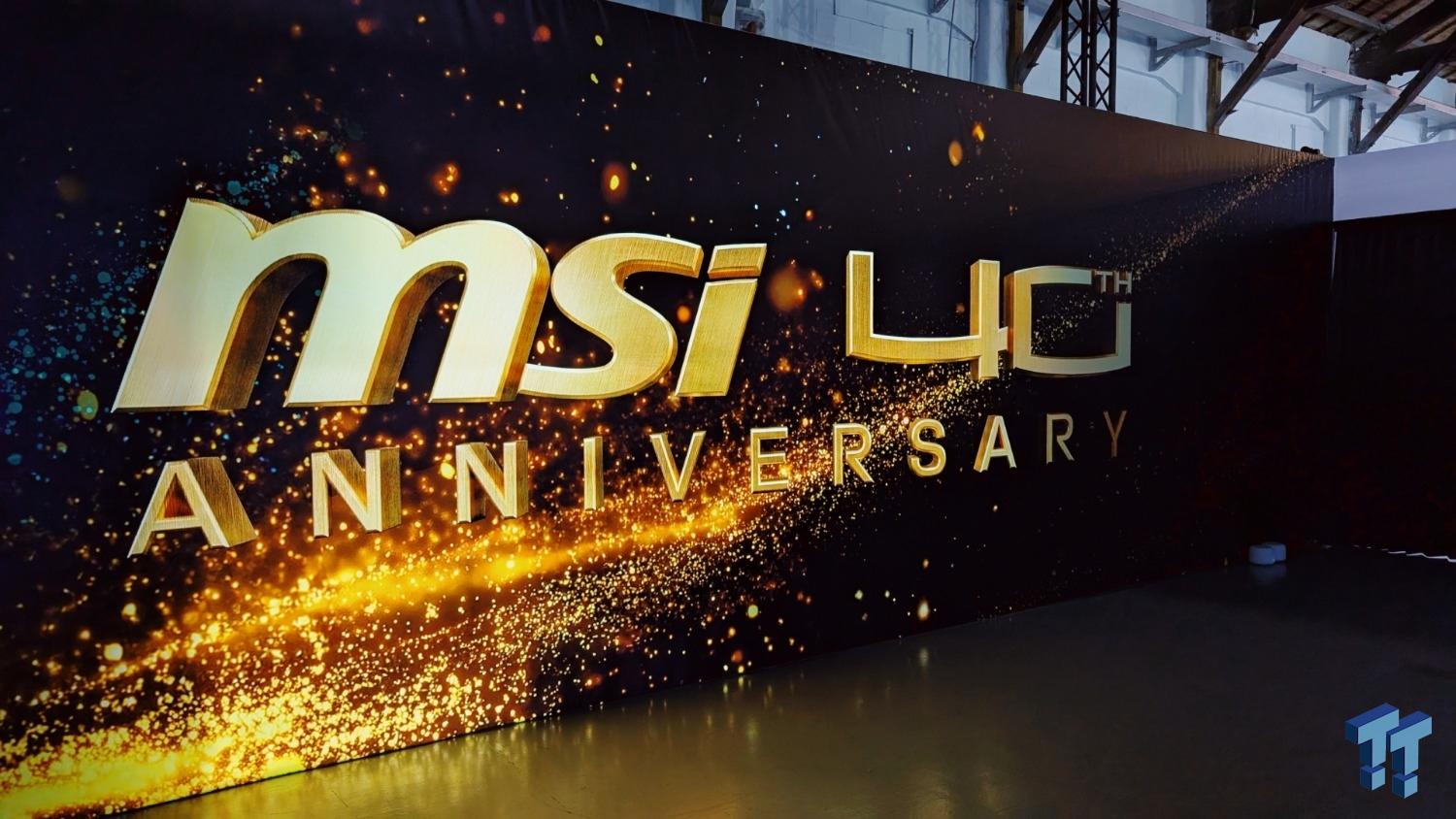
The intersection of legacy hardware and future computing architecture took center stage at Computex 2026, as MSI marked four decades of operations with an expansive interactive exhibition at Taipei’s Songshan Cultural and Creative Park. The event serves as more than a retrospective; it maps the evolution of the personal computer from a modular assembly of components to the highly integrated, AI-accelerated systems of the current era.
The Shift from Modular Motherboards to System Integration
Framed against four decades of rapid standardization in the PC industry, the exhibition’s walkthrough highlights the foundational era of motherboard engineering, where the focus was on chipset stability and expansion capabilities. Early displays feature the 1999 K7 PRO, a pivotal board designed for an early AMD Athlon platform, representing the intensifying competition for x86 dominance. This era was defined by the transition from legacy ISA slots to the more standardized PCI architecture, allowing for a broader range of peripheral expansion and laying the groundwork for the interoperable ecosystems enforced today by cross-industry bodies such as the PCI-SIG.
By 2009, the focus had shifted toward raw throughput and multi-GPU scalability. The MSI Eclipse SLI X58 exemplifies this period, designed specifically for SLI and multi-GPU setups. This architectural approach aimed to double-or, in some enthusiast builds, even triple-graphical processing power through parallelization, a precursor to the highly specialized compute clusters used in modern data centers. However, as PCI Express bandwidth increased and power efficiency became a policy priority for both regulators and major cloud operators, the industry moved away from multi-card consumer setups in favor of single, high-efficiency dies and unified memory architectures that are easier to certify for energy and thermal compliance in large-scale deployments.


Redefining the Mobile Workstation and Gaming Form Factor
The transition into the mobile sector began in earnest in 2004 with the company’s first custom laptop. This move signaled a shift in consumer demand toward portability without sacrificing the productivity of a desktop-an early indicator of the “work-from-anywhere” expectations that now shape corporate IT purchasing and device security policies.
The most extreme expression of this philosophy is seen in the MSI GT80. This machine blurred the line between a laptop and a workstation, integrating a full mechanical keyboard and dual Titan SLI GPUs to achieve flagship gaming performance in a chassis that still met traditional notebook safety and emissions standards. The GT80 represents a specific era of “desktop replacement” engineering, where thermal management and power delivery were pushed to their limits to accommodate desktop-class silicon. Modern mobile design has since pivoted toward efficiency, battery longevity, and AI-driven power management, but the GT80 remains a benchmark for raw hardware integration in a mobile chassis-and a reminder of the trade-offs policymakers face as they encourage higher energy efficiency without stifling performance-led innovation.

GPU Acceleration and the Convergence of Gaming and Brand Ecosystems
Graphics processing has evolved from simple rasterization to complex ray-tracing and AI-upscaling, with GPUs now central not only to entertainment but also to AI research, national compute strategies, and cybersecurity workloads. The exhibition showcases the Lightning series GPUs, which represent the pre-RTX era of PC gaming, when clock speeds, power headroom and manual overclocking were the primary performance drivers. In contrast, newer hardware focuses on the integration of AI tensor accelerators and deep learning capabilities that can be dynamically scheduled between gaming, content creation, and machine-learning inference.
A notable example of modern market strategy is the special edition GeForce RTX 5070s. Created in collaboration with Blizzard for the World of Warcraft Midnight expansion, these cards illustrate the trend of “lifestyle hardware,” where technical specifications are paired with strong IP partnerships to drive consumer engagement and brand loyalty. For regulators and consumer-protection agencies, this kind of co-branded ecosystem raises emerging questions about data telemetry, in-game monetization, and the transparency of performance claims when hardware, software, and online services are marketed as a single, integrated experience.
| Era | Key Hardware Example | Primary Technical Focus |
|---|---|---|
| Early Legacy | K7 PRO (1999) | Chipset stability & AMD integration |
| Multi-GPU Peak | Eclipse SLI X58 (2009) | Parallel processing & SLI bandwidth |
| Mobile Power | GT80 Titan | Mechanical integration & thermal scaling |
| Modern AI | RTX 5070 Special Edition | Ray tracing, AI acceleration & ecosystem collaborations |


Scaling Beyond Consumer Hardware into Enterprise Infrastructure
Beyond the focus on gaming, the exhibition highlights MSI’s expansion into professional and industrial sectors. The inclusion of office-centric layouts, AI workstations and data center racks underscores a strategic pivot toward B2B infrastructure at a time when governments are scrutinizing digital sovereignty, data localization, and the resilience of national compute capacity. In the current market, this transition is essential as the demand for edge computing and localized AI server clusters grows, particularly in jurisdictions tightening cloud-compliance and cybersecurity rules under frameworks such as the EU Cybersecurity Act.
The 40th Anniversary Limited Edition Series, featuring flagship cases and high-end motherboards, serves as a bridge between these worlds, blending enthusiast aesthetics with enterprise-grade durability and manageability. For institutional buyers-from ministries digitizing public services to universities scaling AI labs-these systems are positioned as part of a vertically integrated stack that can be tuned for both regulatory assurance and performance-intensive workloads.
By showcasing its journey from a motherboard manufacturer to a provider of full-stack computing infrastructure, MSI reflects the broader trajectory of the Taiwanese tech ecosystem-moving from Original Design Manufacturing (ODM) toward high-value, brand-driven system integration. Computex 2026, and this exhibition within it, ultimately read less like a company birthday and more like a snapshot of how hardware, standards, and policy are converging to define who will control the next generation of AI-ready compute.


Related reading
