
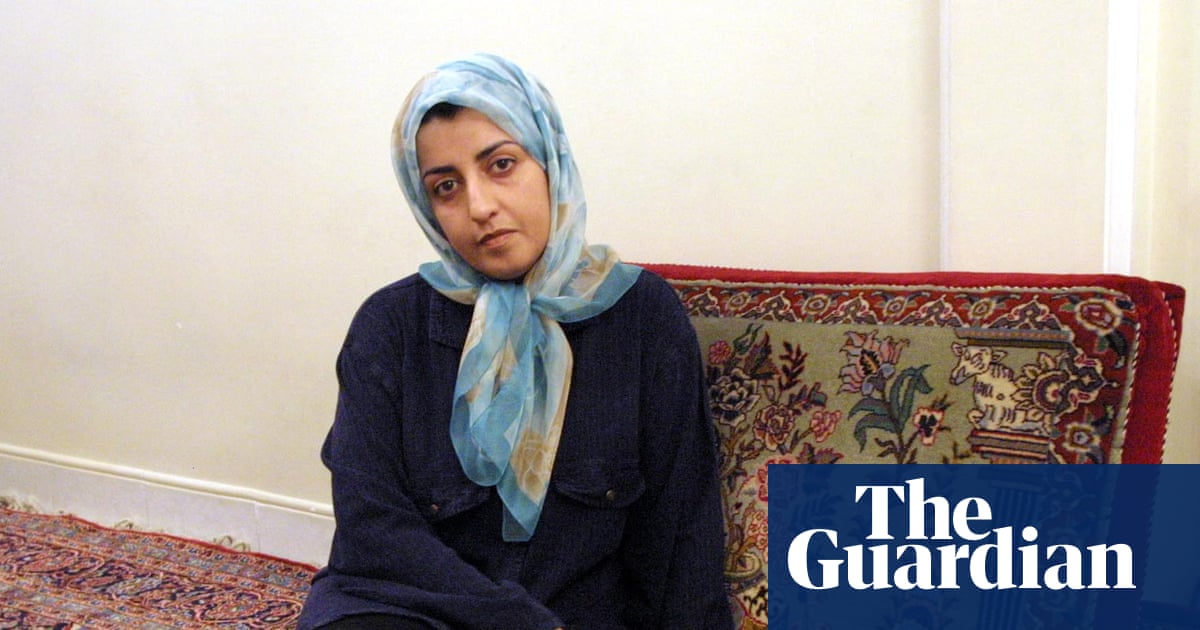
TEHRAN – Smuggled writings from Nobel Peace Prize laureate Narges Mohammadi have revealed a harrowing account of systematic medical neglect and the psychological toll of solitary confinement within Iran’s penal system.
The documents, written over the course of a decade and smuggled out of multiple prisons, provide a rare glimpse into the state’s treatment of one of the world’s most prominent advocates for human rights. The writings will form the basis of Mohammadi’s upcoming memoir, A Woman Never Stops Fighting, scheduled for publication in September.
The revelations arrive as Mohammadi remains in critical condition, facing a precarious health crisis that her family and legal representatives characterize as a deliberate attempt by the Iranian state to silence her without a formal execution.
“There is no hardship worse than illness combined with imprisonment,” Mohammadi wrote. “Authoritarian regimes do not always need an executioner’s rope. Sometimes, they simply wait for the human body to fail.”
Medical Neglect as State Strategy
Mohammadi’s health has deteriorated sharply following a violent rearrest in May 2025, a year after she had been granted a temporary sentence suspension. Since her return to custody, her weight has dropped by more than 20kg, according to relatives and advocates familiar with her case.
In March 2026, Mohammadi was found unconscious in her cell following an apparent heart attack. Despite urgent pleas from her family and medical professionals for her to be transferred to her primary team of surgeons in Tehran, the Iranian authorities repeatedly denied the request.
She is currently held at a small regional hospital in Zanjan, where her condition is described as critical. Her family has stated that the ongoing denial of proper medical care constitutes a “slow execution,” in violation of Iran’s own obligations under the International Covenant on Civil and Political Rights, which guarantees humane treatment of detainees.
The smuggled texts detail a history of severe medical crises endured during her various incarcerations, including:
- Pulmonary embolism
- Recurrent seizures
- Multiple systemic infections
- Chronic chest pain
In the writings, Mohammadi describes being repeatedly denied specialist care, transferred between facilities without medical records, and pressured to sign “confessions” in exchange for treatment-patterns rights lawyers say amount to the instrumentalization of health care as a tool of punishment.
The Mechanics of Silence
The process of extracting Mohammadi’s words from the prison system was a high-risk operation. The writings were smuggled by fellow prisoners and visitors from three of Iran’s most notorious facilities: Evin, Qarchak, and Zanjan.
Due to frequent raids by prison guards, the documents had to be rewritten several times over ten years after original notebooks were discovered and destroyed. The texts describe a regime of “torture” through extended solitary confinement, constant interrogations, and physical beatings, carried out under the authority of Iran’s security and judiciary apparatus.
Mohammadi’s imprisonment is the result of her lifelong activism against the Islamic Republic’s use of the death penalty and her advocacy for women’s rights. She has been arrested 14 times and has been sentenced to a total of 44 years in prison and 154 lashes, often on overlapping charges of “propaganda against the state” and “colluding to undermine national security.”
The memoir excerpts also recount how correspondence with her husband and children has been restricted or weaponized, with visits cancelled at short notice and phone calls curtailed, deepening the psychological pressure intended to force her into silence.
Institutional Context and Global Impact
The persecution of Mohammadi is emblematic of the broader crackdown following the “Woman, Life, Freedom” protests that swept Iran after the death of Mahsa Amini in 2022. The Iranian judiciary frequently utilizes vaguely worded national security provisions in the penal code to justify the long-term detention of political dissidents, journalists, and women’s rights defenders.
These practices sit uneasily with the standards set out in the Universal Declaration of Human Rights, which Iran has endorsed and which underpins many of the international statements calling for her release. Diplomats in European capitals and at the United Nations have repeatedly cited Mohammadi’s case in démarches to Tehran, arguing that her treatment has become a litmus test for the Islamic Republic’s willingness to engage with global human rights norms.
Mohammadi was awarded the Nobel Peace Prize in 2023 while already in prison, an honor that brought unprecedented international scrutiny to the Iranian penal system and to the conditions in which political prisoners-particularly women-are held. However, the award did not grant her immunity; instead, it coincided with an intensification of her judicial sentencing and tighter restrictions on her access to medical care and communication.
The memoir, A Woman Never Stops Fighting, is expected to provide broader context on her early life and the familial influences that shaped her political convictions, framing her struggle not as an isolated case, but as part of a generational resistance against institutionalized gender oppression and the state’s use of incarceration as a governance tool.
Narges Mohammadi remains detained in Zanjan under critical medical supervision, her condition closely watched not only by her family but also by foreign ministries and international legal experts who see her fate as a measure of the costs Tehran is willing to bear in order to silence one of its most persistent critics.
Related reading
