
SYDNEY –
The death of a 16-year-old Australian teenager has exposed a critical gap in medical diagnostic frameworks and highlighted the rising prevalence of a rare, tick-borne condition known as Mammalian Meat Allergy (MMA), or Alpha-gal Syndrome.
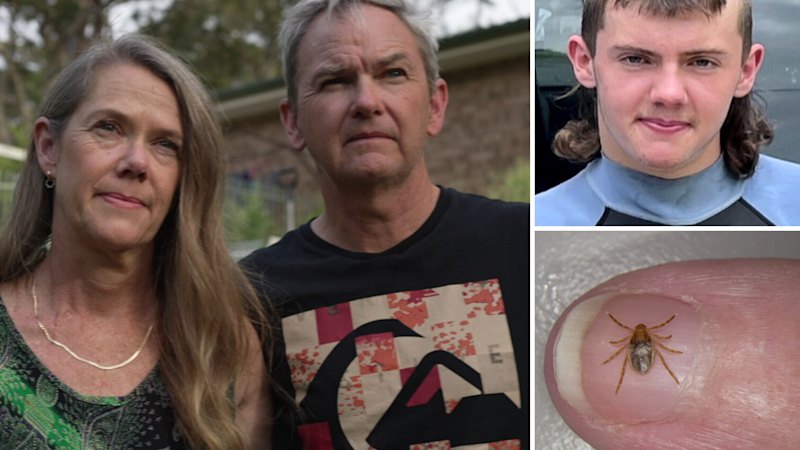
Jeremy Webb died during a camping trip on the Central Coast of New South Wales after suffering a catastrophic anaphylactic reaction. While initially attributed to a fatal asthma attack, a subsequent coronial inquest determined that the cause of death was an allergic reaction to mammalian products-a condition triggered by the bite of the Eastern Paralysis tick.
The tragedy underscores a growing international public health challenge. As tick populations expand due to shifting climates and land-use patterns, clinicians globally are seeing an increase in patients who develop life-threatening allergies to red meat, dairy, and other mammalian derivatives after being bitten by specific tick species.
The Mechanism of Alpha-gal Syndrome
Mammalian Meat Allergy is caused by a sensitivity to alpha-gal (galactose-alpha-1,3-galactose), a carbohydrate molecule found in the cell membranes of most mammals, including cows, pigs, and sheep. Humans do not produce this molecule, but the saliva of certain ticks contains it.
When a tick feeds on a human, it can sensitize the host’s immune system. Professor Sheryl Van Nunen, an immunologist and allergy physician, notes that after two tick bites, 50 per cent of people may develop antibodies to the alpha-gal molecule. Once sensitised, even trace exposures to mammalian products-from food, medicines and some medical implants-can trigger reactions ranging from hives to full anaphylaxis.
Unlike most food allergies, which trigger an immediate response, Alpha-gal reactions are typically delayed by three to six hours. This often results in “nocturnal anaphylaxis,” where patients wake up in the middle of the night struggling to breathe, hours after their last meal. That delay, specialists say, makes the condition harder for families and frontline clinicians to recognise and link back to a specific food.
“The problem is when your kid has asthma and they wake up with nocturnal asthma, you don’t know the difference,” said Jonathan Webb, Jeremy’s father. “And that was certainly the case for us because I do remember once Jeremy woke up and we were giving him his Ventolin and he said, ‘It’s not working’.”
A Growing Public Health Concern in Australia
The Central Coast and Sydney’s northern beaches have emerged as global hotspots for the condition. Recent data from Australia’s national science agency, the CSIRO, indicates a sharp upward trend in cases, with clusters now being monitored by state health authorities.
Dr. Alex Gofton, the study lead for a forthcoming CSIRO report, warns that the condition is now a “significant health concern.” According to the research:
- Over 5,000 people in Australia are currently living with MMA.
- Case numbers have increased by 22 per cent year-on-year since 2020.
- The condition is increasingly linked to the Eastern Paralysis tick.
Public health officials say the figures are likely an undercount, as many people with mild or intermittent symptoms may never receive a formal diagnosis.
For Jeremy Webb, the sensitisation began gradually. By age 10, he felt “queasy” after eating red meat or pork. Eventually, he became so sensitive that the fumes from cooking mammalian meat could trigger an illness. However, because the family was unaware that the allergy extended to all mammalian products, Jeremy continued to consume dairy, including ice cream, which his father suspects triggered previous nocturnal attacks.
Systemic Medical Failures
The inquest into Jeremy’s death revealed a pattern of missed opportunities within the healthcare system. Despite being admitted to Gosford Hospital twice with symptoms of anaphylaxis prior to his death, the possibility of MMA was never investigated. Doctors instead attributed the episodes to his existing asthma.
Jonathan Webb argues that the lack of awareness among general practitioners, paramedics, and hospital staff was a decisive factor in his son’s death.
“We should have gone home with an EpiPen and a letter of management that we needed to go and see an allergy specialist, but that was never done,” Webb said. “And unfortunately on the Central Coast, the paramedics, the doctors, the GPs didn’t know about [meat allergy]. And I want that to change.”
Professor Van Nunen, who discovered the link between the Eastern Paralysis tick and MMA in 2007, believes Jeremy’s case is not an isolated tragedy. She suspects other deaths have been miscategorized as asthma when they were, in fact, food allergies.
The findings from the inquest now place pressure on New South Wales health authorities to embed tick-related meat allergy into standard clinical pathways. Under Australia’s National Asthma Strategy, hospitals and primary care services are already required to assess and manage severe asthma systematically; allergy specialists argue that protocols must explicitly address when apparently “difficult” asthma may in fact be delayed anaphylaxis.
Policy and Practice Gap
Senior clinicians say the Webb case exposes a gap between emerging science and the guidelines used in busy emergency departments and general practices. While specialist allergy clinics in major cities now routinely test for alpha-gal antibodies when patients present with unexplained night-time reactions, that practice is far from universal in regional areas.
Allergy advocates are calling for mandatory training on tick-borne allergies for paramedics and emergency clinicians, clearer discharge instructions for patients who present with anaphylaxis, and consistent access to adrenaline auto-injectors through public subsidy schemes. They also want MMA to be explicitly recognised in state-led public information campaigns about asthma, anaphylaxis and climate-related health risks.
The Global Context of Tick-Borne Allergies
The emergence of Alpha-gal Syndrome in Australia mirrors a similar trend in North America, where the Lone Star tick (Amblyomma americanum) is the primary vector. In the United States, the Centers for Disease Control and Prevention has tracked a rise in the syndrome, noting that it can fundamentally alter a patient’s diet and medical risk profile and complicate access to some medicines derived from animal products.
The international rise of the syndrome is often linked to:
- Environmental shifts: Warming temperatures allowing ticks to migrate into new latitudes and extend their active seasons.
- Ecological changes: Increased suburban encroachment into forested areas, bringing humans into closer contact with tick habitats.
- Diagnostic lag: A failure to integrate zoonotic triggers into standard allergy screening and electronic decision-support tools.
Public health agencies in several countries now treat tick-borne allergies as part of their broader climate and vector-borne disease planning. In Australia, the federal Department of Health has signalled that conditions such as MMA will be considered in future iterations of its national environmental health and climate resilience framework, though concrete timelines and funding commitments remain unclear.
The Webb family is now advocating for a national public health campaign to educate the public and the medical profession on the risks of tick bites, the warning signs of delayed anaphylaxis and the need for prompt referral to allergy specialists.
“If we’d known, my son would still be here today. I’m 100 per cent sure of that,” Jonathan Webb said.
The NSW Deputy Coroner has formally concluded that Jeremy Webb’s death was the result of anaphylaxis due to Mammalian Meat Allergy, and recommended that health authorities review clinical guidelines and community education so that a preventable death like his is not repeated.
