
WASHINGTON DC – A suspect detained following a shooting at the White House Correspondents’ Association (WHCA) dinner managed to bypass the outermost layer of security at the event because he was a registered guest of the host hotel, officials confirmed Saturday.
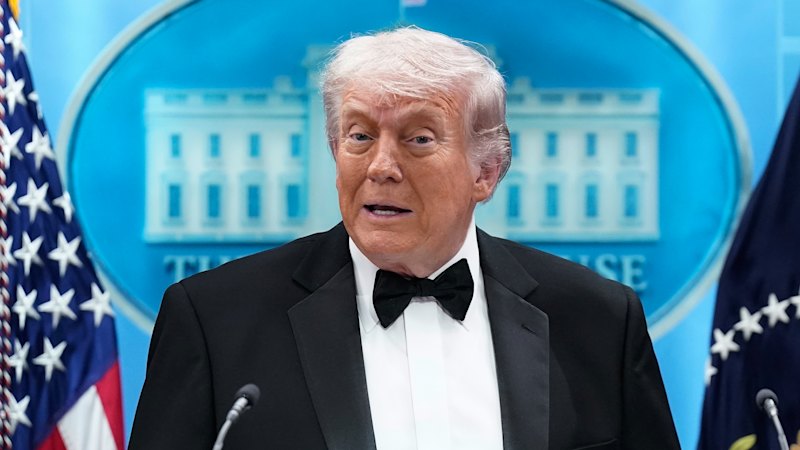
The breach occurred at an event where President Donald Trump was scheduled to speak, highlighting a critical vulnerability in the perimeter security of high-profile political gatherings. While law enforcement maintains that their defensive protocols functioned as intended, the incident underscores the ongoing challenge of securing “soft” points of entry in urban environments.
The event takes place against a global backdrop of increasing political volatility and a rise in targeted violence against state leaders. For an administration and a security apparatus already on high alert, the ability of a suspect to penetrate the outer ring of a presidential event signals a persistent tension between public accessibility and rigorous protection.
The Mechanics of the Breach
The investigation into how the suspect entered the venue centers on the distinction between event-specific security and general hotel operations. According to the Metropolitan Police Department, the suspect’s status as a hotel resident provided a legitimate reason for his presence on the premises, allowing him to circumvent the initial checkpoints established for attendees and media.
“Investigators believe the suspect was staying in the hotel and that appears to be how he was able to enter the hotel at the time of the event,” said Jeffery Carroll, the interim police chief for Washington D.C.’s Metropolitan Police Department.
Officials stressed that the suspect did not pass through the same screening regimen applied to ticketed guests and accredited journalists, who are typically subject to magnetometer checks and identification verification coordinated by the U.S. Secret Service. That distinction, investigators say, is now at the center of an urgent review of how hotels interface with federal security plans when the President is on site.
The security architecture for the WHCA dinner typically involves a tiered system of concentric circles, moving from the public perimeter to the inner sanctum where the President is located.
- Outer Perimeter: Managed primarily by local law enforcement to control traffic and pedestrian access and to push potential threats away from the immediate vicinity of the hotel.
- Intermediate Zone: Hotel access points and lobby areas where credentials are checked and event-specific screening is layered onto normal hotel operations.
- Inner Perimeter: The immediate vicinity of the event space, strictly controlled by the U.S. Secret Service, with controlled ingress and egress and continuous monitoring.
Law enforcement officials argued that their “multi-layered protection” worked as designed, suggesting that while the outer layer was breached, the inner layers prevented the suspect from reaching the President or the main assembly. Still, security planners privately concede that any successful entry into a protected site by an unscreened individual will likely trigger formal after‑action reviews and potential procedural changes.
Historical Precedent at the Washington Hilton
The location of the incident, the Washington Hilton, carries significant historical weight for the U.S. security community. The venue is the site of one of the most consequential security failures in American history.
Forty-five years ago, the Washington Hilton was the scene of the attempted assassination of President Ronald Reagan. On March 30, 1981, John Hinckley Jr. fired six shots at the President outside the hotel, wounding Reagan and three others. That event fundamentally altered how the U.S. Secret Service approaches “close-in” protection and venue sweeping, prompting tighter control of motorcade arrivals, hardened routes, and more stringent buffer zones between crowds and principals.
The recurrence of a security incident at the same venue, regardless of the outcome, inevitably invites scrutiny of current protocols. Security experts note that hotels present unique challenges because they must function as both private residences and secure venues, with hundreds of rooms, service corridors, and public spaces that can complicate efforts to lock down a site.
The Washington Hilton’s long relationship with the WHCA dinner, which has been held there for decades, means its layout is deeply familiar both to law enforcement and to potential adversaries. That familiarity, analysts say, can be an asset for planning but also a risk if long-standing assumptions about “known” spaces are not regularly tested and updated.
Institutional Security in a Volatile Climate
The incident occurs amidst a documented increase in high-profile acts of political violence globally, prompting international security agencies to rethink the balance between “fortress-style” security and the democratic requirement for leaders to remain visible to the public. In Washington, that debate now intersects with questions about how far protections should extend into the private-sector infrastructure that hosts official events.
In the United States, the coordination between the Secret Service-which holds primary jurisdiction over presidential safety under its statutory mandate in Title 18, Section 3056 of the U.S. Code-and local agencies like the Metropolitan Police Department is designed to eliminate exactly these gaps. For designated “National Special Security Events,” the Secret Service acts as the lead agency, but it still relies on local law enforcement, hotel management, and private security contractors to enforce access rules and report anomalies inside the broader security envelope.
However, the reliance on hotel registries for access creates a loophole where “insider threats” or legitimate guests can bypass the scrutiny applied to the general public. Security consultants say this case is likely to accelerate existing conversations about whether hotel guests in proximity to a protectee should face additional screening when major political events are underway, and how to do so without effectively shutting down hotel operations.
The Metropolitan Police Department and federal partners continue to review surveillance footage and guest manifests to determine if the suspect’s hotel reservation was a calculated move to exploit security gaps. Investigators are also examining whether any warning signs were missed in the days leading up to the dinner and whether information‑sharing protocols between agencies and the hotel were followed as planned.
The suspect remains in custody as investigators work to establish a motive. Officials have not indicated when they expect to complete their initial security assessment, but any formal findings could have implications well beyond one dinner in Washington-reshaping how hotels, law enforcement, and federal protection teams share responsibility the next time a sitting president walks into a ballroom.
Keep reading
