
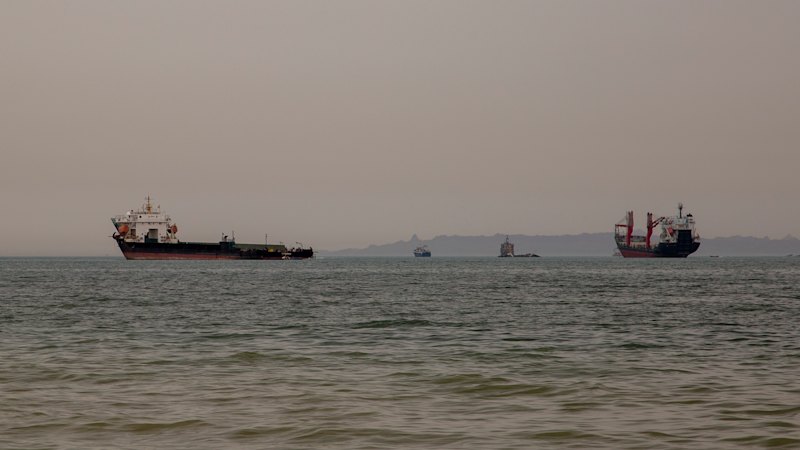
TEHRAN – Iran has paralyzed commercial shipping through the Strait of Hormuz, firing on vessels and seizing two cargo ships in a significant escalation of regional hostilities.
The disruption marks the first such seizure in nearly eight weeks of conflict, signaling a tactical shift by Tehran to exert direct physical control over the world’s most critical maritime chokepoint.
The halt in traffic threatens to destabilize global energy markets and complicates international shipping lanes, as the Strait of Hormuz serves as the primary artery for approximately 20% of the world’s total oil consumption and a vast majority of liquefied natural gas (LNG) exports from Qatar.
Seizures and Maritime Gridlock
Iranian forces opened fire on three commercial ships early Thursday, leading to a near-total cessation of transit through the corridor, according to regional maritime security officials. Two of the targeted vessels, the MSC Francesca and the Epaminondas, were subsequently boarded and seized by Iranian forces.
The operational impact was immediate, with ship-tracking data and port agents reporting a de facto freeze on traffic in both directions through the strait:
- Ocean Jewel: A products tanker currently idling at the entrance to the corridor after aborting its transit following the initial gunfire, with its master reportedly awaiting further guidance from insurers and charterers.
- LB Energy: A bulk carrier identified as the only vessel to move through the waterway early Thursday, under escort and at reduced speed.
- Ascanio: A Greek-owned, Marshall Islands-flagged bulk carrier that successfully crossed the strait late Wednesday after completing a delivery of food to Iran, before the latest closure took hold.
The seizure of the MSC Francesca and Epaminondas represents a new stage in Tehran’s maritime strategy, transitioning from harassment and warnings to the active appropriation of commercial assets and crews. Shipping executives say the episode is already forcing operators to redraw routing plans, consider alternative loading points, and reassess whether they can meet contractual delivery schedules into Asia and Europe.
The Strategic Weight of the Strait
The Strait of Hormuz is a narrow waterway connecting the Persian Gulf to the Gulf of Oman and the Arabian Sea. Under international maritime law, specifically the United Nations Convention on the Law of the Sea (UNCLOS), ships are generally granted the right of “transit passage,” allowing continuous and expeditious navigation through straits used for international navigation. Iran and neighboring Oman control the territorial waters flanking the strait, and Tehran has historically challenged the scope and application of these rights for vessels belonging to nations with which it has diplomatic or security disputes.
The current volatility follows a pattern of “tit-for-tat” escalation. Over the weekend, Iranian forces abruptly ended a brief window of open transit by firing on passing vessels. Tehran has justified these actions as a direct response to the United States’ decision to maintain a naval blockade against Iranian interests and to step up interdictions of ships suspected of carrying sanctioned cargoes.
This cycle of escalation mirrors the “Tanker War” of the 1980s, when commercial shipping became a primary target to apply economic pressure during the Iran-Iraq War and ultimately prompted foreign naval escorts and reflagging schemes. Maritime lawyers warn that a prolonged disruption now could again force governments to weigh whether to provide armed convoys or issue binding advisories that restrict, or even temporarily suspend, national-flag traffic through the strait.
Regional and Global Implications
Ship owners and insurance underwriters have placed vessels in the Persian Gulf on high alert. The recurrence of attacks in less than a week has spiked war-risk insurance premiums, increasing the cost of transporting hydrocarbons and consumer goods and, in some cases, rendering voyages commercially unviable without explicit government guarantees.
The Iranian Revolutionary Guard Corps Navy (IRGCN), which typically oversees these operations, has utilized fast-attack craft, helicopters, and boarding parties to project power over the narrow shipping lanes. This capability allows Tehran to leverage the geography of the strait to offset the conventional naval superiority of the U.S. Fifth Fleet based in Bahrain and complicate freedom-of-navigation operations routinely conducted by Western navies.
For governments, the seizure of vessels creates a complex diplomatic dilemma for the flag states and owners, often requiring protracted negotiations or third-party mediation to secure the release of crews and cargo. Foreign ministries are weighing travel advisories, potential sanctions designations tied to maritime interference, and coordinated responses through regional security forums.
Iranian state broadcaster IRIB has released purported footage of the seizures, framing the operations as legitimate security measures and as enforcement of Tehran’s claimed jurisdiction over traffic it deems hostile or non-compliant. Western officials, by contrast, have characterized the actions as unlawful interference with international navigation and a direct challenge to established norms governing strategic waterways.
The Strait of Hormuz remains largely closed to commercial traffic, with most vessels idling outside the corridor awaiting further security guarantees. As energy and security officials monitor the standoff, analysts say the longer the de facto shutdown persists, the more pressure will mount on major importing and exporting states to coordinate a formal response under existing maritime-security frameworks, from naval escorts to updated industry guidance under the International Safety Management Code, in an effort to restore predictable passage through one of the world’s most sensitive sea lanes.
Keep reading
