
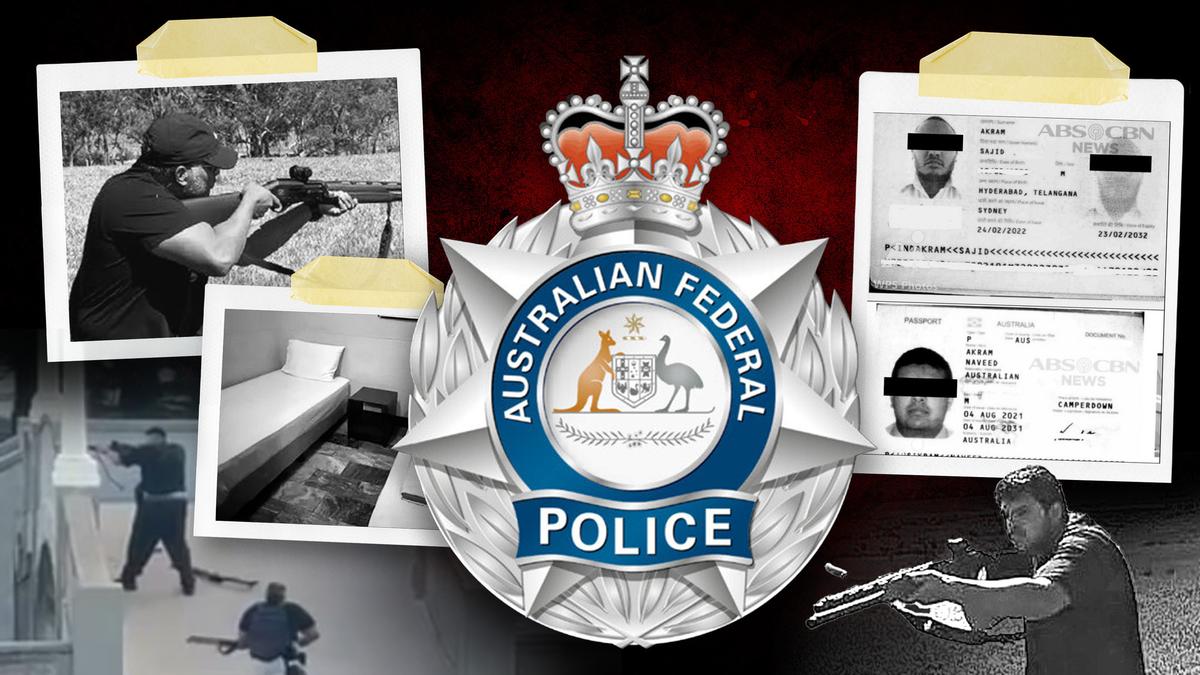
CANBERRA – An Australian Federal Police “national surveillance team” set up under the Commonwealth High Risk Terrorist Offender regime was quietly disbanded because of funding shortfalls weeks before the December 14, 2025 Bondi attack, according to internal staff correspondence and briefings.
The Canberra‑based team was dissolved late in 2025 after managers warned that budget pressures and uncertainty over future funding meant vacancies could not be filled, with its positions returned to the AFP’s Counter Terrorism and Special Investigations Command.
“Current budget pressures and the lack of certainty in relation to ongoing funding has limited our ability to fill vacancies.”
Surveillance unit dissolved amid staffing and budget constraints
In staff messages, the commander of Covert and Technical Operations, Intelligence and Covert Services said: “Whilst funding for eight positions was confirmed in February 2025 for the 2025-26 financial year, this did not meet the requirements for 10 members under AFP best practice.”
The commander added in September 2025: “Further to this, funding was only confirmed for the ’25-26 financial year and not out years. As such, a decision on the future of the team against competing resourcing and operational priorities is required.”
The national surveillance team’s work sat within the AFP’s broader covert and technical operations capability, which supports both federal counter‑terrorism investigations and joint operations with state police. The AFP’s mandate includes enforcing Commonwealth criminal law and protecting national security across Australia and overseas, with specialist units based in Canberra providing rapid‑deployment support to other jurisdictions.
According to AFP insiders, additional surveillance teams were created around a decade ago as Islamic State emerged, designed to be “highly mobile.” A former senior officer said, “I think the AFP’s CTSI Command decided the budget for that surveillance team had more benefit being poured into the investigative part, so they’ve decided to disband it and send the people back to ACT Policing,” and asked: “This question does arise: in light of the accused terrorists not being monitored, could that capability not have been directed to Sydney based counter terrorism surveillance?”

Asked for details about the recent disbanding of the Canberra‑based national surveillance team, an AFP spokesperson responded: “the AFP does not comment on surveillance capabilities”.
Claims of adequate funding meet warnings of shortfalls
Following the December 14, 2025 Bondi massacre, Prime Minister Anthony Albanese said Australia’s national security agencies, including the AFP, have “never had more funding than they have today”.
When asked in December 2025 whether the AFP and the Australian Security Intelligence Organisation should have received more resourcing to deal with radicalisation and extremism, Mr Albanese said “every single request from a security agency has been granted by my government.”
The government has pointed to substantial increases in national security and counter‑terrorism spending since 2022, and to new funding agreements with the states and territories to support high‑risk offender management. But the internal AFP correspondence highlights the gap between aggregate budget settings and the resourcing of individual frontline capabilities, with managers forced to choose between maintaining a specialised surveillance team and shoring up core investigative roles.
AFP Commissioner Krissy Barrett acknowledged that “increasingly complex environments” required “constant re-prioritisation” and said “where I do need more resources, I do and will have those conversations with government”.
In November 2025, the association representing federal police wrote that “Australia’s threat environment is not shrinking; it is expanding rapidly. The men and women of the AFP stand on the front line every day, and they deserve the resources required to keep doing so effectively.” The association cited “chronic and worsening shortages” across specialist areas, warning that capability gaps were emerging even as ministers publicly emphasised record national security spending.
How the High Risk Terrorist Offender regime fits into the system
Australia’s High Risk Terrorist Offender framework is designed to manage individuals convicted of terrorism offences who are assessed as posing an ongoing risk after serving their sentences. The regime sits under Division 105A of the federal Criminal Code, which allows courts to impose post‑sentence measures such as Continuing Detention Orders and Extended Supervision Orders where a terrorist offender is judged likely to commit a serious terrorism offence again.
Under the associated Commonwealth High Risk Terrorist Offender funding agreements, states and territories receive federal money to monitor and manage these high‑risk individuals in the community, supported by federal agencies including the AFP.
Courts can impose measures such as extended supervision or detention orders, and police and intelligence agencies support those orders through monitoring and compliance activities. The disbanded national surveillance team was established to support this regime, according to internal correspondence, with staffing levels described as needing 10 members under AFP best practice.
The AFP’s covert surveillance capability is one of several tools used to enforce these court orders, alongside state and territory police units, electronic monitoring, and the Australian Security Intelligence Organisation’s intelligence‑gathering powers. The closure of a dedicated national team raises questions inside the system about whether responsibility for physical surveillance of high‑risk subjects is being pushed back onto already‑stretched state commands.
Closed-door review and calls for further scrutiny
Former Defence and ASIO leader Dennis Richardson is conducting a closed‑door investigation into the actions of security agencies and federal police before the Bondi shootings, according to government statements. His review is examining what authorities knew about the alleged gunmen, how information was shared between agencies and jurisdictions, and whether existing powers and resources were used effectively.
Opposition Leader Sussan Ley said: “Every day that the Parliament has not come back has been a day that it should have come back, so, in fact, whenever it comes back, it won’t be coming back early – it will be coming back late.” She has demanded the Prime Minister announce a Royal Commission into the anti‑Semitic shootings at Bondi, arguing only a full public inquiry with coercive powers can restore community confidence.
A joint letter to Anthony Albanese dated December 22, 2025 from independent MPs Monique Ryan, Kate Chaney, Sophie Scamps and Zali Steggall said it “remained concerned” the response “will not adequately address anti-Semitism in the community”. The MPs urged broader scrutiny of how online radicalisation, extremist preaching and weapons access are being policed, and whether federal‑state coordination is keeping pace with the threat.
The Bondi massacre, Australia’s deadliest mass shooting since Port Arthur, has already prompted renewed debate over the balance between national security spending, civil liberties and parliamentary oversight. Community leaders are warning that any perceived failure to act on warnings – whether about offender management or rising anti‑Semitism – risks further eroding trust in institutions.
Key dates and decisions
– February 2025: Eight positions funded for the surveillance team for the 2025-26 financial year; best practice cited as 10 members.
– September 2025: Staff told funding was confirmed only for 2025-26 and that a decision on the team’s future was required.
– Late 2025: Decision made to wind up the Canberra‑based team and return funding to Counter Terrorism and Special Investigations Command.
– November 2025: Police association warns of “chronic and worsening shortages” and an expanding threat environment.
– December 14, 2025: Bondi massacre.
– December 22, 2025: Four independent MPs send an open letter urging broader action on anti‑Semitism.
Government sources say Federal Parliament is expected to be recalled early in 2026, most likely in the week before Australia Day, to pass legislation targeting hate preachers and extremist organisations. The package is expected to strengthen offences for incitement and give agencies clearer powers to move against individuals and groups deemed to be promoting violence, in a bid to close gaps exposed by the Bondi attack and its aftermath.
- Urban Infrastructure Resilience: How European and Asian Megacities Are Adapting to Extreme Climate Oscillations in 2026
- UN General Assembly 2026 Framework on Autonomous Systems: International Diplomacy Faces Algorithmic Governance
- Flydubai co-pilot attacked pilot with axe in attempted 'terrorist attack', UAE says (globallypulse.com)
