
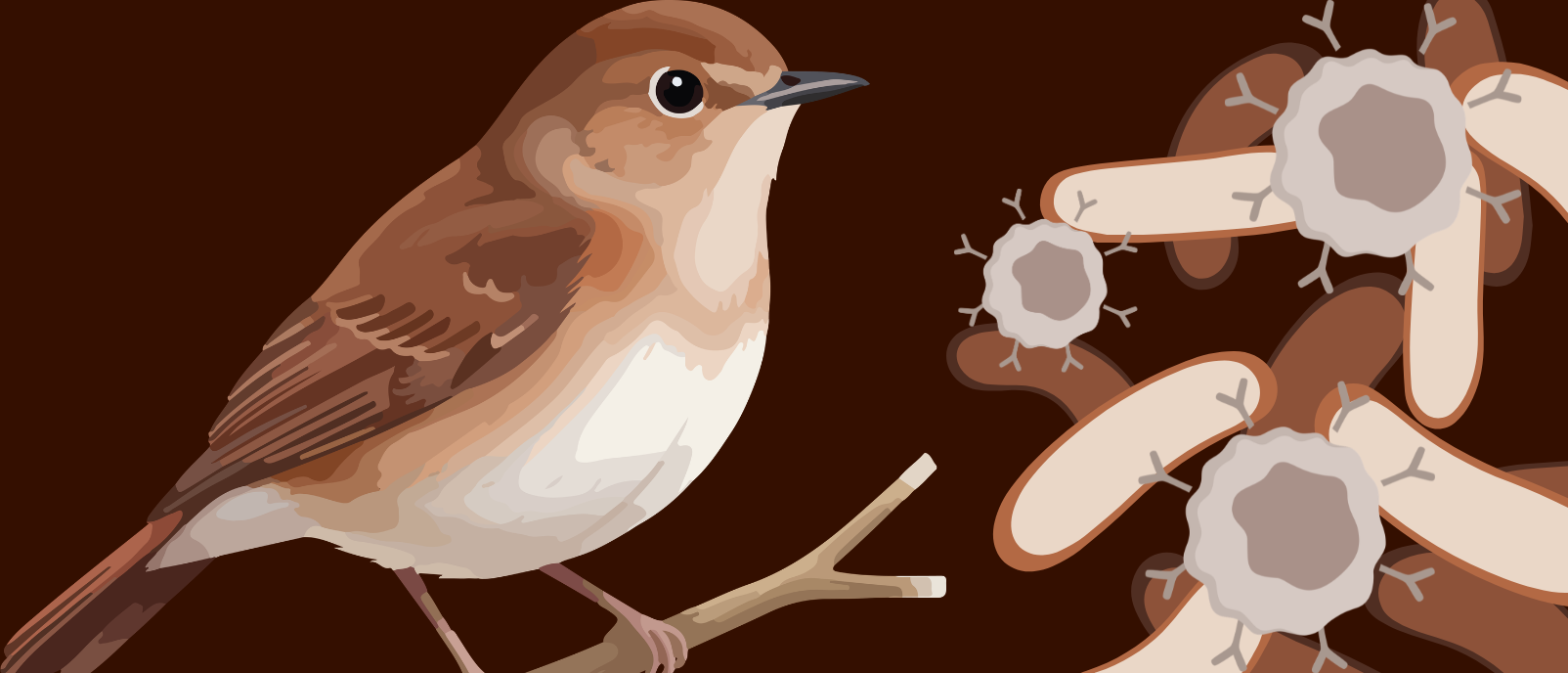
Island fieldwork links immune genetics to gut ecology
On a 27-hectare speck of land in the Indian Ocean, a long-running field project has drawn a straight line between vertebrate immune genes and the gut communities that help keep animals healthy. Researchers following individually marked Seychelles warblers on Cousin Island report that variation in immune genes is tightly associated with both the makeup and the likely functions of gut microbes. The work, conducted by a team at the University of East Anglia, adds weight to the idea that hosts and their resident microbes co‑evolve in ways that shape survival and resilience.
Senior researcher David Richardson explained: “In simple terms, an animal’s immune system may help determine which microbes can live in its gut, while those microbes in turn help support and train the individual’s immune system.”
A natural experiment made possible by lifetime monitoring
The warblers never leave Cousin Island and every bird is ringed, enabling cradle‑to‑grave observation with minimal disturbance. That continuity provides a rare window onto immune-microbiome dynamics in a wild population, avoiding many of the confounders that complicate human cohort studies.
“Cousin Island is small, isolated, and the warblers never leave it,” shared Richardson. “This offers scientists an exceptional opportunity to study life-long biological processes in the wild.”
“It gives us the best of both worlds,” commented Richardson. “We can study animals living natural lives, with natural diets and gut bacteria, while still being able to collect detailed data from known individuals.”
The setting also matters for policy audiences: a closed island system makes it easier to trace how genetics, environment and microbial exposures interact over time-exactly the kind of integrated evidence regulators and public‑health agencies increasingly look for when evaluating microbiome‑based products and prevention strategies.
What the birds reveal about the major histocompatibility complex
The study centers on specific regions of the major histocompatibility complex (MHC)-the gene family central to how vertebrate immune systems detect pathogens. In people, these loci are known as human leukocyte antigens and influence everything from transplant compatibility to certain infection risks. A concise primer on the MHC is available through MedlinePlus Genetics.
Chuen Zhang Lee, who led the work in the field and analyses, described the core finding and its relevance beyond birds. “What we found is that immune genes help shape the gut microbiome in wild animals, with potential beneficial impacts on health and survival. This work helps us better understand how immune systems and gut microbes evolve together, and we would expect to see a similar process in humans.”
The team combined fecal sampling with statistical modeling that linked MHC variation to both community composition and predicted microbial functions. “We also looked at what those bacteria are actually doing,” explained Lee. “For example, whether they are involved in metabolism, nutrient processing or defense against viruses and other infections.”
Lee emphasized the bidirectional nature of the relationship. “Our work suggests a two-way relationship. Immune genes influence the gut microbiome, and the microbiome feeds back to influence immune function.” That feedback loop is increasingly central to how clinicians and regulators think about vaccines, immunotherapies and microbiome‑modifying interventions.
Study components and their wider significance
| Study element | Details | Public‑health and policy significance |
|---|---|---|
| Setting | Closed, lifelong‑monitored population of Seychelles warblers on Cousin Island | Minimizes confounding from migration and variable exposures; strengthens inference on host-microbe co‑variation and offers a model for long‑term surveillance design |
| Immune focus | Major histocompatibility complex (MHC) regions with functional diversity | Aligns with conserved immune pathways across vertebrates, aiding cross‑species translation frameworks and risk‑stratification strategies |
| Microbiome data | Fecal sampling analyzed for taxonomic profiles and predicted functional pathways | Functional readouts better reflect potential metabolic and antiviral roles than taxonomy alone when assessing population‑level resilience and intervention impact |
| Key linkage | Associations between MHC variation and microbial composition and functions | Supports consideration of host genetics in microbiome research, surveillance and intervention design, including how trials are powered and regulated |
Implications for human research, regulation and system design
For human health systems and regulators, the Cousin Island findings are less about birds per se and more about how evidence is generated for microbiome‑targeted tools. The study reinforces the notion that host genetics are not background noise but part of the signal that determines who benefits-and who may be put at risk-when the microbiome is deliberately modified.
- Trial stratification: Host genetic markers that modulate immune recognition, including MHC variation, merit consideration as stratification variables in studies of diet, probiotics, fecal microbiota transplantation (FMT) and live biotherapeutic products. Factoring them into inclusion criteria and subgroup analyses can reduce misleading averages and better capture outlier responses.
- Regulatory assessment: In the United States, microbiome‑based therapeutics such as FMT and live biotherapeutic products fall under the biologics and drug authorities of the Food and Drug Administration. Incorporating host‑factor analyses during development can clarify heterogeneity of efficacy and safety signals before products reach routine care.
- Real‑world evidence: Post‑market monitoring of microbiome interventions can benefit from linked datasets that capture host characteristics, microbiome profiles and clinical outcomes while preserving privacy. Health systems designing such registries may look to the warbler project’s long‑term individual tracking as a conceptual analogue for continuity and depth.
- Comparative biology: Robust findings in well‑characterized wild systems can help generate hypotheses for human cohorts, particularly around resilience to infection and recovery trajectories following illnesses that disturb the microbiome.
Designing population studies that can validate cross‑species signals
To move from suggestive animal data to actionable human insight, health agencies and funders will need population studies that are explicitly built to test immune-microbiome interactions rather than treating them as secondary outcomes.
- Sampling frame: Prospective cohorts with standardized fecal sampling and immune genotyping can test whether similar immune-microbiome associations operate across ages, diets and geographies. Embedding these protocols into existing surveillance systems could accelerate learning.
- Outcomes of interest:
- Infection susceptibility and duration, including for emerging respiratory and enteric pathogens
- Vaccine response variability across different demographic and genetic subgroups
- Post‑infectious sequelae and recovery, such as prolonged symptoms following gut‑disrupting infections
- System capacity:
- Laboratory pipelines for metagenomic and immunogenetic assays that are validated, scalable and quality‑assured
- Bioinformatics resources for function‑level microbiome analysis, including agreed‑upon standards for reporting and reproducibility
- Data governance structures enabling secure linkage and re‑analysis across institutions, consistent with national privacy and research‑ethics frameworks
Equity and biosecurity considerations for microbiome innovation
As microbiome‑focused tools mature from experimental therapies into reimbursed services, questions of access, representativeness and safety move to the foreground for policymakers.
- Access: As microbiome diagnostics and therapeutics advance, coverage policies should avoid widening gaps for rural and lower‑income populations. Explicit equity criteria in reimbursement decisions can help prevent early uptake from clustering only in well‑resourced centers.
- Diversity: Reference datasets that reflect varied ancestries, environments and diets are essential to prevent biased performance of predictive models. Over‑reliance on narrow populations risks designing microbiome interventions that work less well-or not at all-in the groups most burdened by infectious and inflammatory disease.
- Safety and stewardship: Stewardship frameworks should address pathogen screening, antimicrobial resistance monitoring and containment for live products. National biosecurity and biosafety rules, including guidance issued under instruments such as the Biosafety in Microbiological and Biomedical Laboratories framework, provide one anchor for how clinical and research facilities handle microbial material as microbiome interventions scale up.
A measured take for healthcare stakeholders
For health ministries, regulators and clinical leaders, the message from Cousin Island is not to transplant bird results directly into human guidelines, but to take the host-microbe relationship seriously in how future evidence is generated and interpreted.
- The bird study reinforces a conserved link between vertebrate immune genetics and gut microbial ecology without implying direct clinical equivalence in humans.
- Future human studies that integrate immune genotyping with function‑focused microbiome analysis are well positioned to clarify who may benefit most from specific microbiome‑targeted strategies-and who may need alternative approaches.
- Policy planning that accounts for host heterogeneity can strengthen trial design, regulatory review and real‑world performance evaluation across health systems, helping ensure that microbiome innovation translates into reliable, equitable gains in population health rather than a niche set of bespoke interventions.
Keep reading
