
DUBAI – Iran escalated its campaign across the Gulf on March 11, 2026, striking commercial shipping and targeting Dubai International Airport as United States and Israeli warplanes launched new waves of attacks on Iranian territory. Senior Iranian officials warned of a prolonged “war of attrition,” while governments scrambled to contain energy shocks with the strait of Hormuz-transit route for roughly a fifth of the world’s oil-showing no signs of safe passage.
The confrontation entered its 12th day since February 28, 2026, with strikes stretching from the Gulf to Israel and Lebanon. Regional air defenses reported intercepts, maritime monitors logged more vessel hits, and aid agencies tallied mass displacement, as diplomats at the UN Security Council and in Gulf capitals struggled to craft even a temporary de‑escalation.
Region-wide strikes, intercepts, and displacement
– Kuwait said its air defenses downed eight Iranian drones on March 11, 2026, in what officials described as part of a coordinated regional air defense posture.
– Saudi Arabia said it intercepted five drones headed toward the Shaybah oil field the same day, underscoring fears over the kingdom’s energy infrastructure.
– Israeli forces struck what they described as Hezbollah targets in Lebanon, while barrages of Iranian missiles and Hezbollah rockets targeted Israel, testing Israel’s multilayered missile defense systems.
– The UN refugee agency reported at least 759,000 people internally displaced in Lebanon and more than 92,000 crossing into Syria, straining already fragile host communities and regional humanitarian budgets.
– Explosions were heard in Israel before dawn on March 11, 2026, as air defenses intercepted missiles; sirens sent residents to shelters across multiple cities.
Hormuz shipping crisis deepens
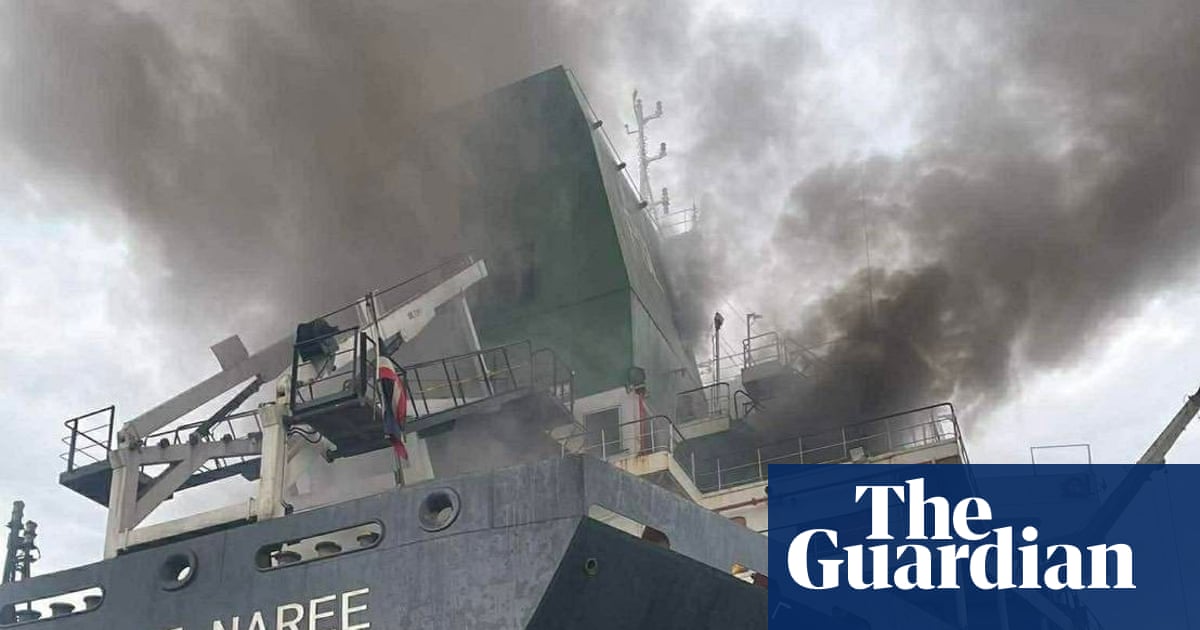
Three merchant ships in the Gulf were reported hit by unknown projectiles on March 11, 2026, raising the tally of vessels struck since the war began to 14, according to maritime security monitors. Crew evacuated a Thai-flagged bulk freighter after an explosion ignited a fire. A Japanese-flagged container ship and a Marshall Islands-flagged bulk carrier were also damaged.
Hundreds of ships were blockaded behind the narrow channel along Iran’s southern coast amid fears of further attack-the worst disruption to global energy flows since the oil shocks of the 1970s. The strait, a chokepoint recognized in the UN Convention on the Law of the Sea for its regime of transit passage for commercial shipping, has effectively become a contested battlespace as naval coalitions weigh how to enforce freedom of navigation. The Islamic Revolutionary Guard Corps said it would not allow “a single litre of oil” through the passage until US and Israeli bombing stopped. US President Donald Trump told reporters on March 11, 2026, that tankers would “see great safety, and it’s going to be very, very quickly,” without offering details on rules of engagement or the scope of any prospective escort mission.
Iran said it continued to target oilfields and refineries in Gulf countries. Addressing the United States, Ebrahim Zolfaqari, a spokesperson for Iran’s military command, warned:
“Get ready for oil to be $200 a barrel, because the oil price depends on regional security which you have destabilised.”
Energy ministers from importing nations met in emergency sessions to discuss fuel rationing and coordinated use of strategic reserves. The International Energy Agency’s recommendation for a 400‑million‑barrel release placed additional pressure on G7 governments to balance domestic inflation concerns with the risk of further provoking Tehran.
Signals from capitals: defiance, pressure, and public messaging
In Tehran and other cities, huge crowds turned out for the funerals of senior commanders killed since February 28, 2026. Mourners carried caskets and portraits of the late supreme leader, Ayatollah Ali Khamenei, who was killed in the opening minute of the US-Israeli offensive, and his son and successor, Mojtaba. The transition, confirmed by Iran’s Assembly of Experts, has kept the core power structure intact even as the new leader is absent from public view. Iranian officials acknowledged for the first time on March 11, 2026, that the new leader had been wounded in the strikes that also killed his father, mother, wife, and a son. “I have heard that he was injured in his legs and hand and arm … I think he is in the hospital because he is injured,” Tehran’s ambassador to Cyprus, Alireza Salarian, told the Guardian.
Iran’s police chief, Ahmadreza Radan, said any protesters would be treated as an enemy. “All our security forces have their fingers on the trigger,” he said. Residents in Tehran described growing habituation to nightly airstrikes that have driven hundreds of thousands toward the countryside and left the capital stained by black rain from oil smoke. “There were bombings last night but I did not get scared like before. Life goes on,” said Farshid, 52, by phone.
From Jerusalem, Israel’s defense minister, Israel Katz, said on March 11, 2026, that operations would continue “without any time limit, as long as required, until we achieve all objectives and win the campaign”. Israeli officials framed the strikes as part of a long‑stated policy to prevent Iran from entrenching militarily across the region.
In Washington, President Trump offered mixed messages. In a March 9, 2026 speech he said “we haven’t won enough,” after previously calling the war a “short-term excursion,” and on March 11, 2026 he told Axios the conflict would end soon because there was “practically nothing left to target.” “Any time I want it to end, it will end,” he said.
Meeting G7 leaders on March 11, 2026, Trump said in a video clip shared by the French presidency, “I think we are having a tremendous impact, unbelievable actually, on the world,” though it was not clear who or what he was referring to. The International Energy Agency recommended releasing 400 million barrels of oil-the largest such move in its history-to temper prices, a step that would require coordinated action by energy and finance ministries across major consuming economies.
Military claims and contested strikes
– Iran’s army said it struck key sites in Israel, including military intelligence headquarters, a naval base in Haifa, and a radar system, and also targeted US bases in Kuwait and Bahrain.
– US and Israeli officials said their aim is to end Iran’s ability to project force beyond its borders and to destroy its nuclear program, framing the campaign as enforcement of long‑standing non‑proliferation demands. Israel’s prime minister, Benjamin Netanyahu, on March 10, 2026, urged Iranians to rise up.
– Iran accused the US and Israel of striking a maritime ambulance at an island in the strait of Hormuz, a claim that, if verified, could raise fresh questions under the laws of armed conflict.
– Israeli officials repeatedly accused Iran of using cluster munitions against population centers; cluster munitions are banned for states party to the [[Convention on Cluster Munitions]], though key regional actors, including Israel, Iran and the United States, are not signatories.
Adm. Brad Cooper, commander of US Central Command, said on March 11, 2026, that Iranian ballistic missile and drone attacks had “dropped drastically” as a result of US strikes, including one on a “large ballistic missile manufacturing facility.” He said more than 60 ships had been among the targets of US operations aimed at securing sea lanes. Cooper added that the military was using “advanced AI tools” to “sift through vast amounts of data in seconds,” while stressing that “humans will always make final decisions on what to shoot and what not to shoot and when to shoot”.
Reported tolls and humanitarian impact
– Lebanon: 570 people killed in Israel’s offensive against Hezbollah, including 45 women and 86 children; the health ministry said the total includes 14 healthcare workers and does not distinguish between combatants and civilians.
– Iran: More than 1,300 civilians killed since February 28, 2026, according to Iran’s UN ambassador, Amir Saeid Iravani, as hospitals operate under repeated power cuts and fuel shortages.
– Israel: Twelve people killed and hundreds injured by Iranian and Hezbollah attacks, officials said, with schools repeatedly closed in frontline areas.
– United States: Washington said seven US soldiers have been killed and about 140 wounded, figures that will increase pressure on the administration from Congress as deployments expand.
Humanitarian agencies warned that the combined effect of mass displacement, fuel disruption and constrained access to ports and airports was pushing parts of Lebanon, Syria and Iran’s border regions toward acute crisis, even as planners struggle to secure safe humanitarian corridors.
Air war over Israel and bombardment of Beirut
Air defenses in Israel intercepted incoming missiles before dawn on March 11, 2026, triggering sirens and sending residents to shelters. Israel also bombarded Beirut, targeting southern suburbs that are a Hezbollah stronghold in what the group described as solidarity with Tehran, while Lebanese officials appealed for renewed respect for the country’s fragile sovereignty arrangements under UN Security Council resolutions.
As of March 11, 2026, there was no sign that ships could safely transit the strait of Hormuz, leaving insurance markets, shipping regulators and naval commanders facing an open‑ended test of how global trade can function when one of the world’s most tightly governed waterways is all but closed.
