
BUENOS AIRES –
Argentina has granted asylum to Joel Borges Correa, a Brazilian fugitive convicted for his role in the 8 January 2023 ransacking of Brazil’s presidential palace, congress and supreme court-an unprecedented decision in the post-riot cases that is already spilling into Brazil’s fiercely contested presidential race set for October 2026. (theguardian.com)
Argentina’s National Commission for Refugees (CONARE) notified Borges Correa, 47, on 4 March that he would receive refugee protection. He had been sentenced in Brazil to 13 years and six months after being arrested inside the Planalto presidential palace; in April 2024 he cut off his court-ordered ankle monitor and fled across the border with other fugitives. (elpais.com)
Election-year shock in the Southern Cone
The asylum ruling comes as Brazil enters the formal campaign season for an October vote in which President Luiz Inácio Lula da Silva faces an emboldened right led by Senator Flávio Bolsonaro, the eldest son of ex-president Jair Bolsonaro. Recent nationwide polling shows a tightening race and, in some scenarios, a technical tie in a potential Lula-Flávio runoff, raising the stakes of any cross‑border move perceived as favouring one camp over the other. (elpais.com)
In a video posted on social media, national deputy Eduardo Bolsonaro celebrated the move as a “victory of freedom” and thanked Argentina’s president, Javier Milei. “It’s impossible that these people could have carried out a coup d’état without weapons, without anything, on a January Sunday, when everyone knows it was vacation time in Brazil,” he said, claiming, spuriously, that his father, who fled the country to avoid handing over power to Lula, had been at Disney World. (theguardian.com)
“The Milei administration is starting to get involved in Brazil’s elections,” said a Brazilian government official, reacting to Argentina’s decision, framing it not only as a legal dispute but as direct interference in Brazil’s domestic politics. (theguardian.com)
“Brazil is about to begin its election campaign, and this year’s election will be more difficult for President Lula than it seemed a few months ago,” said Maurício Santoro, a political scientist in Rio de Janeiro. “There is a real possibility that [Bolsonaro] could win. And that changes the political calculations of Milei’s government.” He added that the opposition may now cite Borges Correa’s case to argue the 8 January events were not a coup attempt. “I think it will become an important issue for the opposition during the election campaign,” he said, suggesting the asylum ruling could quickly migrate from a legal file into a campaign talking point. (theguardian.com)
What CONARE’s ruling legally changes
Argentina’s refugee law (Law 26.165) embeds the principle of non‑refoulement and empowers CONARE, an interministerial body chaired by the Interior Ministry, to determine refugee status under the 1951 Refugee Convention and the region’s broader Cartagena framework. Once a person is recognized as a refugee, Argentina’s extradition statute (Law 24.767, Article 20) instructs the Foreign Ministry to return any extradition request from the country of persecution without further processing-functionally shielding the grantee from surrender. The combination of these two laws means Borges Correa’s status is no longer a discretionary diplomatic issue but an administrative decision grounded in Argentina’s own implementation of the refugee regime.
That framework intersects with active Brazilian cases. In October 2024, Brazil’s federal police sought the extradition of dozens of Jan. 8 suspects-about 63, most believed to be in Argentina. In December 2025, a federal judge in Buenos Aires, Daniel Rafecas, approved extradition for five convicted Brazilians; appeals remained pending, underscoring that the courts had been inclined to cooperate with Brasília before CONARE’s move. CONARE’s protection of Borges Correa now alters the legal calculus for that case and for others still under review, effectively drawing a line between individuals treated as common criminals and those Argentina considers politically persecuted. (apnews.com)
Argentina and Brazil also share multiple cooperation treaties-bilateral extradition (1961), MERCOSUR’s 1998 Extradition Agreement, and the Inter‑American Convention on Extradition-all of which retain a “political offense” exception or related human‑rights safeguards that commonly narrow extradition in politically charged cases. The Milei government’s decision to prioritize the refugee‑protection track over those cooperation commitments, at least in this instance, will now test how far regional partners are willing to stretch the political‑offense doctrine when democratic institutions claim to have been under attack. (zhiyanbao.cn)
The 8 January cases and their aftermath
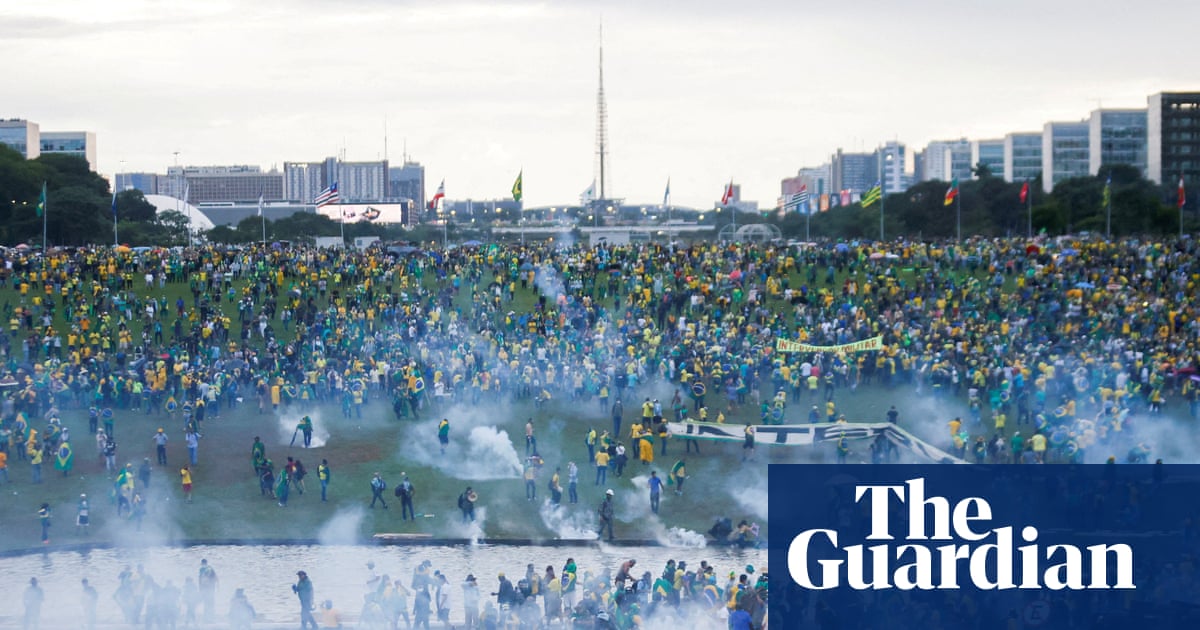
A week after Lula took office, hundreds of rioters vandalized Brazil’s seats of power in Brasília on 8 January 2023, storming the presidential palace, Congress and the Supreme Federal Court (STF) in scenes widely compared to the 6 January 2021 assault on the U.S. Capitol. Brazil’s STF later issued lengthy sentences-up to 17 years in the first wave-and, in September 2025, convicted former president Jair Bolsonaro of attempting a coup, handing down a 27‑year sentence in a landmark ruling that Brazil’s institutions cast as a defence of constitutional order. (apnews.com)
Borges Correa told Argentine authorities he had gone to government buildings carrying a Brazilian flag to protest “Lula’s projects in favour of abortion and the legalisation of drugs”-policies that have not been enacted. He was arrested inside the Planalto and later convicted in Brasília, making him one of the most prominent foot soldiers of the 8 January riot now recast by Argentina as a victim of political persecution. (theguardian.com)
His lawyer, Pedro Gradin, framed the case in human-rights terms:
“There is a very evident human rights issue, a matter of political persecution,” said Pedro Gradin, Borges Correa’s lawyer. “With asylum granted, he will regularise his immigration status. Now they must release him and remove his ankle monitor so that he can live his life like any other citizen.”
By recognising him as a refugee, Argentine authorities implicitly place his conviction in tension with international fair‑trial and proportionality standards-an assessment Brazil rejects but which now carries concrete procedural consequences in Buenos Aires. (theguardian.com)
Regional asylum tradition meets modern extradition politics
Latin America has a distinctive asylum tradition-rooted in the 1954 Caracas Convention on Diplomatic Asylum and reaffirmed through the Cartagena Declaration-that prizes protection in moments of regional upheaval, including for political actors who have fallen out with sitting governments. Argentina incorporates that ethos domestically through CONARE, which is mandated to apply non‑refoulement even in cases that strain bilateral ties.
At the same time, MERCOSUR states-including Argentina and Brazil-have broadened criminal cooperation since the 1990s while preserving carve‑outs for political offenses and human‑rights bars to extradition. The inherent tension between these tracks becomes acute in cases like Borges Correa’s, which sit at the junction of political mobilization, violent unrest and electoral combat. Where Brazil’s judiciary sees an attack on democratic institutions, Argentina’s asylum system now sees a claimant whose prosecution must be scrutinized for political overreach-a clash of institutional narratives that is likely to reverberate in future cross‑border cases.
A fraught bilateral backdrop
Relations between Lula and Milei have been strained since 2023, when Milei repeatedly called the Brazilian leader a “corrupt communist.” The two leaders avoided a formal bilateral during the G20 summit hosted by Brazil in November 2024, reflecting deeper political discord even as trade links and cooperation within MERCOSUR endure. (apnews.com)
Analysts note that with conservative leaders gaining ground in parts of South America, the Argentine government may perceive political advantage in a stance that complicates Lula’s narrative at home-what one scholar described as an effort to “cause a political problem for Lula.” For Brasília, the episode reinforces concerns that ideological alignment is increasingly shaping how neighbours interpret, and sometimes undercut, one another’s judicial decisions. (theguardian.com)
Key dates in the case
- 8 January 2023 – Rioters ransack Brazil’s Three Powers Plaza; Borges Correa is arrested inside the Planalto. (en.wikipedia.org)
- April 2024 – Borges Correa removes his monitor and flees to Argentina. (lanacion.com.ar)
- 16 October 2024 – Brazil seeks extradition of dozens of fugitives, most believed to be in Argentina. (apnews.com)
- 4 December 2025 – Argentine judge Daniel Rafecas orders extradition of five convicts; appeals proceed. (en.mercopress.com)
- 4 March 2026 – CONARE grants asylum to Borges Correa, triggering the protections set out in Argentina’s refugee and extradition laws. (elpais.com)
As of 11 March 2026, Borges Correa remains in Argentina with refugee status; the prior extradition order in his case is effectively in abeyance, and additional Brazilian asylum petitions are pending before CONARE. How those dossiers are resolved will signal whether Argentina intends this to be an exceptional gesture or a broader reclassification of Brazil’s 8 January prosecutions as political persecution.
- Global Food Security Alliances: How Climate-Resilient Agricultural Corridors Are Stabilizing Wheat and Rice Supplies
- Cross-Border Renewable Energy Grids: North Sea and Mediterranean Subsea Cable Networks Enter Phase Two
- Koto Ward Assembly Faces By-Election Over Bribery Convictions (archyde.com)
- Spanish election: Pedro Sanchez calls snap election for 29 November after housing protests (globallypulse.com)
