
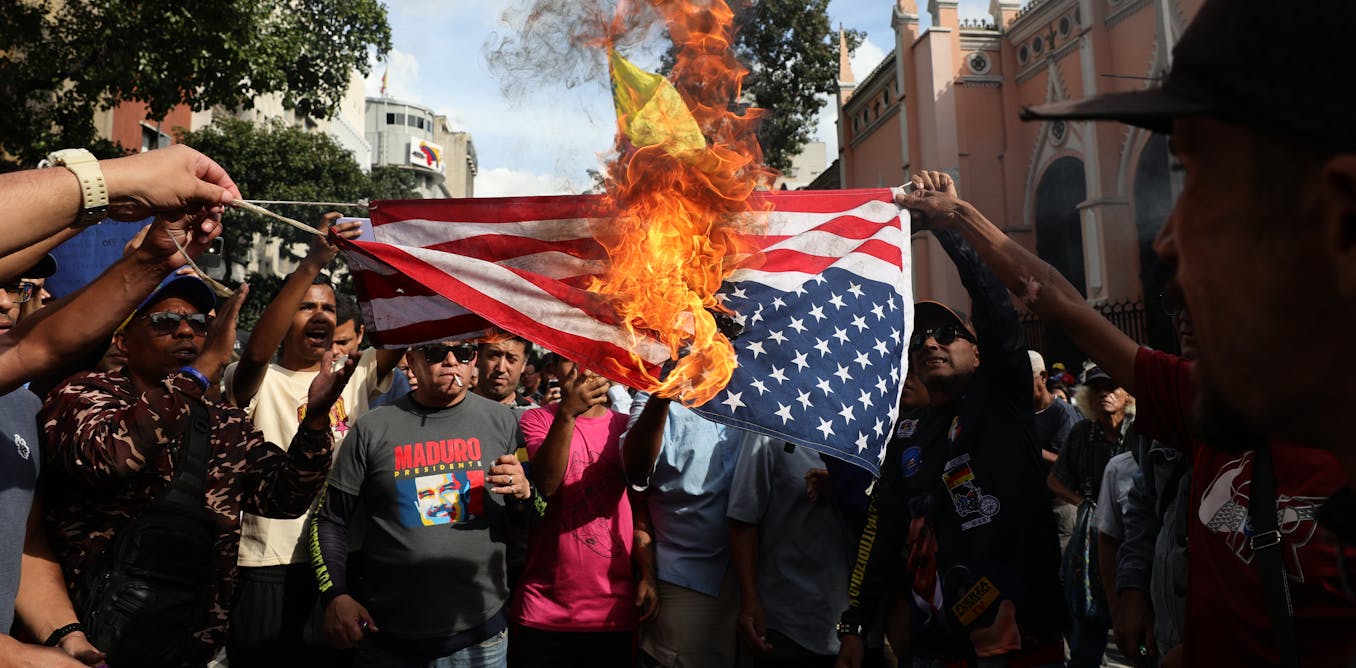
WELLINGTON – The New Zealand government is facing pressure to clarify its position after a United States military operation on January 3, 2026, to capture Venezuelan President Nicolás Maduro and subsequent statements from Donald Trump that the U.S. will “run” the country until conditions exist for a “safe transition of power.”
The development directly tests Wellington’s recent tilt toward closer alignment with Washington and revives long‑standing questions about how a mid‑sized power should respond when a great power acts unilaterally.
What happened and what’s been said
– January 3, 2026: A U.S. military operation in Venezuela sought to capture President Nicolás Maduro.
– In public remarks since the operation, Trump has said the U.S. will “run” Venezuela until a “safe transition of power.”
– Trump has also talked about U.S. companies participating in reviving Venezuela’s oil sector and in managing key state assets during any transitional period.
– New Zealand’s initial response came from Foreign Minister Winston Peters, who said New Zealand “expects all parties to act in accordance with international law” and confirmed officials were seeking further clarification from Washington and regional partners.
“The US will ‘run’ Venezuela … until there are conditions for a ‘safe transition of power’.”
Strategy signals from Washington
The U.S. action aligns with themes in the U.S. National Security Strategy released in December 2025, which signals an intent to reassert dominance in the Western Hemisphere and to treat instability in nearby states as a direct strategic concern. Public debate has linked this posture to an updated reading of the 19th‑century Monroe Doctrine, a framework historically used by Washington to delineate spheres of influence in the Americas and to warn external powers against intervention.
For New Zealand officials, the emerging U.S. doctrine matters not only for Latin America but also for how Washington may approach contested regions elsewhere, including the Indo‑Pacific, where Wellington has been deepening defence and intelligence cooperation.
Legal questions raised
Specialists in international and U.S. law have characterized the January 3 operation as an “act of war” and said it apparently violates U.S. federal as well as international law. The concerns focus on two established frameworks:
– U.S. Constitution: Congress holds the power to declare war (Article I, Section 8), and questions have been raised about whether lawmakers were briefed, consented through existing authorizations for the use of military force, or were bypassed entirely.
– United Nations Charter: The Charter, a cornerstone of the post‑war rules‑based system, prohibits the threat or use of force against the territorial integrity or political independence of any state except in self‑defence or under Security Council authorization. The relevant provisions are set out in Article 2(4) of the UN Charter, and commentators argue those conditions were not met in Venezuela.
Legal experts note that any prolonged U.S. administration of Venezuelan territory would raise further questions about occupation law, the consent of Venezuela’s population and institutions, and whether other states should treat such an arrangement as legitimate.
Wellington’s position so far
Foreign Minister Winston Peters issued a brief statement saying New Zealand “expects all parties to act in accordance with international law.” That message follows a period in which Wellington has reoriented foreign policy toward closer ties with the United States, including deeper intelligence cooperation and more frequent alignment with U.S. positions in multilateral forums.
Inside government, officials now face pressure from opposition parties, legal scholars and some former diplomats to spell out how far that alignment can go when a key partner is seen to be breaching the very norms New Zealand has long championed. The latest events have prompted calls for a clearer statement of principles from Wellington regarding unilateral interventions, the threshold for supporting or opposing regime‑change operations, and how New Zealand will balance alliance politics against its stated commitment to multilateral norms.
A wider doctrine debate
Public commentary has framed the Venezuela action as part of a broader attempt to reinstate great‑power spheres of influence in the Americas. That framing has revived debate in New Zealand policy circles about the country’s long‑standing support for a rules‑based international order, developed after World War II through institutions such as the United Nations, and how that commitment should guide responses when major powers act without multilateral authorization.
For New Zealand, which has historically emphasized the sovereignty of small and medium‑sized states and opposed extra‑territorial regime change, the question is whether to treat the Venezuela intervention as an isolated episode or as a signal of a more assertive U.S. approach that could shape global norms. The answer will inform how Wellington positions itself in upcoming UN deliberations and in its dialogue with partners in the Pacific and Latin America.
Why the timing matters
– September 2025: Observers noted a U.S. military buildup and lethal strikes on alleged drug‑smuggling boats in the Caribbean and eastern Pacific, described at the time as counter‑narcotics operations but now seen by some analysts as preparatory steps.
– December 2025: Washington published its National Security Strategy emphasizing Western Hemisphere primacy and signalling a willingness to act pre‑emptively against what it calls “hostile regimes” close to U.S. borders.
– January 3, 2026: The U.S. moved against Maduro, followed by public statements about U.S. management of Venezuela and potential participation by U.S. oil companies in restarting production and restructuring the country’s energy sector.
The compressed timeline between strategy signals and military action has sharpened questions in Wellington about how early partners are consulted, how much advance warning New Zealand receives, and whether existing diplomatic channels are adequate when allies embark on high‑risk operations.
Implications for partners and small states
Advocates of multilateralism argue that unilateral regime‑change operations risk creating precedents other powers could cite elsewhere, potentially weakening the protections smaller states derive from international law. The debate in New Zealand links these concerns to current security crises and alliance dynamics, including tensions in Europe and across the Taiwan Strait, and to how smaller and middle powers safeguard their interests when larger states assert control in their neighborhoods.
For New Zealand, the immediate policy tests include whether to back calls for an independent international inquiry, whether to support or oppose any new sanctions or recognition decisions at the United Nations, and how to coordinate its position with like‑minded states while preserving space to diverge from Washington when core legal principles are at stake.
As of today, Wellington’s formal stance remains limited to stating that it is “concerned,” is “actively monitoring” developments in Venezuela, and expects all parties to comply with international law. The government has yet to indicate whether that language will evolve into a more detailed articulation of how New Zealand believes great powers should behave when seeking political change beyond their borders.
- Urban Infrastructure Resilience: How European and Asian Megacities Are Adapting to Extreme Climate Oscillations in 2026
- UN General Assembly 2026 Framework on Autonomous Systems: International Diplomacy Faces Algorithmic Governance
- Why Your Tire Pressure Light Comes On on Cold Mornings (daybreakwire.com)
- Mark Zuckerberg faces harsh onscreen portrayal in The Social Reckoning (archyde.com)
