
LONDON –
Nissan has warned that its large Sunderland assembly plant could be at risk if new European Union manufacturing rules for electric vehicle incentives do not treat the United Kingdom as a fully eligible partner, raising fresh questions about cross‑channel industrial integration and the competitiveness of UK‑based auto production.
The warning – delivered privately to UK officials and cited by industry participants – comes as the European Commission has advanced a proposed Industrial Accelerator Act (IAA) that conditions certain public subsidies for electric vehicles on manufacturing location and origin criteria. The UK car industry’s trade body has described the proposals as posing material risk to a trading relationship it values at roughly £70 billion a year, and Nissan’s messaging makes clear that access to EU incentives is a core factor in manufacturing and investment decisions for plants that serve the European market.
- Trade value at stake: £70 billion (annual cross‑channel trade cited by the UK auto sector).
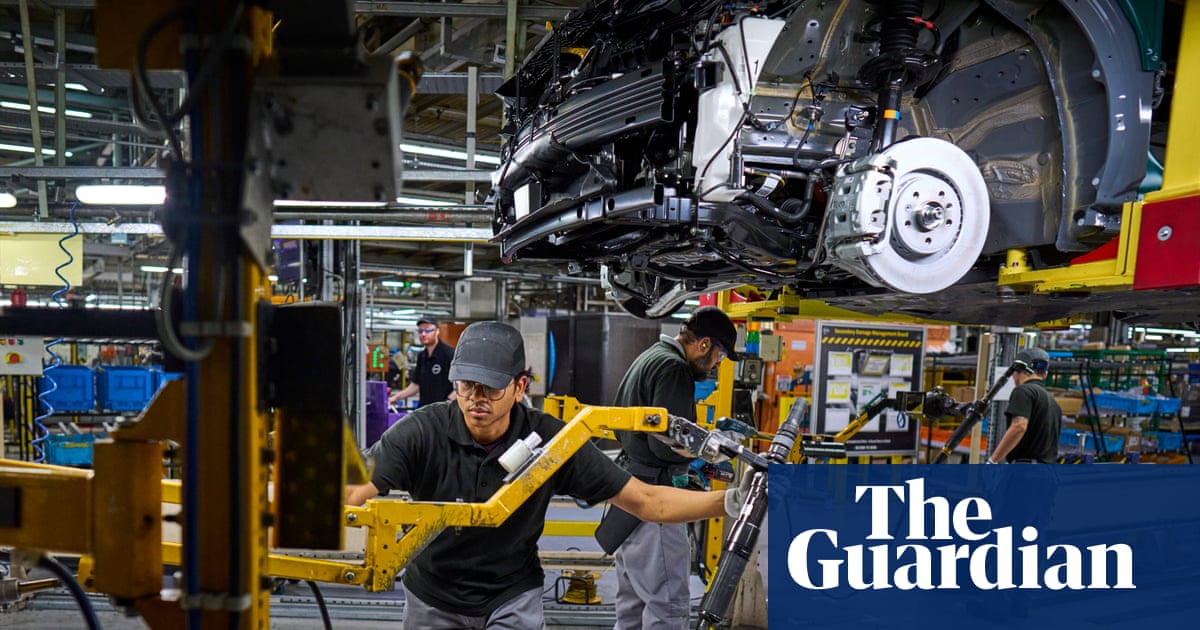
- Sunderland plant staffing and capacity: 6,000 employees; theoretical capacity of about 600,000 vehicles per year (currently operating below capacity).
- Policy instrument at issue: the European Commission’s proposed Industrial Accelerator Act (IAA), a draft EU regulation designed to channel public support to accelerate green technologies and protect industrial capacity in Europe.
Market exposure and trading ties
The UK automotive sector remains tightly integrated with EU markets through finished vehicle sales and an extensive parts supply chain. Many manufacturers operating in the UK export a high share of output to EU markets; conversely, a significant proportion of parts and components used in UK assembly are sourced from within the European single market. Those bi‑directional flows mean changes to rules that determine eligibility for EU‑funded support or auctions can alter marginal economics for plants that supply the continent.
Nissan’s Sunderland factory is Britain’s largest car plant by employment and reported capacity, and its production is strategically oriented to serve regional demand across Europe. The company’s private warning to the UK government that it could be “forced to close” if access to EU incentives were restricted signals how contingent investment and operating plans remain on access to regional incentive schemes, particularly as manufacturers retool for electric and hybrid models.
The Industrial Accelerator Act and eligibility mechanics
The European Commission has framed the Industrial Accelerator Act as a tool to support the development of low‑carbon technologies in Europe by enabling targeted public support and prioritising projects that demonstrably benefit EU industrial capacity. In its current form, the proposal would make access to certain subsidies, public procurement contracts and auctions conditional on production and origin requirements for “clean” and “strategic” technologies, including electric vehicles.
The draft includes origin‑based eligibility criteria for specific schemes, which has prompted UK industry concerns over potential exclusion or disadvantage for UK‑produced vehicles and components. The approach follows a broader “Made in EU” policy trend that aims to ensure public money reinforces manufacturing and jobs within the bloc, rather than rewarding final assembly that relies heavily on imported content.
The competition commissioner has stated that third‑country partners would not be excluded automatically where a trade agreement exists, but the proposals also contemplate the exclusion of countries that pursue measures favouring domestic producers – the type of “buy national” policies the draft cites as counterpoints. A European Commission spokesperson has said the existing EU‑UK Trade and Cooperation Agreement is considered an “agreement establishing a free trade area” within the meaning of the IAA regulation and that, on that basis, products originating in the UK would be treated as equivalent to union origin for the purposes of schemes and auctions, subject to reciprocity conditions.
Nissan and Sunderland: corporate position and operational footprint
Nissan Motor Co. is a Japan‑headquartered automaker and a member of the Renault-Nissan-Mitsubishi alliance formed through strategic partnerships that date back to 1999 and were later expanded with Mitsubishi’s entry. The Sunderland factory has been a major element of Nissan’s European manufacturing footprint and is cited internally for both its scale and its role supplying the region.
Local plant economics are sensitive to demand trends, vehicle mix (internal combustion versus battery electric vehicle models), and access to incentive programmes that lower the effective cost of EV production for manufacturers or reduce retail price points for buyers. For a plant such as Sunderland, which has already been earmarked for new EV and battery‑related investment, the calibration of EU eligibility rules helps determine whether future model allocations and associated supply‑chain projects land in the UK or elsewhere in Europe.
Nissan’s messaging to UK authorities that continued eligibility for EU incentives is material to the site’s viability highlights how border‑spanning eligibility rules can influence site‑level investment and employment decisions. The company’s warning adds to a pattern of manufacturers signalling that, in an era of large green‑industry subsidy regimes in the US, EU and Asia, policy certainty on cross‑border incentives is now a core competitive factor alongside labour and logistics costs.
“The UK automotive sector is gravely concerned by [the] ‘Made in Europe’ proposals set out in the European Commission’s Industrial Accelerator Act. As drafted, it would discriminate against UK-made vehicles and components, damaging a trading relationship worth almost £70bn annually.”
The Society of Motor Manufacturers and Traders (SMMT) has called for the UK to be granted “full trusted partner status” for the auto sector so that UK vehicles and components are not disadvantaged in eligibility for EU‑backed schemes. That status, industry executives argue, would mirror in practice the treatment of the EU‑UK Trade and Cooperation Agreement as a free‑trade arrangement for the purposes of the IAA.
The UK government has described itself as “a close and trusted European partner, committed to our shared security and economic cooperation” and has signalled a preference to resolve eligibility issues through government‑to‑government engagement rather than retaliatory industrial measures.
Supply chains, incentives and investment calculus
Public subsidies and incentive schemes can shape near‑term industrial decisions in capital‑intensive sectors such as automotive manufacturing. State support that is conditional on local or regional production content affects decisions about vehicle sourcing, the siting of battery or driveline assembly, and the configuration of supplier networks. In practice, even modest differences in effective support for EVs can determine whether a given plant secures a new model line or loses out to a competitor within the same corporate group.
Firms typically weigh incentive‑driven cost differentials alongside structural considerations – labour, logistics, tariff exposure and regulatory alignment – when finalising investment plans. For the UK, the interaction between EU requirements under the IAA and the post‑Brexit trading framework will shape how far assembly in Britain can still qualify for EU‑backed demand‑side schemes, such as bonus‑malus systems, fleet decarbonisation auctions or public‑sector procurement.
The IAA’s emphasis on protecting EU industrial capacity from lower‑cost competition reflects broader policy conversations about strategic autonomy in green technologies. The draft’s eligibility provisions are therefore not just redistributive but potentially re‑shaping for where battery cells, module assembly and final vehicle production are located across Europe and neighbouring markets, including the UK.
Governance and legal considerations
The SMMT has argued that the current drafting of the IAA “may also be in breach of the EU‑UK trade cooperation agreement – the Brexit deal,” signalling a possible legal interface between the Commission’s industrial policy and treaty commitments under the EU‑UK Trade and Cooperation Agreement, which sets the overarching rules for trade in goods and services between the two sides. The agreement, concluded in December 2020 and implemented in UK law through the European Union (Future Relationship) Act 2020, is published in full by the European Commission as the EU‑UK Trade and Cooperation Agreement.
The Commission has maintained that the trade agreement qualifies as an agreement establishing a free trade area within the IAA’s language, with the caveat that measures taken by a partner country to explicitly favour domestic producers could alter that status. That conditional reading creates a degree of legal and political leverage on both sides: the UK is pressing for stable, treaty‑consistent treatment under the IAA, while the EU is seeking to preserve the option of differentiated access if it judges that the UK is using its own subsidy or procurement regime in ways that undercut EU producers.
The IAA’s text, as presented, includes mechanisms to differentiate treatment where third countries implement overt buy‑national procurement or subsidy regimes. That drafting feature connects the new instrument to a wider regulatory toolkit – including existing EU state‑aid controls and foreign subsidies rules – that balances open trade with selective industrial support.
Precedents and comparative policy
Policymakers in multiple jurisdictions have used domestic preference rules or content requirements to direct industrial subsidy programmes. The IAA’s stated intent to avoid distortions from lower‑cost external producers echoes long‑standing policy tools such as public procurement preferences and eligibility criteria for national green subsidies, as seen in the US Inflation Reduction Act and similar initiatives in Asia.
The draft’s explicit linkage between trade agreement status and eligibility is one mechanism to reconcile industrial stimulus with treaty obligations. It reflects a wider shift in global trade governance, in which market access and participation in subsidy schemes are increasingly conditioned on alignment with the sponsoring jurisdiction’s climate, labour or security standards.
Procedural status and immediate implications
The European Commission has presented the Industrial Accelerator Act as a legislative proposal and outlined eligibility principles that condition certain public support on origin and reciprocal treatment. The proposal will now be negotiated by the European Parliament and EU member states under the ordinary legislative procedure, with scope for amendments on how third‑country partners such as the UK are treated in specific sectors and schemes.
Nissan’s private warning to the UK government, the SMMT’s public statement of concern and the Commission’s qualification of the EU‑UK trade agreement as an “agreement establishing a free trade area” together place the question of UK eligibility squarely into the formal EU legislative and intergovernmental dialogue. For ministers in London, the file now sits alongside wider efforts to stabilise relations with Brussels and reduce friction in post‑Brexit trade.
Companies with cross‑border manufacturing footprints are reassessing near‑term investment signalling and the architecture of supply chains in light of the proposals; government officials on both sides of the Channel have engaged in direct representations. As the IAA proceeds through the EU legislative machinery, the core question for Nissan and other manufacturers is whether the final regulation will create a clear, durable route for UK‑built vehicles to qualify for EU‑linked EV incentives – or whether Britain’s largest car plant will find itself competing at a structural disadvantage inside what remains its most important export market.
Prof Simone Tagliapietra, a senior fellow at the Brugel thinktank in Brussels, said: “In its final version, the proposed Industrial Accelerator Act has abandoned the pure ‘Made in Europe’ approach, opening it up to third countries – what we might call ‘Made with Europe’. This is a welcome step, aligning EU industrial and trade policies as it should be.”
An industry executive told the Financial Times that Nissan could face “an existential threat” if it was “frozen out of access to EU incentives”.
A spokesperson for the European Commission said: “The EU-UK trade and cooperation agreement is considered as an ‘agreement establishing a free trade area’ within the meaning of the IAA regulation. Therefore, products originating in the UK would be considered as equivalent to union origin for the purposes of schemes and auctions, unless the UK excludes products originating from the EU from the scope of schemes and auctions.”
A spokesperson for the UK government said the UK was “a close and trusted European partner, committed to our shared security and economic cooperation” and that ministers want “to work together as like-minded partners to boost growth, resilience and economic security.”
For corporate background, see Nissan Motor Co. and the Industrial Accelerator Act, including the Commission’s summary of its objectives in the proposal to strengthen industry and create jobs in Europe.
Worth a look
