
Six planets stage a prime-time alignment as NASA turns data into sound
For skywatchers and the tech-curious alike, a rare six-planet alignment arcs across the evening sky this weekend, with Jupiter, Saturn, Venus, Mercury, Neptune, and Uranus appearing in a gentle curve shortly after sunset. The spectacle coincides with new sonifications from NASA’s Chandra X-ray Observatory that transform telescope data from Jupiter, Saturn, and Uranus into sound, part of a broader push to make flagship-mission data more accessible.
“We’re seeing this alignment now because the planets’ orbits have brought them into roughly the same area of the sky from our perspective on Earth. Since each planet circles the sun at a different speed, they constantly shift position against the backdrop of stars. Only occasionally do their paths line up in a way that places several of them together in our night sky,” she said.
“While it’s fairly common to spot four or five planets at the same time, seeing six is much rarer. All seven were visible together last year, but the next full line up won’t occur again until 2040.” As with any celestial event, visibility depends heavily on local conditions: light pollution, horizon obstructions, and weather will determine how much of this alignment the public actually gets to see.
Where and when to look
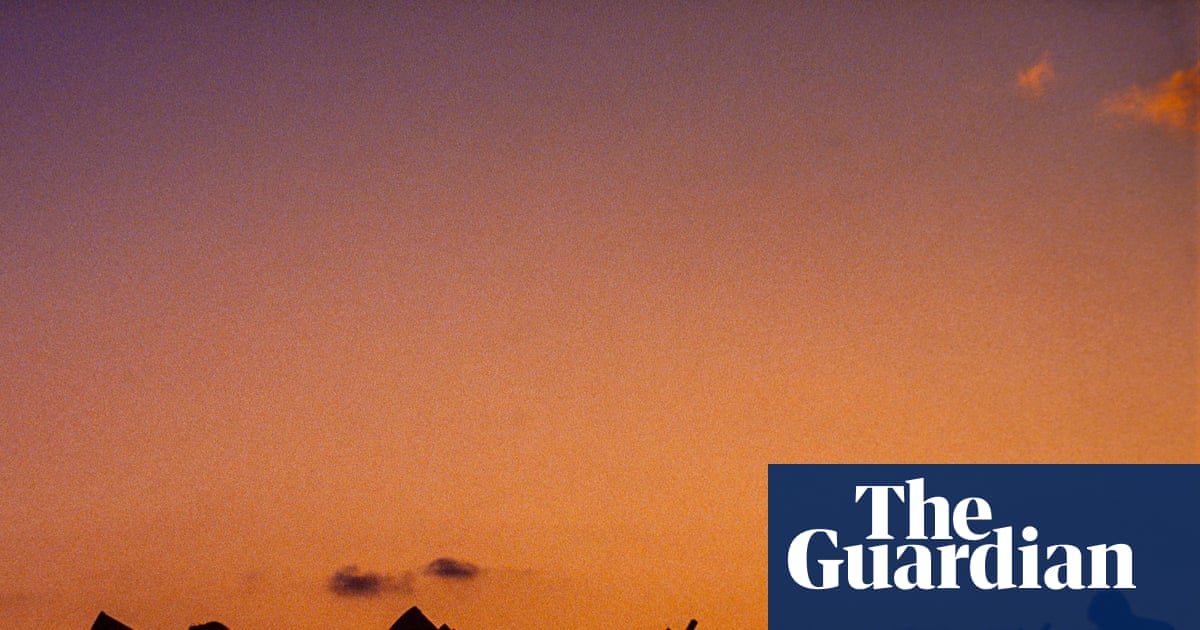
In the Northern Hemisphere on Saturday, February 28, Jupiter stands high toward the south-east, while Mercury, Saturn, Neptune, and Venus cluster low in the western sky near the horizon. Uranus sits faintly below the Seven Sisters (Pleiades), best found with a stargazing app and binoculars. The window opens quickly after sunset and lasts only a short time for the lower, fainter worlds-especially Mercury-before they sink into the glow.
“In Australia, Jupiter will be seen in the north, and Uranus will be visible in the north-west just above the Seven Sisters,” said Argo. Visibility there follows a similar pattern but mirrored, with a slightly later start after local sunset and similarly tight timing for the lowest planets.
Quick-reference visibility guide
| Region | Approximate local start | Notes |
|---|---|---|
| United States | Around 6:00 pm | Look low to the west for Mercury, Saturn, Neptune, and Venus; Jupiter higher in the south-east. |
| United Kingdom | Around 5:45 pm | Similar layout; a clear western horizon is essential for Mercury. |
| Australia | After ~6:45 pm | Mercury likely too low to see; Venus sets by ~7:15 pm, so act fast. |
“We’ve also got the moon in the mix actually tonight and over the next couple of days. So we get quite a lot of the visible solar system.” Local astronomy groups and science centers are using the alignment as a convenient hook for public observing nights, pairing telescopes with talks on how planetary orbits, orbital inclination, and our own seasons conspire to create these viewing opportunities.
Tools and techniques: AR star maps, sensor fusion, and safer optics
Modern stargazing apps use phone sensor fusion-GPS, gyroscope, accelerometer, and magnetometer-to pin an augmented-reality star map to the sky. Calibrate the compass, hold the phone steady, and use night mode to preserve dark adaptation. For imaging, enable a tripod or pro mode, lower ISO to reduce noise, and capture multiple short exposures rather than one long shot for sharper results.
- Use 7×-10× binoculars to peel Neptune and Uranus from the background; a small telescope improves the odds.
- Never look at or near the Sun with binoculars or a telescope; wait until the Sun is fully below the horizon before scanning low sky.
- Choose the darkest western view you can find-hills or waterfronts often work-away from streetlights and reflective surfaces.
For schools and community groups, this alignment offers a ready-made lesson in safe observing practices and in how consumer technology-phones, compact binoculars, and modest backyard telescopes-can bridge professional astronomy and public curiosity.
Turning photons into audio: how sonification extends access
Chandra’s sonification projects map telescope measurements-brightness, position, and energy-into pitch, timbre, and spatial audio. The result is an accessible rendering of data that can reveal structure and variability even when visual detail is faint. This approach broadens public participation in space science, including for people who prefer or rely on non-visual cues, and aligns with institutional commitments to make federally funded research outputs more usable to people with disabilities under frameworks such as the U.S. Information and Communication Technology accessibility standards.
Explore this planetary set via NASA’s interactive visualization tools to compare what you hear with how the alignment looks from your location; together, they highlight how the same stream of photons can be translated into complementary visual and auditory narratives.
The infrastructure behind a clear night: lighting, satellites, and policy levers
Urban skyglow and the reflectivity of low-Earth-orbit satellites are now routine constraints for public observing. Municipal lighting upgrades that favor fully shielded fixtures, warmer color temperatures, and curfews can materially improve visibility near the horizon where Mercury and Venus quickly sink. Satellite operators are testing darker surface treatments and attitude controls to reduce brightness and streaking; astronomers are refining image-processing pipelines to flag and remove trails without erasing real data.
- Lighting design: full cut-off, downward-facing LEDs with adaptive dimming.
- Observing sites: designated dark-sky parks and community observatories extend access beyond rural areas.
- Space traffic norms: brightness and tracking coordination help protect professional surveys and public night-sky experiences.
For city planners and regulators, alignments like this one are a reminder that choices on street lighting, building codes, and satellite licensing shape not only energy use and safety but also whether residents can share a direct view of the planets overhead.
Plan your session for February 28 and the days just after
- Arrive 20-30 minutes before the listed start to let your eyes adapt and to spot Venus before it sets.
- Scan the western horizon first for Venus and Mercury; then move up and right for Saturn and Neptune; cap the session by turning to Jupiter higher in the sky.
- Expect Mercury to fade from easy view by midweek; Jupiter and Venus remain reliable evening targets for months.
Whether you are heading to a dark-sky site or a city rooftop, the next few nights offer an unusually compact tour of our planetary neighborhood-and a glimpse of how policy, technology, and design decisions on the ground can either reveal or erase the cosmos above.
Keep reading
