
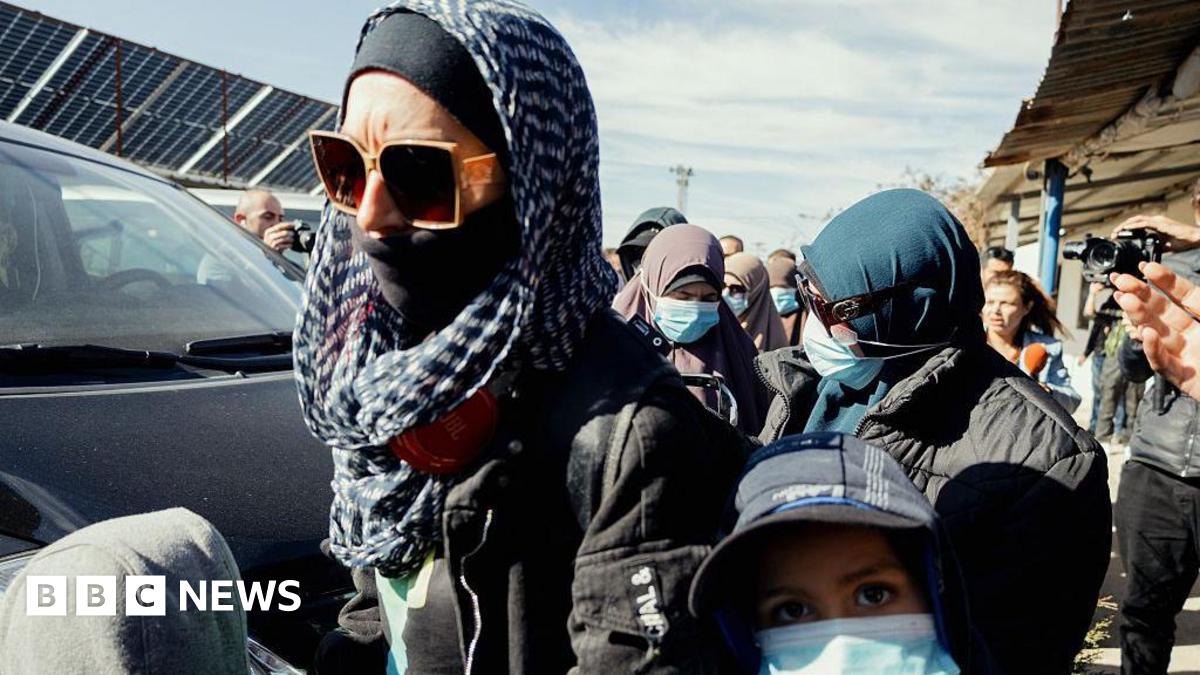
Prime Minister Anthony Albanese has ruled out government assistance for a group of Australian women and children trying to leave northeast Syria, hardening Canberra’s stance as Kurdish authorities confirm the group was turned back to the al‑Roj detention camp after a failed attempt to fly home.
“You make your bed, you lie in it,” he told a press conference on Wednesday.
He said those involved “chose to go overseas to align themselves with… a brutal, reactionary ideology that seeks to undermine and destroy our way of life,” adding his government would not “breach Australian law”. Opposition figures seized on the security implications. “How can only one member of this group be deemed a risk and the rest somehow okay?” Liberal Party Senator Jonno Duniam said on Tuesday, offering to help amend laws to bar more of the group.
The 34 Australians from 11 families—women and children who have been held in Syria since the Islamic State group lost its final territory in 2019—were reportedly stopped by Syrian authorities and returned to al‑Roj after “procedural issues” halted their journey to Damascus for a commercial flight to Australia. Albanese later confirmed his government would not support the repatriation attempt; Home Affairs has issued a Temporary Exclusion Order (TEO) to one individual, based on security‑agency advice. The remainder of the group was assessed as not meeting the statutory threshold for exclusion. (apnews.com)
Why Australia’s position matters beyond its borders
Australia’s decision lands amid intensifying international pressure on states to resolve the limbo of thousands of foreign nationals in Kurdish‑run camps. Roj alone holds roughly 2,200 people from about 50 countries—mostly women and children—under strained local administration and chronic humanitarian shortfalls. The United States military command responsible for the region has repeatedly urged capitals to repatriate their citizens, warning that prolonged mass detention fuels security risks and preserves a potential recruitment pool for extremist networks. UN agencies have catalogued outbreaks of preventable disease and persistent gaps in healthcare and sanitation in the camps, underscoring the costs of inaction for both regional stability and longer‑term counter‑terrorism efforts. ([apnews.com](https://apnews.com/article/21a21fe9827fa78006ee81a6ab1e2445?utm_source=openai))
Canberra’s stance is closely watched by other governments with nationals in Syria because Australia has been seen as a cautious but ultimately willing repatriator. Its choice now to stand back from an attempted self‑organized return sends a signal on where it draws the line between humanitarian responsibility, domestic political risk and deference to security advice.
The legal ground Australia is standing on
Canberra faces competing imperatives: far‑reaching domestic security powers that can lawfully delay and condition a citizen’s return, and international commitments that protect the right of entry. The Albanese government argues its current approach fits squarely within the existing legal architecture rather than stretching it.
- Temporary Exclusion Orders: Under federal law, a TEO can prevent an Australian citizen aged 14 or over from returning for up to two years at a time, or require them to re‑enter under a return permit with strict conditions. Orders are issued by the Home Affairs Minister on specified security grounds, with limited judicial review and periodic reporting to Parliament.
- Control orders: Once onshore, courts can impose curfews, electronic monitoring, association limits and technology restrictions if necessary and proportionate to prevent terrorism‑related harm. Applications are brought by the Australian Federal Police with ministerial consent and judicial oversight.
- Right of return: Australia is party to the International Covenant on Civil and Political Rights; Article 12(4) bars arbitrary deprivation of the right to enter one’s “own country,” a concept the UN has interpreted broadly. Successive Australian parliamentary and human‑rights analyses note that citizenship‑stripping or administrative measures cannot be used arbitrarily to defeat that right.
- Limits on citizenship deprivation: The High Court has curtailed ministerial powers to strip citizenship for terrorism conduct, ruling in 2023 that provisions enabling executive denationalisation amounted to unconstitutional punishment—sharpening the salience of onshore risk‑management tools over banishment.
Legal experts argue these frameworks, taken together, impose an obligation to allow citizens to return while managing risk through court‑supervised controls and prosecution where evidence supports it—consistent with Albanese’s insistence that any action “not breach Australian law.” The TEO regime itself, introduced in 2019 as part of Australia’s counter‑terrorism laws, remains controversial among civil‑liberties advocates but is now a central lever in the government’s response.
Inside al‑Roj: humanitarian and security stakes
The al‑Roj camp, run by Kurdish‑led authorities, is smaller than the notorious al‑Hol complex but still faces severe shortages of medical care, clean water and education. UN and humanitarian assessments warn that prolonged confinement without due process entrenches trauma and makes children especially susceptible to radicalisation pressures, with some aid workers describing a “lost generation” growing up in legal and psychological limbo. Camp officials describe a brittle ecosystem strained by funding gaps, intermittent access for aid groups and the constant risk of disorder or flight. ([washingtoninstitute.org](https://www.washingtoninstitute.org/policy-analysis/five-years-after-caliphate-too-much-remains-same-northeast-syria?utm_source=openai))
Speaking to Australia’s ABC, camp director Hakmiyeh Ibrahim appealed to all governments with nationals at al‑Roj: “Take your citizens, take these children and women.” The children, she said, are growing up surrounded by “dangerous ideas and ideologies” in the camp. “The more time passes, the more complicated the situation becomes.” For policymakers in Canberra and other capitals, those warnings go to the heart of the risk calculus: whether leaving citizens in place ultimately creates the very security threats governments say they are trying to avoid.
Canberra’s recent track record—and the options now
Australia has previously conducted limited, government‑led returns coordinated between the Home Affairs portfolio, the Australian Federal Police and state child‑protection agencies. In 2019, eight orphaned children of two slain IS members were brought home. In October 2022, four Australian women and 13 children were repatriated to New South Wales after security vetting. Authorities say returnees are subject to ongoing surveillance and potential prosecution, and in some cases to child‑safety interventions where welfare risks are identified. ([abcnews.com](https://abcnews.com/International/wireStory/australia-repatriate-34-women-children-syria-130222613?utm_source=openai))
Other countries have inched forward, often under court pressure. France repatriated 47 nationals—15 women and 32 children—in 2023, placing adults under judicial control and transferring minors to child‑protection services. The Netherlands has conducted operations to bring back women and children for prosecution and monitored reintegration, while the United Kingdom has largely avoided repatriating adult women and has instead stripped citizenship in high‑profile cases such as Shamima Begum, who remains in Roj after losing her final domestic appeal in 2024. ([dw.com](https://www.dw.com/en/france-repatriates-47-women-children-from-syria-detention-camp/a-64495235?utm_source=openai))
Officials and advocates say Australia could, in principle, pursue similar managed‑return options for some or all of the 34, using a mix of conditional return permits, prosecutions and control orders. For now, however, the government is signalling that, absent a decision to mount an official operation, it will not facilitate private efforts to come home.
Domestic politics and security calculus
The latest episode has reignited a familiar divide in Canberra: human‑rights and child‑welfare imperatives versus risk‑management and deterrence. Government ministers say they are acting strictly on security‑agency advice, including the targeted use of a TEO for one person in the group; the opposition argues the threshold should be applied more broadly and has invited the government to consider tightening return laws further. For both sides, the politics are fraught: opinion polling has long suggested limited public sympathy for adults associated with IS, but greater concern for children born into the camps.
Australia’s police, intelligence and prosecutorial architecture—Joint Counter‑Terrorism Teams, ASIO assessments, control orders and terrorism‑financing and foreign‑incursion offences—offers authorities multiple levers short of blanket exclusion to manage returnees. ([apnews.com](https://apnews.com/article/6b1e84f3e5efbdfdebb52203fb82ec93?utm_source=openai)) The government’s choice to lean on exclusion powers rather than these onshore tools, at least in one case, will be a key point of scrutiny in Parliament and among rights advocates in the weeks ahead.
At a glance: the Syria–Australia timeline
- 2019: IS loses its final Syrian territory; eight Australian children are repatriated. ([abcnews.com](https://abcnews.com/International/wireStory/australia-repatriate-34-women-children-syria-130222613?utm_source=openai))
- October 2022: Four Australian women and 13 children return from al‑Roj to Sydney after a government‑run operation. ([aljazeera.com](https://www.aljazeera.com/news/2022/10/29/australia-repatriates-17-women-and-children-from-syrian-camp?utm_source=openai))
- October 2025: Two Australian women and four children escape a Syrian camp and reach Victoria independently, intensifying debate over managed returns. ([theguardian.com](https://www.theguardian.com/world/2025/oct/03/two-australian-women-and-four-children-escape-syrian-detention-camp-and-flee-to-victoria?utm_source=openai))
- February 2026: Thirty‑four Australians are turned back to al‑Roj en route to Damascus; the Australian government declines to assist, and a TEO is issued to one individual. ([apnews.com](https://apnews.com/article/21a21fe9827fa78006ee81a6ab1e2445?utm_source=openai))
Al‑Roj also holds high‑profile detainees like Shamima Begum, stripped of her British citizenship in 2019 and still seeking redress outside the UK; her continued presence underscores a wider international reluctance to resolve complex, politically fraught cases. ([feeds.bbci.co.uk](https://feeds.bbci.co.uk/news/articles/cm2n8xv61x3o?utm_source=openai))
As of February 18, 2026, the 34 Australian citizens remain in the al‑Roj camp; the Australian government maintains it will not assist their return, and a Temporary Exclusion Order is in force against one individual. ([apnews.com](https://apnews.com/article/21a21fe9827fa78006ee81a6ab1e2445?utm_source=openai))
Related reading
- Global Food Security Alliances: How Climate-Resilient Agricultural Corridors Are Stabilizing Wheat and Rice Supplies
- Cross-Border Renewable Energy Grids: North Sea and Mediterranean Subsea Cable Networks Enter Phase Two
- Why Australia Fines People Who Don't Vote (daybreakwire.com)
- Is Russia’s UN Security Council Seat Legal (archyde.com)
