
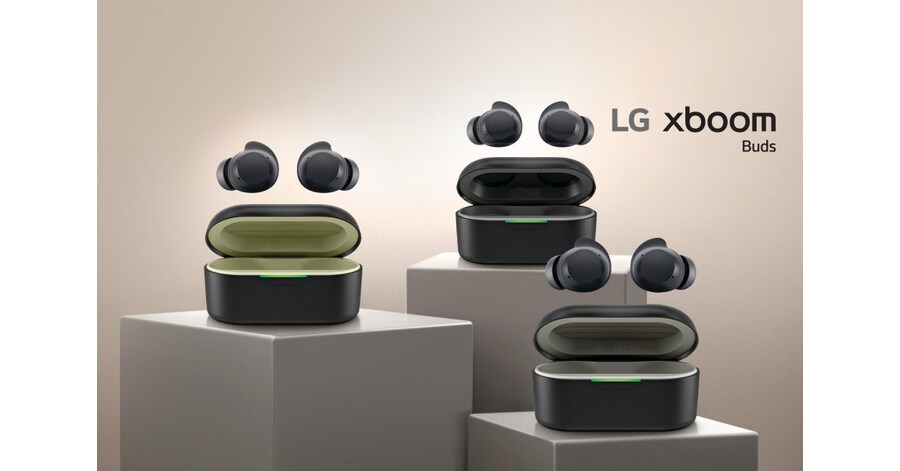
LG and will.i.am extend their audio collaboration with travel‑ready hardware
LG Electronics and will.i.am are adding two models to the xboom Buds family on February 12, 2026, positioning the line for commuters and frequent flyers alike at a moment when airlines and regulators are still catching up to the realities of always‑on personal audio. The flagship xboom Buds Plus are listed at $179.99, while the xboom Buds Lite come in at $69.99. Both are available on LG.com and through authorized U.S. retailers.
The partnership continues will.i.am’s role as the brand’s creative lead, and the new release follows his recent FYI Visionaries showcase. In keeping with earlier entries, the design language emphasizes warm, balanced tuning and straightforward controls. He developed the lineup as the “experiential architect” of the company’s “xboom by will.i.am” brand, with LG positioning the range as a bridge between mainstream consumers and more feature‑rich, regulation‑aware travel tech.
What’s new: ANC, hygiene, battery headroom, and in‑flight flexibility
The headliner feature on the Buds Plus is a built‑in Bluetooth transmitter that turns legacy 3.5mm audio jacks—on seat‑back screens, treadmills, older laptops—into a wireless source without relying on the host device’s Bluetooth stack. That makes the buds relevant not just to travelers but also to operators of older fleets and gyms who are under pressure to modernize experiences without replacing hardware wholesale.
The case also integrates UVnano+ that uses UV‑C light on the earbud mesh during charging, tapping into post‑pandemic expectations around hygiene in shared and high‑traffic environments. For focus, Active Noise Cancelling is supported across the series, with multi‑mic ANC on Buds Plus and a single‑mic implementation on Buds Lite, giving buyers a clearer trade‑off between price and isolation when working or traveling in public spaces.
- Sound profile: will.i.am’s signature balanced warm tones and 3D Spatial Audio on Buds Plus for films, games, and streaming.
- Battery: up to 30 hours total on Buds Plus (10 hours earbuds + 20 hours case) with ANC off; up to 35 hours total on Buds Lite (11.5 hours earbuds + 23.5 hours case) with ANC off, putting both models in line with current long‑haul flight needs.
- Resilience: IPX4 water and sweat resistance on both models for light rain and workouts.
- Convenience: multipoint device switching on Buds Plus and customizable EQ across the lineup for users juggling work, personal, and travel devices.
Feature comparison at a glance
| Feature | xboom Buds Plus | xboom Buds Lite |
|---|---|---|
| Price (U.S.) | $179.99 | $69.99 |
| Availability | LG.com and authorized retailers | LG.com and authorized retailers |
| Active Noise Cancelling | Yes; 3‑microphone system | Yes; single‑microphone monitoring |
| Total playback (ANC off) | Up to 30 hours (10h buds + 20h case) | Up to 35 hours (11.5h buds + 23.5h case) |
| UVnano+ hygiene case | Included | Not listed |
| Built‑in Bluetooth transmitter | Included | Not listed |
| Multipoint connection | Yes | Not listed |
| Water resistance | IPX4 (earbuds) | IPX4 (earbuds) |
| 3D Spatial Audio | Yes | Not listed |
| Customizable EQ | Yes | Yes |
How the transmitter changes the airline and gym experience
The integrated transmitter is where the Buds Plus move from incremental upgrade to infrastructure‑aware hardware. It effectively overlays a modern wireless layer onto legacy systems that airlines and gyms are still amortizing, without forcing operators into costly retrofits.
- Seat‑back systems: Many aircraft still default to 3.5mm analog jacks, so travelers typically need wired headphones or adapters. A transmitter in the earbud case removes that dependency by sending audio wirelessly to the earbuds while the phone remains in airplane mode, aligning with airlines’ obligations to keep cellular radios off during key flight phases under the Federal Aviation Administration’s electronic device rules.
- Latency: A dedicated transmitter can reduce the lip‑sync mismatch common when relying on older screens or third‑party dongles. Actual delay varies by codec and environment, something corporate IT and inflight entertainment teams will scrutinize as they update equipment standards.
- Power planning: Transmitters draw from the case battery. For long‑haul flights, charging the case before boarding remains essential, especially for business travelers who depend on uninterrupted VPN sessions and cabin‑noise masking.
- Policy awareness: U.S. airlines generally permit Bluetooth use with devices in airplane mode, but cabin crew instructions always take precedence, and rules can differ internationally, leaving airlines to balance customer expectations against a patchwork of national aviation policies.
Durability, safety, and hygiene notes
The new models also land in a regulatory climate where consumer‑grade electronics are being scrutinized more closely for safety, durability, and hygiene—particularly in shared or public environments.
- UVnano+: Independent testing shows the UV‑C lighting targets bacteria on the speaker mesh and operates during charging. The function runs when the case is cabled to power, with an optional setting to activate when the earbuds are placed in the case and the lid is closed, addressing lingering post‑COVID questions around cleaning regimens in offices, airports, and gyms.
- Ingress protection: The IPX4 rating under IEC 60529 covers splashes. Dry earbuds fully before use and avoid charging while wet. The case itself is not IPX4‑rated, a distinction facilities managers and procurement teams will note when drafting acceptable‑use policies for shared devices.
- ANC variability: Performance depends on the microphone system and ambient conditions; the experience differs between Plus and Lite models, which may matter for employers offering ANC earbuds as part of hybrid‑work equipment bundles.
- Compatibility: Device support for transmitter and features such as multipoint may vary by source hardware and software version, making fleet‑wide standardization a non‑trivial exercise for airlines, gyms, and large enterprises.
Ecosystem context: where these buds fit
The Buds Plus target travelers who want airline‑proof listening, cross‑device work setups, and added hygiene. The Lite model matches budget‑sensitive buyers who prioritize battery longevity, portability, and splash resistance. With pricing that spans mainstream and premium brackets, the pair broadens access to ANC and longer runtimes while keeping legacy jacks in the picture via the transmitter, a detail that will appeal to institutional buyers under pressure to modernize user experience without immediately overhauling installed hardware.
For regulators and standards bodies, products like xboom Buds Plus and Buds Lite illustrate how consumer devices are quietly absorbing policy constraints—around radio use, hygiene expectations, and durability ratings—into everyday hardware. For travelers and commuters, the impact is more straightforward: fewer cables, cleaner earbuds, and equipment that is increasingly designed to respect the rules in the background.
Purchase links
Worth a look
