
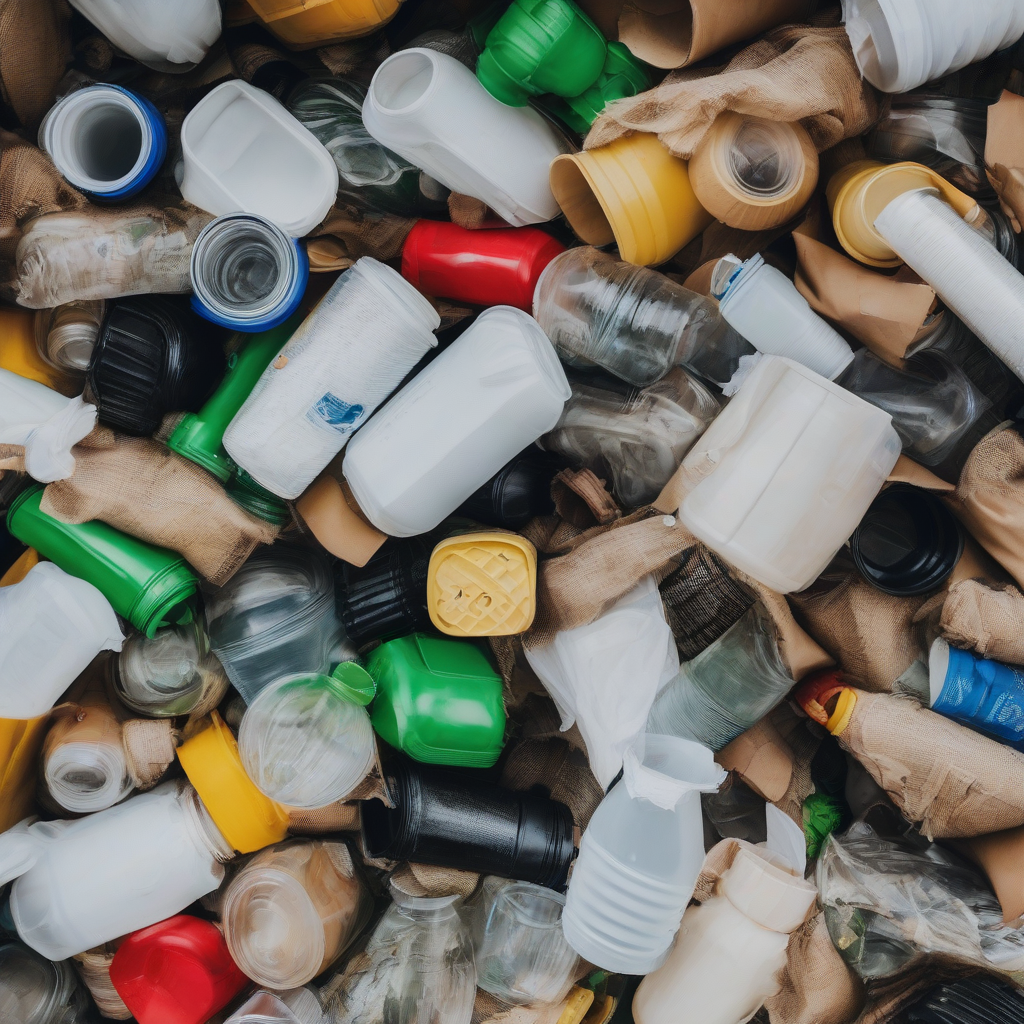
SINGAPORE – Experts are calling for a systemic overhaul of Singapore’s recycling infrastructure to combat persistent contamination rates and improve overall waste recovery outcomes.
The current reliance on co-mingled collection systems has resulted in contamination rates stagnating at approximately 40 percent for several years, prompting calls for a transition toward source-segregated collection and a broader circular economy design. The debate comes as the Government reviews its Zero Waste Masterplan and longer-term plan to extend the lifespan of the Semakau Landfill under the Resource Sustainability Act, Singapore’s cornerstone law for waste and resource management.
Contamination in Co-mingled Systems
The foundation of the current household collection system is the co-mingled bin, widely known as the “blue bin” or “Bloobin.” While intended to simplify the process for residents, the system allows various recyclables to be disposed of together without prior sorting.
Prof Kuah noted that while the blue bin “lowers the barrier to participation,” this convenience comes at the expense of quality. The co-mingled approach frequently leads to the disposal of food and liquid waste within the bins, which contaminates other materials and reduces the overall market value of the recyclables.
To address this, Prof Kuah suggested a move toward a differentiated system. Under this model, blue bins would be reserved for specific dry recyclables, such as textiles and clothes, while other materials would be handled through separate collection streams.
One such example is the Beverage Container Return Scheme, which seeks to isolate specific waste streams to ensure higher purity and recovery rates. The upcoming scheme is part of Singapore’s extended producer responsibility framework for packaging waste, which places legal obligations on beverage producers and importers to collect and recycle containers placed on the market.
Incentives and Source Segregation
The misalignment between private incentives and social objectives is cited as a primary reason for the city-state’s struggle to meet recycling targets, despite national campaigns and infrastructure investments.
Dr Or of the Singapore University of Social Sciences (SUSS) argued that improving the rewards for participation and the convenience of proper recycling-effectively reducing the “cost” of recycling for the individual-is essential to translating public awareness into actual results.
“The challenge now is to strengthen incentives that encourage households to recycle more consistently and comprehensively, while also reducing the effort required to sort and dispose recyclables correctly,” said Dr Or.
Dr Or stated that source-segregated collection would be an appropriate method to reduce contamination and make the process of proper recycling more convenient for the public. Such a model would dovetail with the Government’s broader shift toward a circular economy under the waste management policies overseen by the Ministry of Sustainability and the Environment, where extended producer responsibility and pay-as-you-throw pricing mechanisms are being studied to realign incentives across the value chain.
Upstream Waste Mitigation
Beyond improving collection, specialists are advocating for “upstream” interventions to stop waste from being generated in the first place, arguing that downstream sorting alone cannot keep pace with Singapore’s consumption patterns.
Cheang Kok Chung, executive director of the Singapore Environment Council (SEC), emphasized that product redesign and the reduction of packaging deserve more attention due to the inherent difficulty of recycling certain waste streams. Cheang urged consumers to adopt a “waste-light” approach to consumption.
Assoc Prof Rosenthal identified the disposable carrier bag charge as an effective example of such an intervention.
“So people are more likely to think twice and take only what they need,” Rosenthal said, noting that the charge introduces “extra steps and a little extra cost” to the use of plastic bags.
Experts say such upstream pricing and design measures will have to work in tandem with regulatory tools directed at businesses, including mandatory reporting of packaging and targets for waste reduction, to meaningfully bend the curve on waste generation.
Circular Economy Design
The transition toward better recycling outcomes is described not merely as a shift in household behavior, but as a requirement for a systemic redesign that cuts across ministries, municipal agencies and private-sector operators.
Prof Kuah advocated for an ecosystem-wide circular economy design. This approach integrates the roles of:
- Producers and importers, who determine the materials and packaging placed on the market
- Retailers and consumers, whose purchasing and disposal choices shape demand for low-waste products
- Waste collectors and recyclers, who depend on cleaner streams and stable end-markets for secondary materials
- Regulators and end-markets, which set the rules, price signals and standards that determine whether recycling is commercially viable
Assistant Professor of Public Policy Sreeja Nair of the Lee Kuan Yew School of Public Policy observed that a historical reliance on highly convenient waste collection systems may have conditioned household expectations and behaviors.
“While participation has increased over time, developing consistent recycling habits and improving sorting quality remains an ongoing challenge,” Nair said.
“These outcomes reflect not just individual behaviour, but also how waste systems, infrastructure, and social norms have evolved together over time.”
Analysts say the current policy window – with national waste and climate plans under review – gives policymakers an opportunity to hard-wire these behavioural insights into the next phase of regulations, potentially determining whether Singapore can move from a disposal-heavy system to one that keeps materials in circulation for as long as possible.
Keep reading
